At first blush, Kristin LaHargoue’s social media resembles that of many thirtysomething moms espousing aspirational lifestyles. To her 88,000-plus followers on Instagram, LaHargoue—a crunchy blonde living in central Utah—routinely posts her children, her husband, and herself traipsing around the globe on her account @veda.revival. There they are, standing before the Sagrada Familia, striking silly poses
At first blush, Kristin LaHargoue’s social media resembles that of many thirtysomething moms espousing aspirational lifestyles. To her 88,000-plus followers on Instagram, LaHargoue—a crunchy blonde living in central Utah—routinely posts her children, her husband, and herself traipsing around the globe on her account @veda.revival. There they are, standing before the Sagrada Familia, striking silly poses on a busy Tokyo street, or dancing beachside in the Philippines. In an April 2026 post soundtracked to a version of Taylor Swift’s “The Fate of Ophelia,” LaHargoue wrote that she and her family have thus far traveled to over 40 countries.
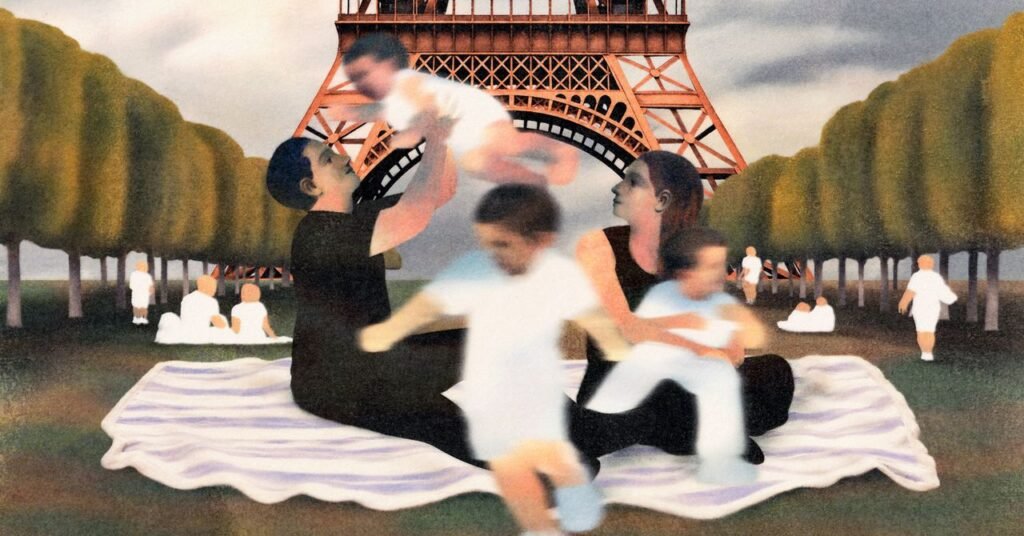
Flying around the world at such a clip isn’t unusual for influencers. But LaHargoue says her children, although born in the US, travel without birth certificates or Social Security numbers. Her thinking is aligned with the sovereign citizen movement: an ever-expanding group of anti-government activists that, for almost half a century, have operated on the belief that they aren’t subject to US law. “Hot take: You don’t actually need a birth certificate to raise a thriving, traveling, fully functional child,” she writes in the same post. “Yeah … I said it. Because we are living proof of it.” By virtue of not registering her two young children’s births, she says her sons are “sovereign babies”—an oft-used hashtag, on accounts such as LaHargoue’s, to describe a child bearing alternative identification documents.
With her brand Veda Revival, LaHargoue offers a white-glove concierge service to new and expecting parents, rooted in the belief that obtaining requisite birth documents is tantamount to entering one’s children into “the jurisdiction of the US corporation.” A larger sovereign citizen movement has existed in the US for decades, with its practitioners similarly eschewing traditional government documents; acts of protest can also include tax evasion, driving without a license, and in the case of Terry Nichols—domestic terrorism. But the rise of influencers selling an alternative means of obtaining a passport, and the idea that babies can be sovereign, represents a new, digitally native outgrowth of this ideology.
For $497, LaHargoue sells a bundle that includes videos and templates for parents to obtain passports for their children based on “nationality” versus “citizenship,” with detailed instructions so they might respond confidently during “interactions with agents of the matrix.” Those seeking something more intensive can pay $997 for “hand-holding,” meaning that LaHargoue will personally guide them in navigating this divergent route. (LaHargoue declined WIRED’s request for an interview, citing the forthcoming birth of her third child.)
LaHargoue, who says she has worked with over 1,000 parents to obtain passports for their sovereign babies, is one of a growing cohort of influencers working in the unregulated industry that’s now selling this self-taught knowledge. One “family legacy architect” named Minister Dionne, known for broadcasting missives to her 125,000 Instagram followers about how registering one’s child makes them “wards of the state,” offers “Status Correction FastTrack Bundles” for securing noncitizen national passports (for as much as $555). LaHargoue also offers an affiliate program for those who want to make a commission of 15 to 20 percent by successfully selling her sovereign baby services.
It’s impossible to quantify how many sovereign babies currently live in the US, given their parents’ feelings about record-taking. (According to one oft-cited estimate, 100,000 to 300,000 people identify as sovereign citizens, although it’s hard to know exactly because of the nature of the movement.) But Adam Bojak, a family law attorney in western New York who is currently on the ballot for the New York state legislature, says that he’s seen an uptick in cases involving sovereign children. In decades past, he’d have maybe one client per year who’d vacate or even try to reject formal identification documents for their children; lately, that’s increased to a half dozen a year, a phenomenon he suspects is linked to the “psychic break” that happened during Covid. “So many of these things are downstream from the aftereffects of that,” he says. “Just where people were ripped apart socially and physically from each other, emotionally. [It’s a rupture] that leads into this idea that everybody’s out for themselves.”
Remote learning during the pandemic also transformed education. Homeschooling rates surged in the early 2020s and remain high: The National Home Education Research Institute estimated earlier this year that 3.4 million children in the US are homeschooled—a number that is almost certainly underreported—compared to 1.4 million back in 2003. Tess Ulrey, executive director of the Coalition for Responsible Home Education, is unsurprised that the sovereign baby movement has risen in tandem with homeschooling rates, as homeschooling can become an inadvertent gateway into sovereign thinking. Some parents might pull their child out of school and “get tied up in this ideology of like, ‘Well, it is my right to do whatever I want. Well, why would the government be tracking that?’” she says.
Keep following us for the latest insights.