Editor’s note: Justin Lynch is a researcher and analyst in Washington, DC. He is co-author of the book “Sudan’s unfinished democracy.” The opinions expressed here are his own. read more opinion on CNN. Four years ago, almost exactly, the people of Sudan were celebrating a revolution after overthrowing dictator Omar al-Bashir. Now the East African
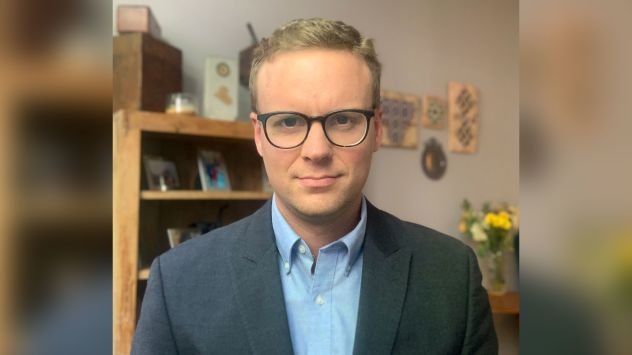
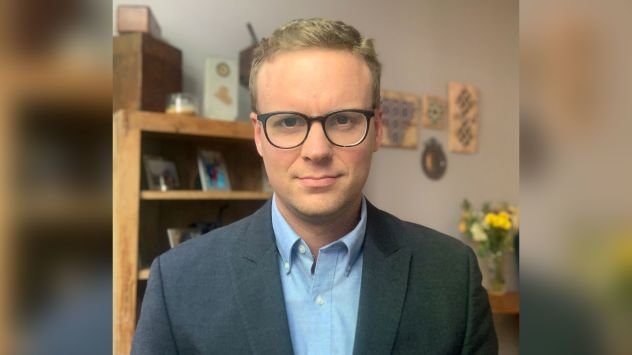
Editor’s note: Justin Lynch is a researcher and analyst in Washington, DC. He is co-author of the book “Sudan’s unfinished democracy.” The opinions expressed here are his own. read more opinion on CNN.
Four years ago, almost exactly, the people of Sudan were celebrating a revolution after overthrowing dictator Omar al-Bashir. Now the East African country faces the possibility of total collapse similar to the chaos we see today in Yemen or Libya.
On Saturday, rival military factions began fighting each other in the capital, Khartoum. The two sides fought for control of the country’s airports, bases and military complexes. The violence quickly spread to the streets and throughout the country.
In practice, some 45 million Sudanese are held hostage and cannot venture out of their homes for fear of dying in the crossfire. At least 180 people have perished in the fighting, including three humanitarian workers from the World Food Programme.
The conflict pits two bitter rivals and their powerful armed forces against one another. On one side are the Sudanese Armed Forces (SAF), led by General Abdel Fattah al-Burhan. On the other side are the Rapid Support Forces (RSF), a paramilitary group led by Mohamed Hamdan Dagalo, known as Hemeti.
There is no good side to this conflict. Both have been accused of a long litany of human rights violations.
How did Sudan go from abandoning a despotic government and creating a fledgling democracy a few years ago to being on the brink of state collapse?
On April 11, 2019, Sudan’s former dictator Bashir was overthrown. The cause of Bashir’s ouster was months of protests led by Sudan’s unions, which led to a military coup by the SAF and RSF. Both Burhan and Hemeti joined forces to remove their former boss.
It was a promising time because there was hope for democracy. I remember walking around the “sit-in,” a giant freedom carnival in the middle of Khartoum that protesters had blocked to demand change. It was electric.
But social movements like the Sudanese Professionals Association (SPA), the union behind the protest, often struggle to translate the momentum of their demonstrations into real political power.
The reason for this is, in part, structural. Social movements like the SPA are often based on grassroots activism. A dictator can arrest one or two leaders of an organization but not an entire country.
However, once a dictator is overthrown, these types of social movements often struggle to build the necessary leadership hierarchy during the political negotiations that take place. Like many other movements, Sudanese protesters were unable to translate mobilization into political power.
Civilian leaders entered into negotiations with the military over the country’s future shortly after Bashir’s fall in April 2019. The two sides were not evenly matched. Because of these leadership challenges, pro-democracy forces had difficulty negotiating with the disciplined military.
Any momentum democracy advocates had during the negotiations was crushed in June 2019, when RSF soldiers violently dispersed the sit-in. More than 100 people died.
After the June massacre and challenges to leadership, a transitional constitution was signed in August 2019, giving the SAF and RSF most power in Sudan. Burhan was the head of state and Hemeti occupied a high political position. Elections were promised in 2022, but few believed they would actually take place.
The transition period began in August 2019, and I interviewed Abdalla Hamdok, the civilian prime minister, several times for a book I co-wrote about Sudan’s revolution. The way the constitution was written meant that Hamdok had limited power as prime minister. Burhan was the head of state and wanted to preserve the powers of the Sudanese Armed Forces.
Hamdok often told me that revolutions come in cycles. Bashir’s ouster in 2019 was a high point of the revolution, and he saw it as his job to make as many reforms as possible before the low tide of the counterrevolution swept him away.
Hamdok discovered that the legacy of 30 years of dictatorship meant that Sudan’s political and economic models were in ruins. But Burhan and Hemeti blocked the major reforms that Hamdok wanted to make.
Outside Khartoum, violence increased. In parts of Sudan, such as Darfur, there was a new round of conflict between ethnic groups orchestrated by RSF troops. More than 430,000 people were displaced due to the conflict in Sudan, mainly in Darfur.
The soldiers did not hide the atrocities they committed against civilians. I remember having tea with an RSF-aligned soldier in his home in Darfur as he explained why he had recently participated in the burning of a village belonging to another ethnic group.
The soldier reasoned that a member of his tribe had died in an altercation, so RSF-aligned forces took revenge by burning down a village that had housed 30,000 people. At least 163 people died.
Tensions between the SAF and RSF increased. Burhan viewed Hemeti and his RSF forces as upstart usurpers from Darfur who were undisciplined. Hemeti, on the other hand, believed that the time had come for Darfur to lead Sudan.
Hamdok was about to start turning the economy around when Burhan and the SAF intervened. As we wrote in the book “Sudan’s Unfinished Democracy,” the potential success of a civilian government was too much for Burhan. In October 2021, Hamdok was removed in a military coup.
After the October 2021 coup, the United States and the United Nations pushed for a worse version of the transitional constitution in Sudan. They argued that it was the best way to bring democracy.
The idea was to restart the transition period, but I and many others argued that it was short-sighted and wouldn’t work. It is clear that returning to a Burhan-led government was not going to usher in democracy. If the plan ended in a coup the first time, why would it work the second time?
Some activists stopped associating with the United States and came to see the UN mission as an obstacle to democracy because of these policies. I felt sorry when I spoke to top American and foreign diplomats, who also understood that international politics in Sudan would not work. They saw the flaws but felt powerless to dissent and were forced to carry out decisions made at many levels above them.
What preceded this weekend’s outbreak of clashes was a controversial piece of international politics that attempted to unify the SAF and RSF. The idea was to form a single army, but neither Hemeti nor Burhan wanted to give up the power they had accumulated.
The plan to unify the military had not worked in similar contexts. It was a repeat of the 2013 and 2016 unification processes that took place in South Sudan with equally bloody results. Instead, the tenuous relationship between Burhan and Hemeti boiled over under the pressure.
It can be easy to look at the recent history of “revolutions” in countries like Myanmar, Tunisia, Egypt and Sudan and conclude that they eventually backfire. I don’t agree. I learned from Sudanese activists that a nation’s political fortunes are an active battle.
We can hope one day that dreams of democracy will come true in Sudan. But right now, the Sudanese people only hope to survive.
The lesson of Sudan is that a revolution is only the beginning of change, not the end.
For more tech updates, stay tuned to our blog.