
Markets were rocked on Wednesday by a major resurgence of hostilities between the United States and Iran. Oil prices soared and stocks fell as the conflict escalated again, prompting President Donald Trump to declare that the ceasefire that has been in effect since mid-April is “over.” West Texas Intermediate and Brent crude oil each rose
Markets were rocked on Wednesday by a major resurgence of hostilities between the United States and Iran.
Oil prices soared and stocks fell as the conflict escalated again, prompting President Donald Trump to declare that the ceasefire that has been in effect since mid-April is “over.”
West Texas Intermediate and Brent crude oil each rose about 5% to $73.91 and $77.97, respectively.
US stocks plummeted on the news and the Dow Jones fell more than 500 points. Bond prices also fell, pushing up yields. The 10-year US Treasury yield rose 4 basis points to 4.57%. The 30-year bond yield rose 2 basis points to 5.07%.
Here’s where the major indices stood shortly after the 9:30 a.m. opening bell:
• Nasdaq 100: 29,068.52, 0.36% less
Trump lashed out at Iranian authorities in comments at the NATO summit in Türkiye.
“I don’t want to deal with them anymore, they are scum,” he said. The American leader also called them “liars,” accusing Iranian officials of agreeing to a deal with their American counterparts and then telling the press that the two sides had not spoken.
Trump’s comments come after an escalation of the conflict in the region with the United States attacking dozens of Iranian targets in retaliation for the attacks on three oil tankers in the Strait of Hormuz.
“A rise in oil prices has raised concerns about persistent inflation, with the Middle East tinderbox re-emerging,” Susannah Streeter, chief investment strategist at Wealth Club, said in a morning note.
“There is a real sense of déjà vu, with the United States and Iran appearing to take significant steps toward peace, only for the illusion to be shattered once again,” Streeter added.
However, he emphasized that crude oil prices are still “nowhere near” the $100-plus levels they reached during earlier stages of the conflict, indicating “some expectation that tensions will eventually calm down again.”

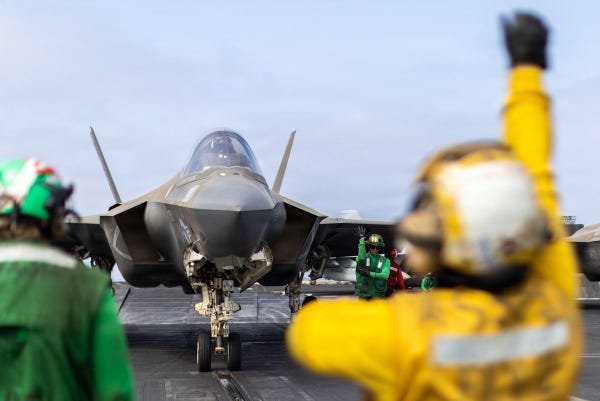
US forces carried out dozens of attacks against Iran. US Central Command
The United States and Iran signed a provisional agreement in mid-June to suspend the war for 60 days while the two sides negotiated a final agreement. Tehran had agreed to open the besieged Strait of Hormuz as part of the 12-point memorandum of understanding.
However, senior US officials warned at the time that a final agreement may not be reached. Later in June, Tehran attacked several commercial ships in the Strait and the United States carried out several rounds of attacks against Iran.
Clashes intensified on Tuesday when Iran attacked three ships in the Strait. The U.S. military said it responded by striking more than 80 targets in Iran, including air defense systems, coastal radar sites, command and control networks, anti-ship missile capabilities and dozens of Islamic Revolutionary Guard Corps small boats.
Iran retaliated by firing missiles and drones at Kuwait and Bahrain. World leaders warned Wednesday that the exchange of attacks will complicate peace talks between Tehran and Washington.
“I’ll talk to our negotiators, but they have to come back to me,” Trump said Wednesday.
“As far as I’m concerned, dealing with them is simply a waste of time.”