Heretic has acquired the worldwide sales rights to “Nobody’s Violence,” the 17th feature film by prolific Canadian auteur Denis Côté, which has its world premiere in the main competition at the Locarno Film Festival. In the director’s latest, he reunites with actress Larissa Corriveau, star of previous features such as “Social Hygiene,” “That Kind of
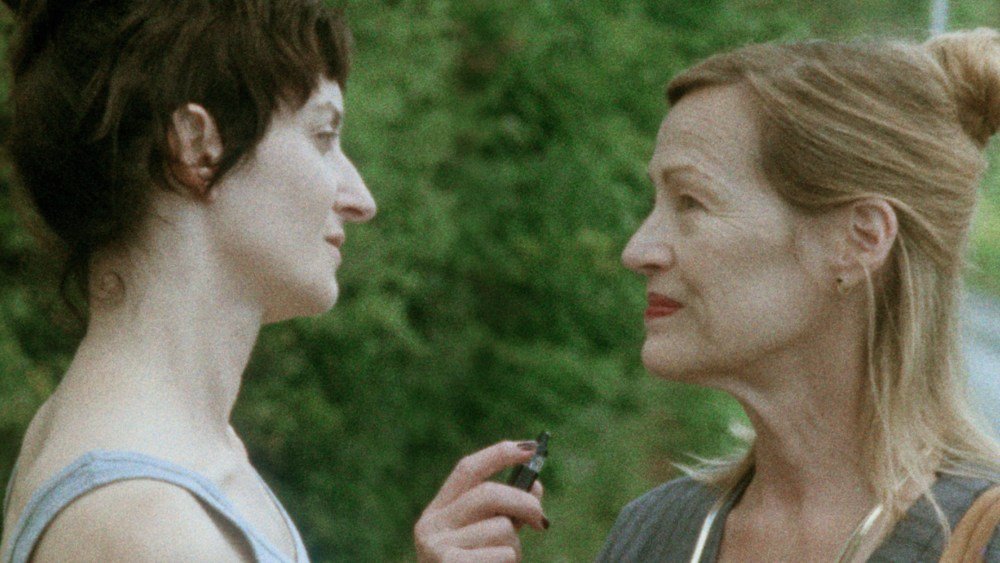
Heretic has acquired the worldwide sales rights to “Nobody’s Violence,” the 17th feature film by prolific Canadian auteur Denis Côté, which has its world premiere in the main competition at the Locarno Film Festival.
In the director’s latest, he reunites with actress Larissa Corriveau, star of previous features such as “Social Hygiene,” “That Kind of Summer” and the 2023 Locarno premiere “Mademoiselle Kenopsia.” Here she plays Mira, a lonely woman who works on behalf of a mysterious organization that offers assisted dying to desperate people.
With seemingly no plan in life or direction to guide her, Mira falls in love with Madeleine and Ludo, two free-spirited hedonists who live deep in the forest. There he begins to question his wandering life and reevaluate the dark pacts he forges with the desperate souls who seek his services.
“Nobody’s Violence” is written and directed by Côté and produced by Guillaume Vasseur and Gabrielle Tougas-Fréchette, with the participation of Sodec and Téléfilm Canada and the support of the Crédit d’Impôt Cinféma et Télévisio – Gestion Sodec of Quebec, the Crédits d’Impôts, Télé-Québec, H264 and Heretic from Canada. It stars Corriveau alongside Philippe Rebbot, Xavier Bergeron, Gabrielle Lazure and Pierrette Robitaille.
The film continues Côté’s long love affair with Locarno, beginning with his fifth feature, “Curling,” which won awards at the prestigious Swiss festival in 2010 before traveling to more than 80 festivals. It is the director’s first appearance there since receiving a life-saving kidney transplant in 2023, after spending more than a decade battling debilitating kidney disease.
talking to Variety Ahead of this year’s festival, Côté spoke about his love of low-budget independent film, why he’s still not sold on Hollywood, and how it feels to have a new lease on life, saying, “I never expected to experience such a miracle.”
You wrote this script during the last and most difficult year of your illness, a time of uncertainty when you lived in a gray area between life and death. How did that experience influence the creation of this film?
I don’t really want to make films about my personal life. I’m not very good with that, although that’s what cinemas are like today: people only talk about their coming of age or their traumas or their family. I’m very bad at that. Maybe I’m from a different generation, but it’s fun to make a movie that’s about yourself, but it’s not about yourself at all. Look, it’s created that way. She has no idea where she is going. My condition was something like [similar to hers]. It is a liminal space.
I made “Mademoiselle Kenopsia” when I was very sick and that film was about liminal spaces. This script is still about all these in-betweens that were stuck in my head. I didn’t know what dialysis meant. I didn’t know what a transplant was. What’s on the other side? Because for 10 or 15 years I didn’t know what it meant to be healthy. I was just living with all these toxins in my head and in my body, and I was just tired. I imagined the script that way. It’s something you can’t understand. It’s a movie about me, but it has nothing to do with my life.
How did your long illness affect you as a filmmaker?
When you have kidney failure, you can function. You are always tired. And there are some doctors who tell you that you are going towards something very dark, but you function. So I made all these films with my condition. It was difficult to travel, but it is not a very clear illness. The symptoms are not very clear. You know you’re in a dangerous place, but it’s very abstract. And that’s how I created this movie. I didn’t know where I was going. And suddenly someone offered me a kidney and it was a miracle.
Was the process of making “Nobody’s Violence” different from how you would normally approach a film? Did Mira come to you in a different way than other protagonists?
I knew he was talking about me, but I didn’t want it to be too explicit. Because of the way I work, I never see the end of the script. I just write and it’s blank pages, one after another. My films are more like objects and less like clear narratives and organized propositions. You just don’t know where this character is going.
For me, she is somewhere in between. I created this script thinking of me hoping to have a new life. That was the goal of the movie. The Floating Center: Look, no questions asked, just drift, drift, drift. I love that type of cinema. And then she has to do one thing. We don’t know what, but sometimes you need to do one thing to just jump into the void and then find a new life.
I love getting lost in front of my own creation. I don’t even know what this movie is. I don’t even know who that character is. Who are these people? I know it’s a little silly to say it like that, but I love it. You feel that the object you created can have a life of its own without you. You are totally lost in front of what you created. I love that feeling.
You’ve talked about how you miss narrative freedom in film and how you think your own work could benefit more from it. Because?
It’s getting harder and harder to make those movies. But some filmmakers are still so free and [I admire] what they are doing. The problem with our industry is that in the rich countries in which we live we have to ask the ministries of culture for money and we have to [explain] everything you are doing. You need to put it on paper. You have to fight for that freedom because they ask for very solid and tight scripts before giving you the money. You can’t just write something on a piece of paper and they will give you the money. In the end, I’m trying to shoot this movie with the most improvised moments I can find, this 16mm footage and this editing that’s from the ’70s, rough looking. Those are the parts where I find my freedom. I’m an experimental filmmaker and I never experiment enough. You have these teams of 35 people around you, you have tight schedules, so I’m always striving to find more freedom.
Have you ever seen yourself moving in a more commercial direction? Would you like to work in Hollywood?
Maybe if you had asked me 15 or 20 years ago, during “Curling” or “Vic and Flo,” those older movies. I had these conversations with Denis Villeneuve or Philippe Falardeau and they told me how it works. You stay home. You read scripts. And if you like it, you tell your agent and those movies happen. To me, it’s just a mysterious planet. But I was curious.
Today I would tell you that it’s over. I’m 52 years old, I’ve made 17 films. I have my kind of cinema, not “experimental”. But it’s very difficult to approach a 52-year-old man and try to bring him closer to the light or the more narrative aspects of things. I couldn’t write these scripts. It would be completely foreign to that industry. So today I don’t seek to be anything other than what I am now. I’m going to go further to make more and more free projects. I know where I want to be and I believe I am where I want to be, and it has nothing to do with anything narrative or commercial. I lost connection with that world.
It has been three years since his kidney transplant. How do you think the experience of being, you know, at death’s door influenced your approach not only to life, but also to film? Do you see cinema and your work differently now?
When I was sick, I don’t think I was conscious, but I was still fighting against time. It wasn’t very specific, but people told me: ‘You make one film a year and it’s not necessary.’ And then he would give answers like: “I don’t have children. I don’t have a house. I don’t have a car. I don’t have a driver’s license. I don’t have anything but movies in my life.” So I had the luxury of making a movie every year. Even when “Mademoiselle Kenopsia” was done, I had 15% kidney function left. I couldn’t even get up and we were making this stupid movie. It was an unnecessary project. So why was he doing that?
Since the transplant, [that feeling] It’s gone. It’s my old life and I can’t remember what it was like before. Maybe I’m not spiritual or philosophical enough about the whole thing, but I’m a very concrete person. What kind of new philosophy can I tell you about the whole experience? I’m still not sure. But since I’m healthy, it’s my second project, I just finished a new script and maybe I’ll be about to film a small movie soon. So it’s the same life. Cinema is a daily routine. You’re just shopping and making movies.
Check back often for more exciting news!