It is a summer of extreme heat in much of the world. I know what it feels like. In Uttar Pradesh, India, where I grew up, temperatures easily exceed 120 degrees in May and June. But few people have access to air conditioning. With a per capita income of around $1,000 a year, many people
It is a summer of extreme heat in much of the world.
I know what it feels like. In Uttar Pradesh, India, where I grew up, temperatures easily exceed 120 degrees in May and June. But few people have access to air conditioning. With a per capita income of around $1,000 a year, many people in this part of the country cannot afford to buy an air conditioning unit or pay the energy bills that come with its use.

So how do people stay calm?
People in India and other countries in the Global South have long discovered ways to deal with the terrible heat. I would like to share some tips that I learned from my elders in India. Some of the tips are just what you might think: drink plenty of fluids and stay out of the sun. Other strategies might surprise you.
I know each of these tips alone may seem trivial. But as a heat wave researcher, I can tell you that when combined, they can really help the body cool down. The key is to be aware of the power of heat and be prepared to prevent its adverse effects.
And remember, when you see any signs of heat stroke, such as fever, headache, nausea, confusion, or weakness, call an ambulance as soon as possible and seek medical help. Use ice packs while you wait for treatment in the hospital. Seriously, folks, don’t delay. Heat stroke can be fatal.
(Also: We want to hear from you! Scroll to the end of this story to find out how to share tips from your culture on coping with the heat.)
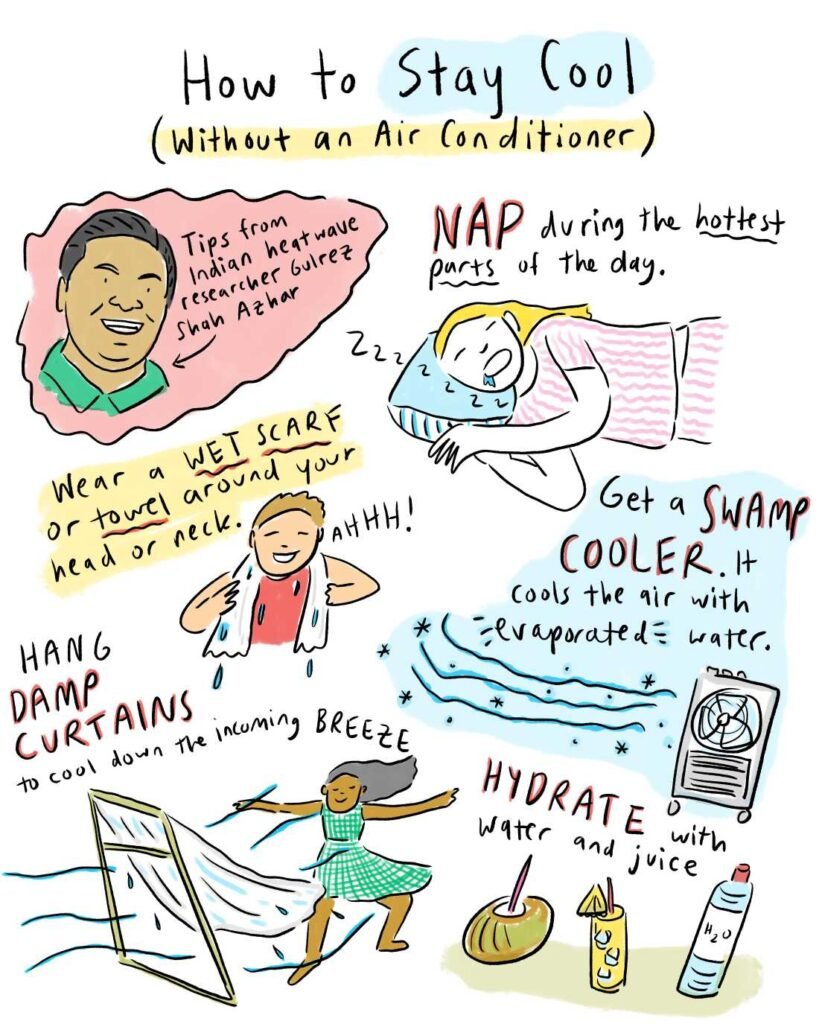
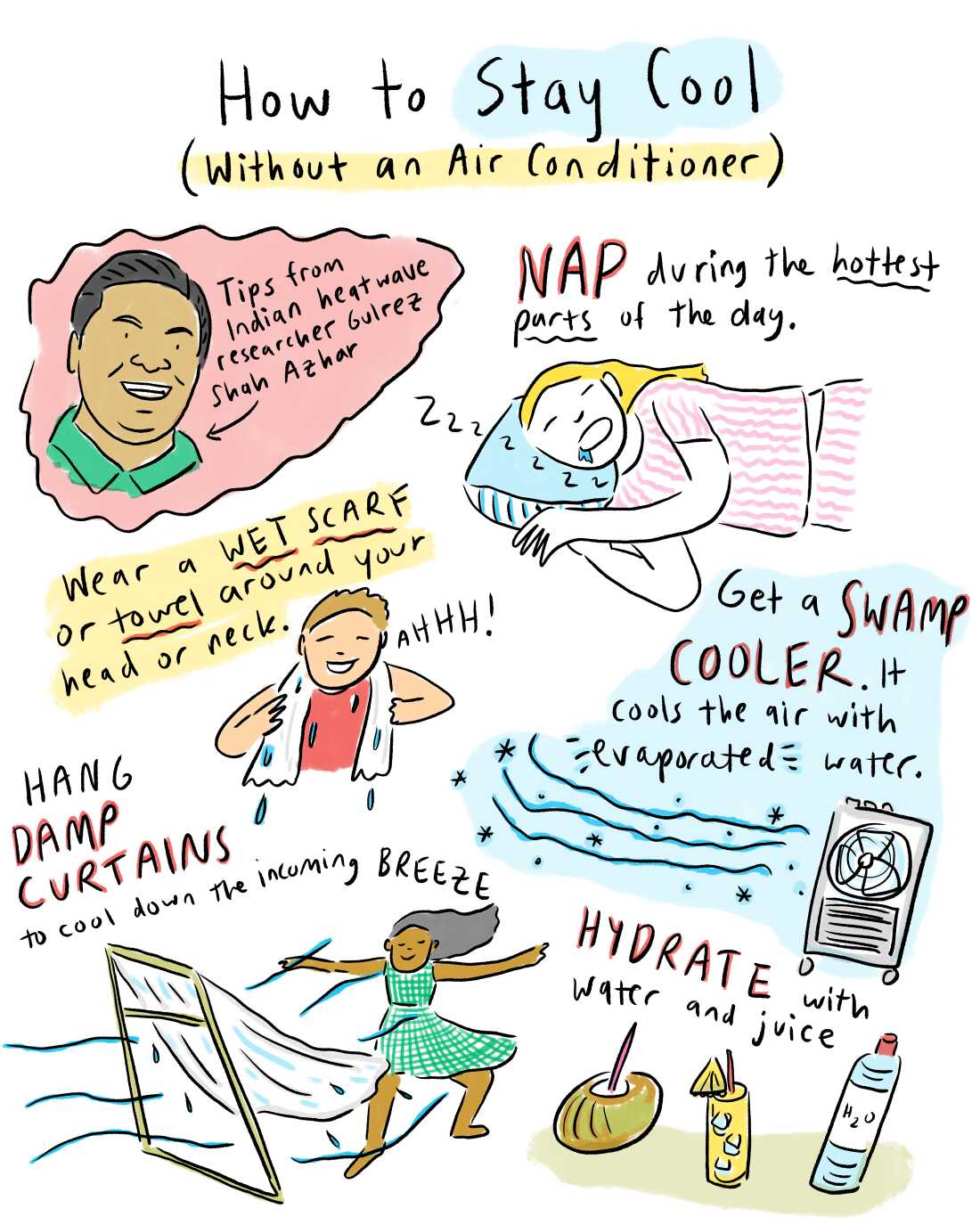
Drink plenty of fluids, it doesn’t have to be water!
One of the childhood lessons etched in my head was to always be aware of your hydration status. And drink water, even in small sips, as soon as you do any physical activity. Carrying a bottle of water when you go out is not only common sense but it saves lives.
Some of the popular drinks in India can help replenish electrolytes lost through sweat as well as keep the body hydrated.
We quench our thirst with fruity drinks like sugarcane juice, coconut water, and a spicy raw mango juice called aam ka pana. Made with boiled and mixed sour raw mangoes, aam ka pana Replenishes electrolytes lost through sweat. The pre-made mix is available from online sellers and ethnic supermarkets. Just add cold water and enjoy!
In India we also like refreshing milk-based drinks like lassia popular summer yogurt drink, and buttermilk.
And eat something!
Another lesson was never go out on an empty stomach: always eat something. A cucumber (which contains dissolved electrolytes) or a pineapple snack will do the trick. In India, we sprinkle black salt on a cake, which increases its restorative powers.
shower power
If you feel hot, take a cold shower or at least periodically splash water on your face and hands and wet your head with water; that will reduce body temperature.
You can also play with water. When I was a kid in India, I would have water balloon fights with the neighborhood kids. Or we would fill a tub with water and splash each other in the backyard.
Find a cool place to relax
Find the coolest parts of the building where you live and make them the place where you sleep or hang out. Because heat rises, the lower floors of a multi-story house are colder. The terraces are ventilated and shaded. During the day, block sunlight with heavy curtains. Turn on any fans you have. And don’t be afraid to move furniture in your quest for freshness. In Uttar Pradesh, we used to move our beds closer to the windows so that we could breathe the breeze while we slept.
If the indoor environment becomes incredibly stuffy, go outdoors and lie down in a hammock. The air created by swinging helps cool the body. When I was a kid, I remember mango orchards were the best places to hang out. The dense foliage provided maximum shade coverage. The shadow is your friend!
Get inspired by architecture
Among many architectural innovations is a building design called jali (which simply means a network in Hindi and Urdu). Let’s think about the Taj Mahal. It’s basically a way to turn a stone wall into a lattice screen by carving geometric patterns with a series of small openings instead of a solid wall. This stone screen blocks direct sunlight and also causes air to speed up as it passes through the holes.
Now, it is true that there is no way you can rebuild your house in the style of the Taj Mahal.
But you can be inspired by another architectural tactic. Some buildings have a small body of water on the outside, such as the Hawa Mahal (the Wind Palace) in Jaipur. The wind enters the palace through the jali holes in the thousand windows and collects humidity from the body of water in the patio. The humid wind then blows towards the thousand windows of the palace and cools the air inside.
A clever trick to bring in fresh, moist air is to hang a grass-woven curtain on the door. Sprayed with water, it turns hot air into a cool breeze. A special fragrant herb called khus It is used for this purpose in India. I have also seen curtains made of thin bamboo, which offer protection from direct sunlight, with a thin damp cloth added inside for cooling. Or a damp, heavy cloth curtain will do.
The cooler swamp effect
The ubiquitous swamp cooler works best in low humidity environments. Also known as an evaporative cooler, this electrical device passes air in a room through water-saturated pads, which cool the air and then return it to the room. These devices are cheaper than air conditioners and consume less energy. You can even make one yourself.
Wear airy, light-colored clothing.
The Rabari people (a nomadic tribe of western India) and many other tribal communities use small mirrors on their clothing to reflect sunlight.
In addition to her use of cotton and linen fabrics for her clothing (both materials are cooling because they have large pores in their woven threads that allow air to circulate), her choice of color in her clothing is ingenious. They cleverly take advantage of the fact that black not only absorbs heat faster than white, but also gives it off much faster than white. Due to the nature of their work, women are frequently in and out of their tents, while men who graze cattle remain outside for longer periods. So, to stay cool, it makes sense for women to wear darker colors (these shades cool down quickly as soon as women go indoors) and men to wear lighter colors (which warm up more slowly than darker colors during extended stays outdoors).
Cover your head or neck
In summers, covering your head is an ancient practice. If they were the nobles who wore a pagdee (a turban) or common people wearing a wet rectangular piece of traditional cotton cloth called gacha for men and dupatta for women. A variation of a wet white towel, it is almost universal in the countryside and is even seen in cities.
Or take a light towel, called gamchha in Hindi, moisten it and wear it around your neck or on your head like a scarf. This wet clothing is omnipresent among men in the interior and small towns.
Even our former British colonial masters protected themselves from the sun with pith helmets, made of an extremely light, dry, milky-white, spongy plant material that could be pressed into various shapes.
Avoid the midday sun
During the hottest parts of the day, try not to burn up energy or exhaust yourself by going out, exercising, or standing outside, because the scorching sunlight and hot air will make you hotter. Instead, do what I did in Uttar Pradesh: relax at home or take an afternoon nap. if you have to work and have a flexible schedule, try to do your tasks in the cooler hours of the day. Farmers in my state, for example, work hard early in the morning and late at night. And the markets close on hot afternoons but stay open late into the night.
Embrace the shadow
Whether you are working outdoors or walking down the street, stay in the shade of trees. The actual air temperature is the same as the sun, but your skin will not absorb the sun’s rays and cause your body to heat up. Thanks to our ancestors for planting trees for us! And we return the favor by planting trees now, even when we know we won’t enjoy that shade in our lifetime. Our children will do it. And that is what makes us a civilization.
Your turn: share tips on how to deal with the heat
Did you grow up without air conditioning in a hot place? How did you handle the heat? Email us at globalhealth@npr.org with the subject line “Heat Tricks” and we may publish your story on NPR.org. Please include your name and location. Submissions close on Monday, July 20.
Dr. Gulrez Shah Azhar is a Seattle-based Aspen New Voices Fellow researching the health impacts of heat. Previously, he was a postdoctoral fellow at the University of Washington, a policy researcher at the RAND Corp., and an assistant professor at the Indian Institute of Public Health.
{For more tech updates, stay tuned to our blog.|Keep following us for the latest insights.|Check back often for more exciting news!}