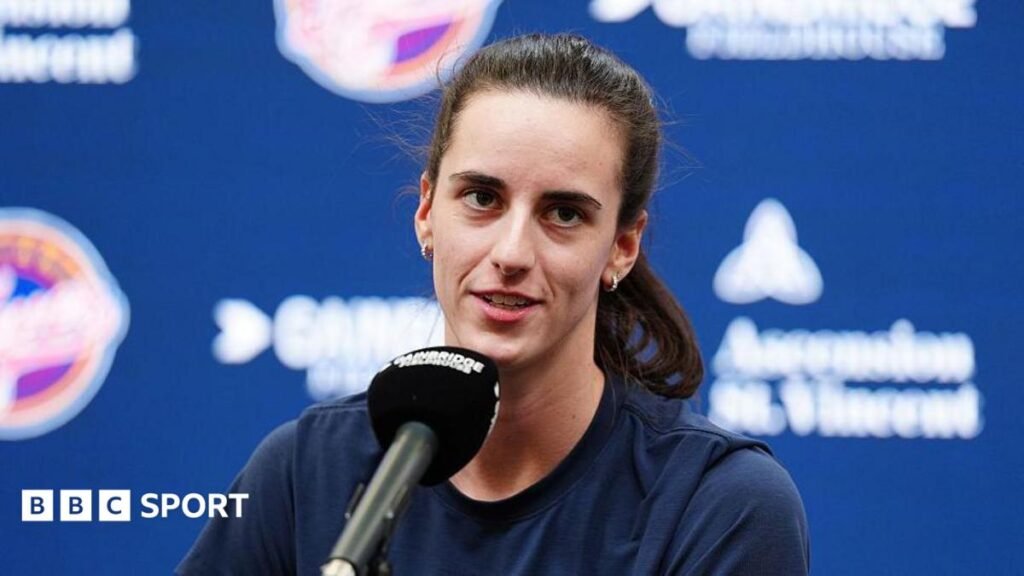
Indiana Fever star Caitlin Clark has become a “political football” in the United States and the debate over fouls against the player “is not primarily about officiating,” says NBA commissioner Adam Silver. Clark, 24, has become one of the WNBA’s biggest attractions since being drafted by the Fever in 2024. As a result, a lot
Indiana Fever star Caitlin Clark has become a “political football” in the United States and the debate over fouls against the player “is not primarily about officiating,” says NBA commissioner Adam Silver.
Clark, 24, has become one of the WNBA’s biggest attractions since being drafted by the Fever in 2024.
As a result, a lot of attention has been paid to how opposing teams treat Clark and the tactics they employ to try to limit his impact during games.
Last month, Phoenix Mercury forward Alyssa Thomas received a retrospective one-game suspension and a $1,000 (£743) fine for appearing to knee Clark in the groin and shove her fist into his neck during a fight for possession.
This led Fever coach Stephanie White to call the officiating of games involving Clark in the WNBA “atrocious” and “completely disrespectful,” while Thomas said the incident with the 2024 Rookie of the Year led to her receiving death threats and racist abuse.
A group of 11 Republican lawmakers later sent a letter to WNBA Commissioner Cathy Engelbert, calling on the league to take “responsibility” and expressing concern that “the attacks on Clark may be racially motivated.”
Right-wing political commentators have also weighed in, suggesting that Clark’s treatment is rooted in racism and jealousy.
Speaking as part of a panel at an event in New York, Silver said debates surrounding Clark had focused on broader political and cultural issues in the United States rather than focusing solely on basketball.
“That particular incident was not about whether a foul should have been called at the time of the game or whether it was ultimately a flagrant review foul,” Silver said.
“I’ve gotten to know Caitlin very well. She’s an incredible player and also an incredible person.
“And she wants to focus on being the best player she can be. And she’s become kind of a political footballer in this country, and I think it’s incredibly unfair to her.”
Silver declined to comment when asked if reports that he had pressured Engelbert to suspend Thomas last month were true.
But while the 64-year-old said there is “no question” that officiating in the WNBA needs to improve, he doubled down on his belief that the intense focus on the incidents involving Clark had become a game of “political ping-pong.”
“She’s a young woman trying to improve her game and focus on being the best player she can be,” Silver added.
“I don’t even think it’s fair to her that this became a separate story about whether a foul should have been called at the time or whether a flagrant foul should have been called after the fact.”
Engelbert was also a panelist at the New York event and said, “The vitriol and everything our players receive is unacceptable.”
Coach White previously criticized the tone of the debate, highlighting a rise in “toxicity, racism and homophobia” in the league, especially in online comments.
And speaking earlier this month, Clark criticized “the bullying, the hate” surrounding the debate, adding: “None of that is okay. That goes for the rival teams we play against, that goes for my teammates, that goes for my coaches.”
His own frustration boiled over this week when he yelled at a referee and used an insult after calls went against his team.
Check back often for more exciting news!