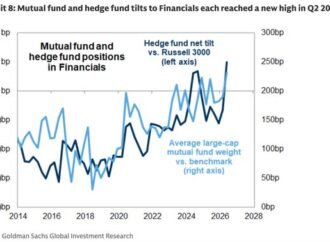
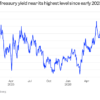
Investors are split on the AI trade, but they’ve converging on one sector of the stock market in particular in recent months: financials. Hedge funds and mutual funds have both poured money into the sector, even as their investing moves diverge when it comes to high-flying areas like AI. In fact, both groups’ buying of
“Big Short” investor Michael Burry has swapped his Alibaba stake for a rival and said the Chinese tech giant’s latest fundraising has left him unwilling to buy back in. On Sunday, Burry wrote in a Substack post that he recently moved his entire Alibaba position into JD.com, increasing his stake in the rival Chinese e-commerce
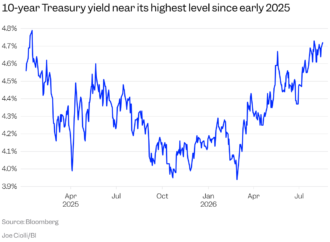
The word “Goldilocks” is meme-ing out in US markets right now. It’s a reference to how recent economic data has been neither too cold nor too hot. The labor market and consumer spending have been cooling lately, while inflation has remained relatively mild. For the purposes of keeping interest rates on hold, the recent figures
Leopold Aschenbrenner, the Wall Street wunderkind whose hedge fund imploded in late July, placed huge bets on two AI stocks in the lead-up to the disaster. Aschenbrenner’s firm, Situational Awareness, owned a $5.7 billion stake in SanDisk and a $5.6 billion stake in Micron at the end of June, its quarterly portfolio update revealed on
SpaceX stock has stumbled out of the gate since its IPO in June, but one veteran fund manager thinks there’s more trouble ahead for Elon Musk’s rocket company. George Noble, formerly the manager of Fidelity Overseas Fund, was bearish on the stock as it headed for its IPO, and his tune hasn’t changed since the
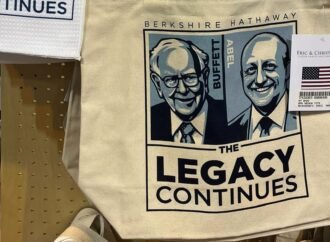
Berkshire Hathaway sharply increased its Alphabet stake during its biggest quarter for stock buying in years. Greg Abel, who took over from Warren Buffett as CEO at the turn of the year, oversaw an 83% increase in Berkshire’s Alphabet holdings to about 106 million shares, worth nearly $38 billion at the end of June. Berkshire