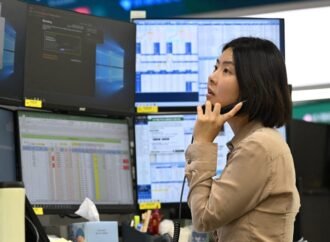
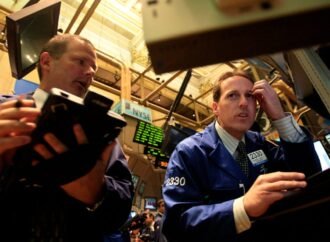
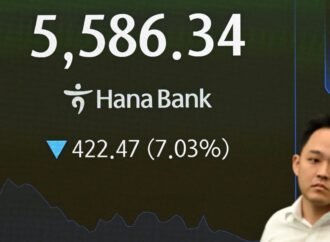
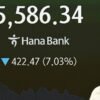
South Korea’s AI trade roared back Wednesday, as stocks staged a dramatic rebound from Tuesday’s rout and a disastrous AI IPO reversed course. The benchmark Kospi index surged as much as 5%, triggering a temporary curb on program buying as investors piled back into heavyweight chipmakers. Samsung Electronics and SK Hynix jumped as much as
It may not be long before the whole US stock market has a Situational Awareness moment. At least, that’s the worst-case scenario being mulled by some analysts on Wall Street, who have increasingly turned their attention to one eye-popping statistic in the market: Margin debt held by investors has swelled to records and grown at
South Korea’s stock market is bearing the brunt of a global AI selloff as investors question whether massive spending on the technology will pay off and worry that persistently high interest rates will make the boom more expensive to sustain. On Thursday, the benchmark Kospi index plunged 8%, while Samsung Electronics and memory-chip rival SK
It may be time to rethink the AI trade as two increasingly distinct AI ecosystems emerge around the US and China, according to a new analysis from Goldman Sachs. “The narrative of a global AI duopoly is gaining traction among investors,” wrote strategists led by Kinger Lau in a note published on Sunday. One ecosystem
There’s a brutal truth lurking beneath the surface of the stock market’s four-year bull run. Since the October 12, 2022 bottom, endless enthusiasm for the AI trade has defined the stock market. It’s also posed uncomfortable questions about just how sustainable a bull rally can be if it’s only being powered by a handful of
Bill Ackman thinks tighter monetary policy could prove to be a mistake in the era of AI. The billionaire investor said late Thursday that the Federal Reserve’s decision to hike interest rates last week was the wrong move, because AI may be rewriting the rules that guide the central bank’s response to inflation. Ackman wrote