The World Cricketers’ Association says it is “concerned” about how the 2027 men’s 50-over World Cup will be structured. It warned that the format, which eliminates two of the three lowest-ranked teams early, raises “questions about transparency, consultation and the game’s long-term commitment to global growth.” The main part of the tournament, which starts with
The World Cricketers’ Association says it is “concerned” about how the 2027 men’s 50-over World Cup will be structured.
It warned that the format, which eliminates two of the three lowest-ranked teams early, raises “questions about transparency, consultation and the game’s long-term commitment to global growth.”
The main part of the tournament, which starts with 14 teams, will feature only 12 teams.
The three lowest-ranked teams will compete in a first round in which only one will advance to join the 11 remaining teams in the group stage.
The remainder of the tournament will run as two groups of six, with the top three from each and the next highest-ranked team advancing to a ‘super seven’ round-robin stage, replacing the ‘super six’. The four best teams from the ‘super seven’ advance to the semifinals.
The WCA said it is “concerned that the revised format does not meet the opportunity presented by expansion to 14 teams.”
He added: “For some countries, qualification will no longer guarantee a true World Cup campaign or the opportunity to compete against established nations, reducing potential sporting, development and commercial benefits for some players and emerging cricket markets.”
The changes will be in effect for the 2027 edition, which will be co-hosted by South Africa, Namibia and Zimbabwe.
The 2023 World Cup had only 10 teams. The last time it was a 14-team tournament was in 2015, when teams were divided into two groups of seven, with six matches guaranteed for each team.
The ICC had said the new format “creates greater context, competitiveness and consequences during the event.”
He was asked for comment following criticism from the WCA, whose chief executive Tom Moffat said: “It is difficult to reconcile the game’s stated ambition to grow cricket globally with decisions that reduce significant opportunities at pinnacle events for some of the countries that would benefit most from genuine expansion.”
Ireland, Scotland and the Netherlands are currently ranked 12th, 13th and 14th in the men’s ODI rankings.
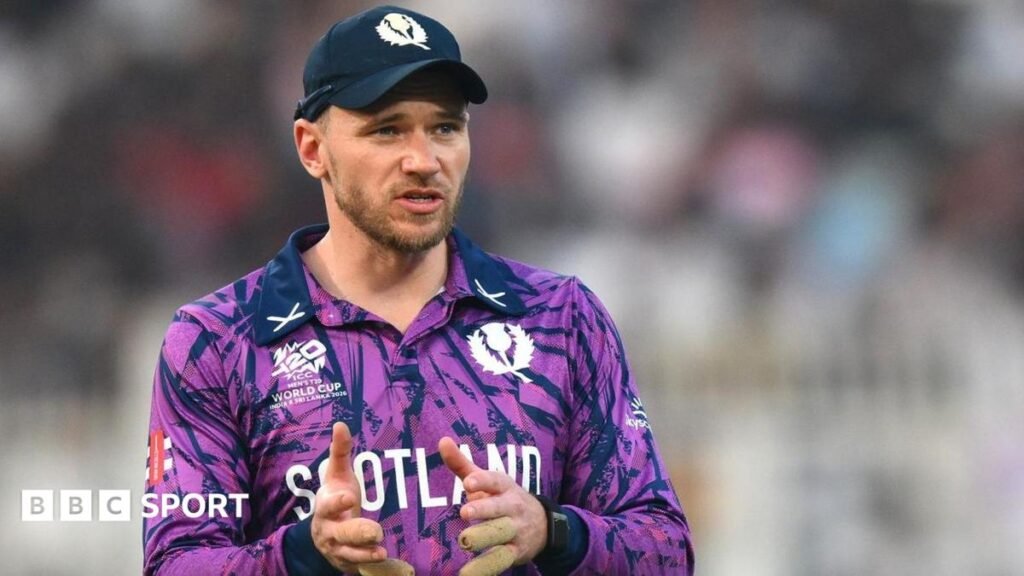
Scotland captain Richie Berrington said: “Players are not expected to make all the decisions, but we must be consulted meaningfully on decisions that have a significant impact on the game and players’ careers.
“Better decisions are made when different perspectives are brought to the table, and we’re urging the game to start doing that right.”
Keep following us for the latest insights.