
Pakistan’s Gateway to Global News, Tech Updates, and Emerging AI Trends.
Ask Us Anything
- Home
- Ask Us Anything

Why do dead bodies move and make noise?0
- Ask Us Anything, Biology, Environment, SCIENCE, Science / Health, Science Mission Directorate, scientists, Space, Space Communications & Navigation Program, Space Launch System (SLS), Space Telescope, space-x-ipo, SpaceX
- October 25, 2026
Death is supposed to be the end of the road. The lights are out, the curtain has fallen. No breathing, no heartbeat—end of discussion, right? Not quite. In some cases, corpses twitch, flex, shift, change positions, or even make noises that could easily be mistaken for messages from beyond the grave. But before you call
READ MORESome people really are werewolves—at least, in their minds0
- Ask Us Anything, HEALTH, Medicine, SCIENCE, Science / Health, Science Mission Directorate, scientists, Space, Space Communications & Navigation Program, Space Launch System (SLS), Space Telescope, space-x-ipo, SpaceX
- October 22, 2026
Dr. Nick Medford’s patient had plenty of reasons to be terrified of a simple blood test. His body had shrunk down to a fraction of its size, or so he believed, and the physicians looming over him were enormous. Then there was the needle about to pierce his vein: to the patient’s eye, it was
READ MOREReal-life vampire birds hunt and drink blood in remote Ecuador0
- Animals, Ask Us Anything, Biology, Birds, Environment, Evolution, SCIENCE, Science / Health, Science Mission Directorate, scientists, Space, Space Communications & Navigation Program, Space Launch System (SLS), Space Telescope, space-x-ipo, SpaceX, Wildlife
- October 18, 2026
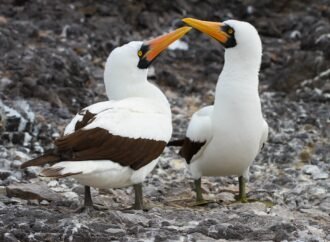
When zoology professor Daniel Baldassarre traveled to the remote Galápagos Islands of Wolf and Darwin with two other researchers, getting there proved quite a challenge. With no beaches to land a boat on, they had to approach the islands’ cliffs in a small dinghy and wait for a lull in the waves before jumping onto
READ MORE


In 1960, scientists predicted the world would end on November 13, 20260
- Ask Us Anything, Biology, Environment, SCIENCE, Science / Health, Science Mission Directorate, scientists, Space, Space Communications & Navigation Program, Space Launch System (SLS), Space Telescope, space-x-ipo, SpaceX
- October 17, 2026
In exactly a month, on November 13, 2026, the world will end. Fittingly, our impending apocalypse falls on Friday the 13th. At least, that was the prediction made by University of Illinois physicist Heinz von Foerster in a highly cited Science paper published in 1960. Though talks of supposed doomsday have renewed in recent months
READ MOREHumans were never built for tails. Here’s why.0
- Ask Us Anything, Biology, Evolution, SCIENCE, Science / Health, Science Mission Directorate, scientists, Space, Space Communications & Navigation Program, Space Launch System (SLS), Space Telescope, space-x-ipo, SpaceX
- October 17, 2026
Many of the cutest animals on Earth have one appendage in common. Whether you’re thinking of an adorable raccoon, a kitten, or a puppy, it’s hard to imagine them without their fluffy tail. In fact, the overwhelming majority of animals have tails. Only a select few, like us humans, don’t have an external tail. But
READ MORENorth America’s oldest human footprints tell a tale of ice age chaos0
- Ask Us Anything, Climate change, Environment, SCIENCE, Science / Health, Science Mission Directorate, scientists, Space, Space Communications & Navigation Program, Space Launch System (SLS), Space Telescope, space-x-ipo, SpaceX
- October 16, 2026
An extensive new analysis further confirms the oldest known human footprints in North America date back to the last ice age (about 23,500–21,700 years). To pinpoint their origins, researchers at the University of Arizona relied on cutting-edge methods at the United States Geological Survey (USGS) Radiocarbon Laboratory to examine hundreds of thousands of prehistoric pollen
READ MORE



Latest Posts




Top Authors
-
matechpros@gmail.com
ADMINISTRATOR
-
OWS
ADMINISTRATOR

