Dr. Nick Medford’s patient had plenty of reasons to be terrified of a simple blood test. His body had shrunk down to a fraction of its size, or so he believed, and the physicians looming over him were enormous. Then there was the needle about to pierce his vein: to the patient’s eye, it was
Dr. Nick Medford’s patient had plenty of reasons to be terrified of a simple blood test.
His body had shrunk down to a fraction of its size, or so he believed, and the physicians looming over him were enormous. Then there was the needle about to pierce his vein: to the patient’s eye, it was larger than his entire arm.
It might sound like something out of Alice in Wonderland. But this patient’s story belonged to a different genre entirely. Horror, namely. As far as the patient was concerned, there was no point in taking his blood. It was no longer human. Neither was he.
Medford’s patient was suffering from clinical lycanthropy, defined as the delusional belief that one is turning into a werewolf. And unlike the flesh-tearing beasts of folklore, who terrorize the unsuspecting by the light of the full moon, patients like Medford’s are often the ones haunted, trapped inside a body-horror nightmare.
According to Medford, his patient knew something was wrong, but was as confused about his condition as anyone. “Not only did he think he was a werewolf, but he would also talk about things like wanting to realign the cosmos and wanting to kill God,” says Medford, a neuropsychiatrist with the South London and Maudsley NHS Foundation Trust.
“And then you would say, ‘Do you believe in God? Are you religious?’ And he’d say, ‘No.’ His ideas didn’t really make sense even to him, which was a part of his distress.”
So, what causes this rare condition? And why does it take the form of one of Halloween’s classic monsters?
Rarer than movie werewolves
If you’ve never heard of clinical lycanthropy before, there’s a good reason: Hollywood’s werewolves easily outnumber the real-life cases of this condition. Only about 25 instances have been reported in the medical literature.
Because there are so few cases, Medford says it is difficult to identify a common cause or predictable disease course. However, he says that typically it is seen in patients already experiencing mental illness.
“In around 40 percent of published cases, it occurs in the context of schizophrenia,” Medford says. “There are also reports of it occurring in the context of bipolar disorder or psychotic depression. So, in the context of severe mental illness, basically.”
Medford’s own patient had been diagnosed with Huntington’s disease, an inherited, fatal brain disease that causes psychiatric symptoms and uncontrolled body movements. The case, which Medford documented in a 2023 report, was the only published instance of clinical lycanthropy associated with Huntington’s. Although Medford says it is uncertain what then led his patient to believe he was a werewolf, he says the physical changes associated with Huntington’s may have fed this idea.
“There may be some change in the person’s body or in their perception or their experience of their body,” Medford says. “That might be, if you like, the seed from which this idea can develop.”
This seems possible in the case of Medford’s patient, who exhibited involuntary writhing movements and other strange physical sensations.
“He did not seem to be aware that he was having these abnormal movements, but he was aware of some weird sensations,” he says. “He described freezing sensations and electric-shock-like sensations. He had some sense that something strange was happening in his body.”
Why wolves?
But physical changes alone don’t explain why the patient imagined he was turning into a werewolf. Which raises the question: Why do these delusions so often focus on lupine metamorphoses?
They don’t always, Medford notes. There’s a broader term—therianthropy—for the delusion that one has turned into any animal. But most of these cases involve canines, he acknowledges.
“Most of them are wolves or dogs or something of that type,” he says. “And then there’s a whole range of other strange things. There’s a report of someone who thought they’d turned into a bee.” That would make for an underwhelming horror movie, to be sure.
So, is it a coincidence that many of these patients report delusions ripped straight from a creature feature?
Probably not. In their case report, Medford and his co-author, neuroscientist Natasha Sigala, note that “delusions are influenced by culture,” and few cultural images of human/animal shapeshifting are as deeply embedded as the werewolf.
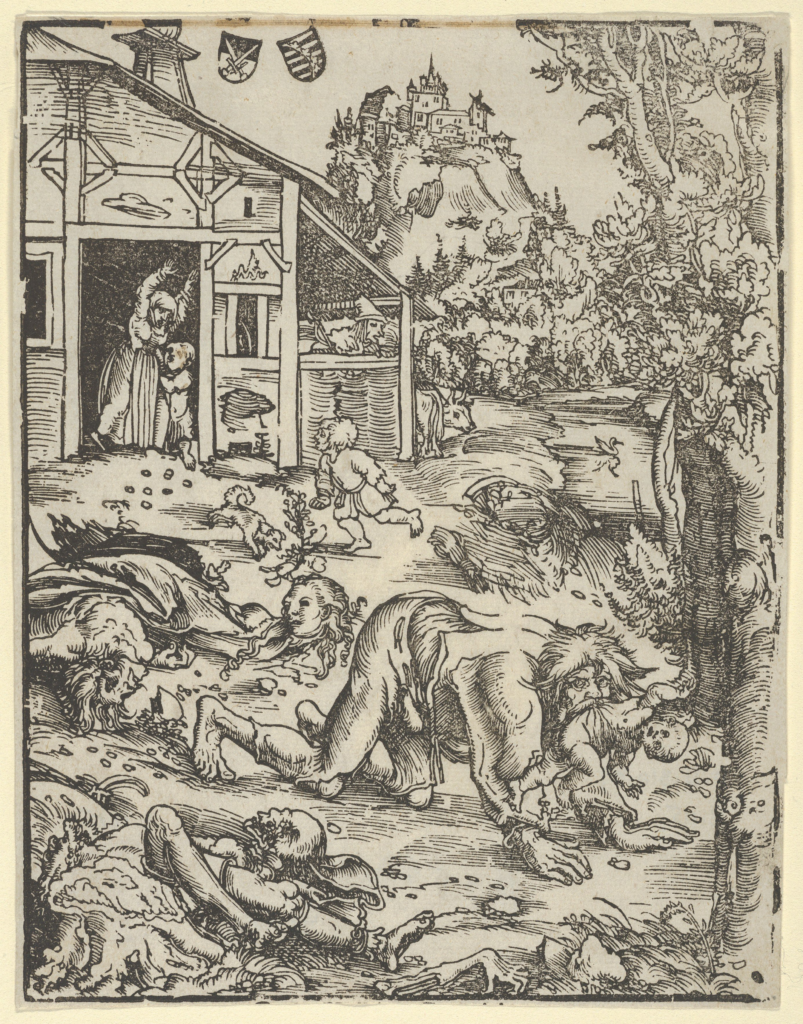
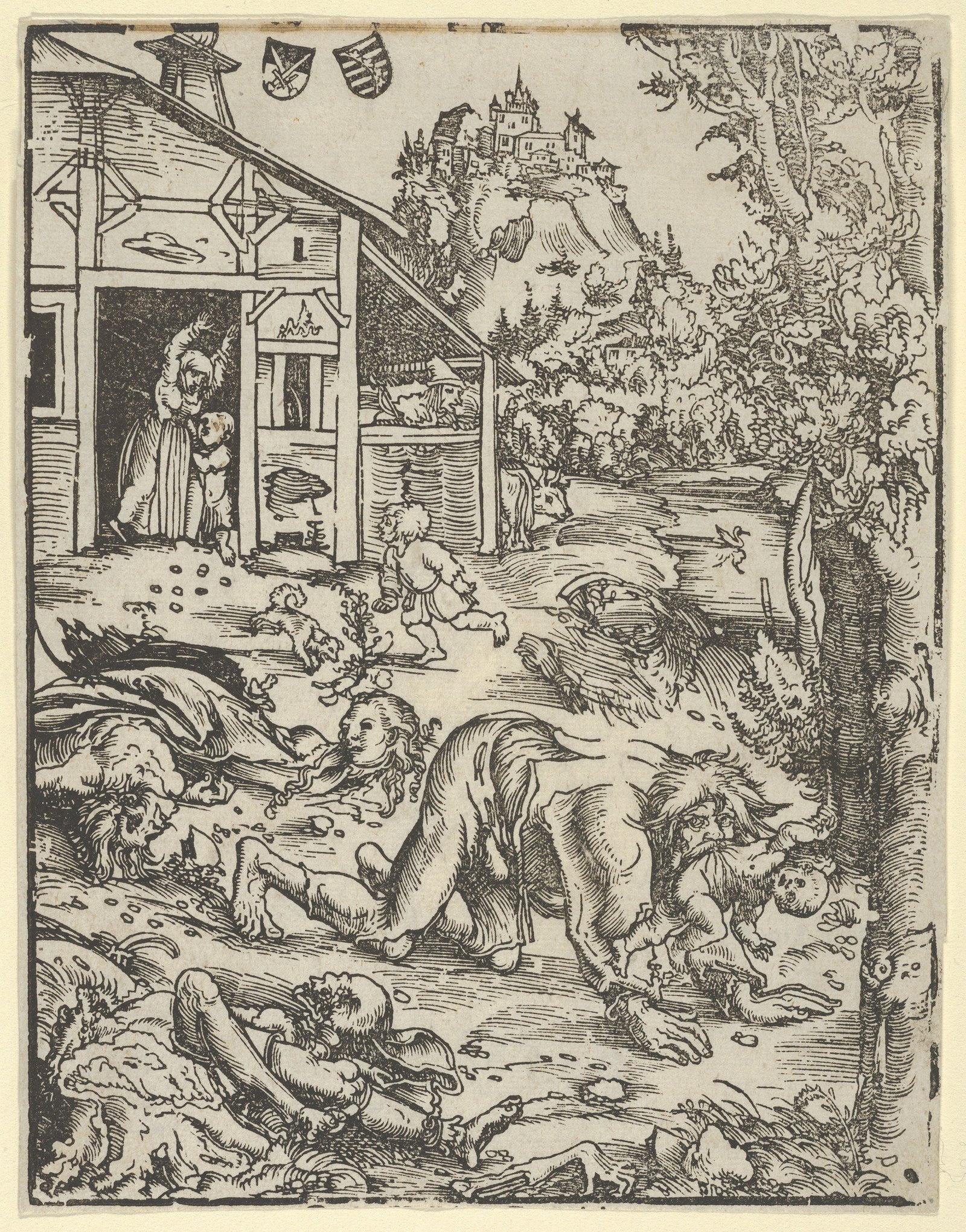
“The werewolf folklore and werewolf mythology goes right back to antiquity,” Medford says. “And it’s kind of interesting that the werewolf or something like it seems to pop up in a lot of different cultures and different times and places.”
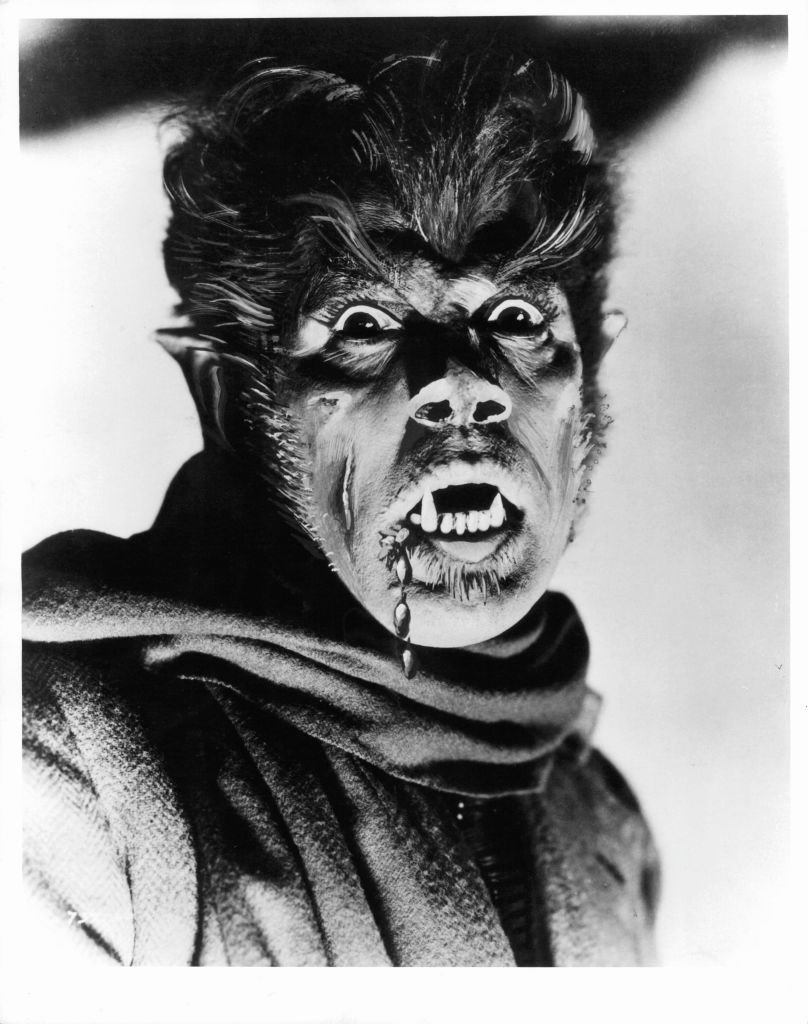
Why is the werewolf legend so potent and enduring? Medford suspects it may tap into something primal.
“The werewolf symbolizes something about the human condition,” he says. “We live in civilized societies, and we adhere to social norms, but there’s a sort of animal part of us that perhaps chafes against that.”
That internal conflict may explain some of the patient’s other fixations. He described urges to strangle his wife and to defecate in a church. Medford notes that Huntington’s may also have impaired his sense of disgust, which can happen as the disease progresses.
Yet the patient also fought against his own impulses. At times, he lunged at staff, only to pull back and apologize.
“You could see the conflict in that moment,” Medford says. In that sense, the patient wasn’t so far from the werewolves of fiction. Like a movie werewolf beholding his mirror image in horror, he looked at his reflection and saw himself changing in ways he couldn’t control.
The werewolf fades
For Medford’s patient, that dreaded blood test ultimately was part of a turning point in his treatment. The bloodwork allowed Medford to keep the patient on clozapine, a potent antipsychotic. As Medford increased the dose, the patient’s delusional beliefs dwindled, and although the underlying Huntington’s disease remained, the werewolf soon was gone.
Medford hopes patients like his will be treated with compassion rather than sensationalism. “These cases, they’re rare, but when they do happen, they tend to arise in the context of serious psychiatric or neurological disturbance,” Medford says. “They are people meriting sympathy and treatment, rather than romancing about it.”
In Ask Us Anything, Popular Science answers your most outlandish, mind-burning questions, from the everyday things you’ve always wondered to the bizarre things you never thought to ask. Have something you’ve always wanted to know? Ask us.
Related ‘Ask Us Anything’ Stories

2026 Popular Science Home of the Future Awards
Check back often for more exciting news!