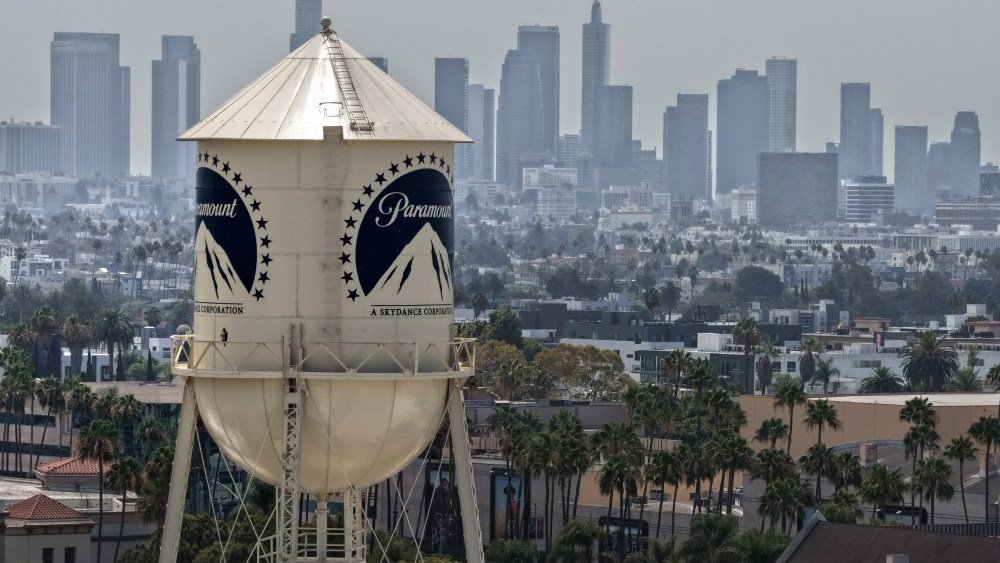
A judge on Friday heard arguments on a state coalition’s request for a restraining order to stop the Paramount-Warner Bros. Discovery merger, and said she would issue a ruling next Wednesday. Judge Araceli Martínez-Olguín suggested at one point that Paramount had admitted it would suffer no harm if a temporary restraining order was granted, which
A judge on Friday heard arguments on a state coalition’s request for a restraining order to stop the Paramount-Warner Bros. Discovery merger, and said she would issue a ruling next Wednesday.
Judge Araceli Martínez-Olguín suggested at one point that Paramount had admitted it would suffer no harm if a temporary restraining order was granted, which would suspend the merger for up to 28 days.
Led by California, 12 states are seeking to block the merger on the grounds that it will harm competition in the movie and basic cable markets. Paramount’s lead lawyer, Jeffrey Kessler, argued that the states had not presented the necessary arguments to show that the agreement is anticompetitive. He argued that the success of recent releases such as Apple’s “F1” and Amazon MGM Studios’ “Project Hail Mary” shows that the theatrical business is open to new participants.
“In this industry, talent is completely mobile,” Kessler argued. “So, actors, writers, directors, they go from studio to studio.”
James Weingarten, defending the states, pointed out that “F1” was actually distributed by Warner Bros., emphasizing the stable role of current players in a mature market.
“That’s the power of the big five companies,” Weingarten argued. “Apple is not in the movie business. It’s in the cell phone and laptop business.”
Martínez-Olguín seemed inclined to admit that market concentration issues are sufficiently in dispute to at least grant a restraining order. Citing the evidence presented by Paramount, he asked Kessler: “Why doesn’t that reinforce the conclusion that there are serious doubts about the legality of the merger?”
He also focused on the difficulty of reversing the merger if it is allowed to proceed and was later ruled illegal, and asked the parties to address the challenge of “cracking the egg.”
Kessler made it clear that the company is more focused on getting a ruling on a preliminary injunction in early September. He offered to stipulate that the deal would not close in the next 30 days if the parties agree to a hearing on the court motion sometime in late August.
Starting Sept. 30, Paramount will have to pay investors $7 million a day if the deal hasn’t closed, marking a key deadline in the case. Paramount previously promised not to close the transaction before July 22.
Check back often for more exciting news!