
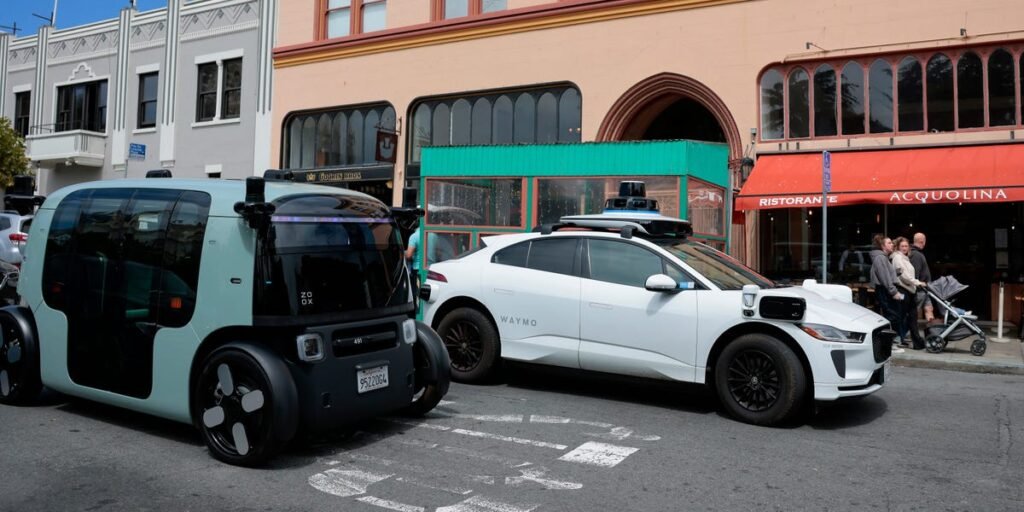
The mayor of San Francisco is tired of his city serving as a test track for autonomous vehicles. In a letter sent to California transportation regulators on Wednesday, Daniel Lurie called for new state standards regulating how autonomous vehicles respond during major disruptions, saying stricter measures will strengthen the AV industry. “California’s challenge now is
The mayor of San Francisco is tired of his city serving as a test track for autonomous vehicles.
In a letter sent to California transportation regulators on Wednesday, Daniel Lurie called for new state standards regulating how autonomous vehicles respond during major disruptions, saying stricter measures will strengthen the AV industry.
“California’s challenge now is not only whether autonomous vehicles can operate safely under normal conditions, but also whether they can operate reliably during extraordinary conditions,” Lurie wrote.
“Test it before you deploy,” Lurie added, “Before deploying autonomous vehicles, autonomous vehicle operators must demonstrate operational readiness for major events through testing and exercises.”
Lurie’s letter describes two incidents that he said made new regulations necessary. The mayor said that on the night of July 4, heavy traffic around San Francisco’s waterfront left numerous Waymo vehicles stranded, blocking travel lanes and worsening a traffic jam that trapped municipal ferries and thousands of people trying to leave the city’s fireworks celebration.
Lurie also pointed to a citywide power outage in December 2025 that similarly stranded Waymo robotaxis and paralyzed public transportation.
“As autonomous vehicles make up a larger proportion of the vehicles on our streets, they become part of the transportation system itself,” Lurie wrote. “That comes with responsibilities that go beyond serving individual passengers. It means supporting the critical functions that define life in a major city.”
Lurie’s proposal would require robotaxi companies to demonstrate the ability to quickly remove disabled vehicles from active lanes, dynamically reroute service during emergencies, share real-time operational data with local agencies, and demonstrate through testing that their systems can withstand large increases in traffic and demand.
Lurie’s proposal signals a move away from the voluntary commitments of companies like Waymo and toward mandatory performance requirements, a vision shared by a growing number of government agencies.
The National Highway Traffic Safety Administration sent a letter to major audio-visual vehicle companies on July 8, saying it had noticed “a clear pattern of self-driving autonomous vehicles interfering with law enforcement and other first responders,” and calling on all autonomous vehicle operators to “immediately focus their resources on addressing this issue.”
“Emergency scenes are not rare or extreme ‘edge cases,'” the agency wrote. “Public trust in our roads is earned, not given.”
Waymo told Business Insider that the company appreciates Lurie’s input and said its robotaxis have successfully supported some of the city’s biggest events, including the FIFA World Cup games.
“The city and Waymo share the mutual goal of providing safe and accessible transportation for visitors and residents alike,” a Waymo spokesperson said. “We will continue to partner with city agencies, collaborating with them on learnings based on the millions of rides we have provided in San Francisco.”
California requires AV companies to clear two separate regulatory hurdles before launching a robotaxi service: one through the Department of Motor Vehicles and another through the California Public Utilities Commission. Six companies, namely Waymo, Zoox, Nuro, Motional, Apollo Auto and WeRide, They have already obtained permits that allow them to test fully autonomous vehicles on public roads without a human safety driver.