
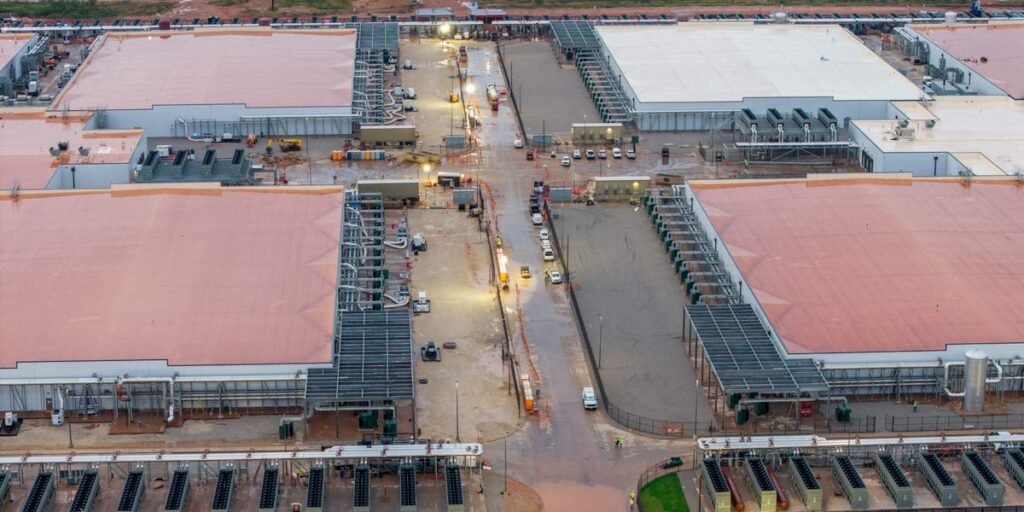
OpenAI is pushing to build community support for a new data center planned in Georgia in an apparent effort to avoid the kind of backlash that is emerging against AI infrastructure projects across the United States. The ChatGPT maker on Wednesday revealed plans to build “Project Camellia,” an at least $20 billion data center campus
OpenAI is pushing to build community support for a new data center planned in Georgia in an apparent effort to avoid the kind of backlash that is emerging against AI infrastructure projects across the United States.
The ChatGPT maker on Wednesday revealed plans to build “Project Camellia,” an at least $20 billion data center campus in rural Effingham County outside Savannah that will require 3.2 gigawatts of power.
OpenAI said it has been meeting with state and local officials, community leaders, schools and other stakeholders to gather feedback on the project and will hold an open house on Thursday.
“We believe that arriving early is the right way to build trust; with that, we are still at the beginning of the development process,” OpenAI said in a press release. “There is a lot of work to be done in infrastructure, project phases, design, financing and operating model.”
Effingham County Commissioner Jamie DeLoach said in a statement that he and his team “asked the tough questions” and found that the project “uses minimal water, will not increase energy costs for county residents, will generate new tax revenue to support our schools and will create new opportunities for local businesses.”
OpenAI added that it has contracted Georgia Power to supply electricity to the 1,400-acre campus in phases between 2028 and 2032.
OpenAI says water use will be “minimal”, utility bills will not increase and schools will receive free AI tokens
Along with the announcement, OpenAI detailed a four-point commitment that addresses issues that have fueled widespread opposition to data centers elsewhere, including electricity costs, water use, and community impacts.
OpenAI said local residents would not see higher electricity bills due to the project and that the facility’s water use would be “minimal” due to its closed-loop water system.
“Georgia families will not subsidize this project. OpenAI will pay the full cost of the infrastructure and electric service costs needed to serve it,” the company said.
It said the project will be one of the first data centers designed to “proactively reduce its energy consumption before residential customers are impacted during periods of high demand.”
OpenAI also said it would provide $80 million in community benefits over the life of the project and generate up to $71 million in credits for Codex, its AI coding tool, available to eligible students at Georgia universities, community colleges and technical schools. Eligible Georgia students will receive $100 in Codex credits through their ChatGPT account.
An independent firm will conduct an annual audit of OpenAI’s commitments that will be made public, the company said.
OpenAI awaits will create thousands of construction jobs and more than 1,000 operational positions once the campus is fully built.
Companies are racing to build AI data centers across the country, and many communities are pushing back over concerns about potential environmental and economic impacts.
OpenAI CEO Sam Altman acknowledged the challenge earlier this year, saying, “AI is not very popular in the US right now.”
“Data centers are blamed for rising electricity prices. Almost every company that makes layoffs blames AI, whether it’s AI or not,” he said.
According to the Data Center Watch research project, at least 75 data center proposals worth an estimated $130 billion were delayed or blocked during the first three months of 2026 due to local opposition.
In May, there were at least 430 local Facebook groups with more than 525,000 members fighting against AI data centers, according to the Data Center Opposition Report, which tracks local opposition to the projects.
Georgia’s 12th Congressional District Democratic Committee issued an “urgent call to action” via Facebook, urging community members to attend Thursday’s public meeting.
Earlier this month, New York Governor Kathy Hochul signed an executive order imposing the nation’s first state law. moratorium on large-scale data centers.