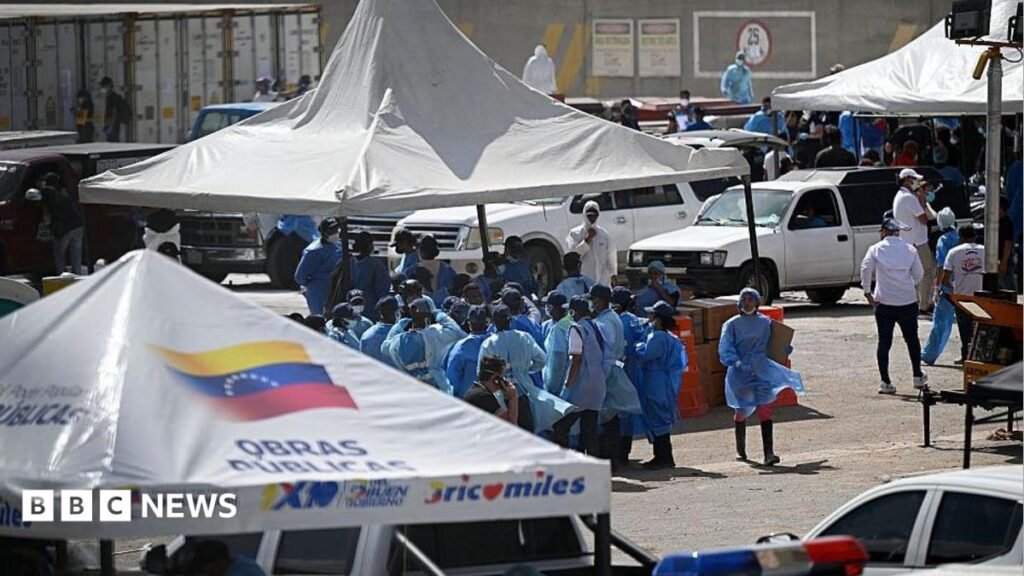
More than 1,000 images of bodies appear on the screens in a seemingly endless sequence. Many are swollen, have dark skin or have wound marks, making them difficult to identify. Families look for any trace that could help identify their loved ones: a tattoo, a bracelet, a piece of clothing or an object from their
More than 1,000 images of bodies appear on the screens in a seemingly endless sequence. Many are swollen, have dark skin or have wound marks, making them difficult to identify.
Families look for any trace that could help identify their loved ones: a tattoo, a bracelet, a piece of clothing or an object from their home.
Sometimes there is a pause, a moment of hope. The two workers reviewing photos on an iPad zoom in on teeth, tattoos or scars.
In front of one of the screens, a woman bursts into tears when she recognizes her son thanks to a dusty blanket. Another woman, a stranger, hugs her.
A phone rings and breaks the silence.
A young man whispers into the phone that he is trying to identify his mother. But he says the state of the bodies makes it difficult.
“This is like a horror movie,” says Liliana González, a 60-year-old resident of Catia La Mar, as she leaves.
He had come to look for his aunt, but in the end he identified his 37-year-old nephew by his tattoo.
“He wasn’t on the list,” she says. “I had to look at the pictures.”
“I saw my mother when she died, but this… this is not the same.”
Check back often for more exciting news!