John Bennett: Little by little it became clear that the World Cup was capturing the imagination in New York. I went to a soccer fan event in Harlem in the first week of the tournament and it was full of people who lived in the US but were originally from one of the World Cup
John Bennett: Little by little it became clear that the World Cup was capturing the imagination in New York.
I went to a soccer fan event in Harlem in the first week of the tournament and it was full of people who lived in the US but were originally from one of the World Cup nations or had family history from one of the participating teams.
It made me realize how important a role diaspora fans were going to play in the tournament and how much excitement and atmosphere would be created in the stadiums and streets.
I remember walking to an interview in Greenwich Village and seeing a group of construction workers and businessmen who had stopped on the sidewalk outside a bar because something had caught their attention on one of the television screens inside. What was it? The final stages of Cape Verde’s heroic 0-0 draw against Spain. World Cup fever was here.
Ian Dennis: For me it changed when I went to Atlanta. That’s when it felt more like a World Cup with fans from different countries mingling in a vibrant fan festival in the heart of downtown Atlanta.
What also caught my attention inside the Atlanta stadium is that American fans follow a country, but they are not real followers. For example, most of the crowd wore red when Spain played Saudi Arabia, but they were not Spanish and, as a result, the atmosphere was lacking.
Liz Conway: My opinion has completely changed. World Cup fever has truly hit the United States. Everywhere I have traveled, I have been very impressed by the fan zones, the number of friendly volunteers and the general enthusiasm surrounding the tournament.
Even some of the fans I’ve spoken to, who admitted they don’t usually watch football, have been genuinely excited to support the World Cup and learn more about the game. It’s been fantastic to see.
Sam Harris: A few weeks later, that view completely changed. Some of my favorite moments have come off the court, from chatting with Brazilian fans in Philadelphia to the Cape Verdeans turning Boston into one big street party.
The World Cup is only as good as its fans. You can organize it anywhere, but without followers to bring their songs, food, flags and culture, it loses its heartbeat.
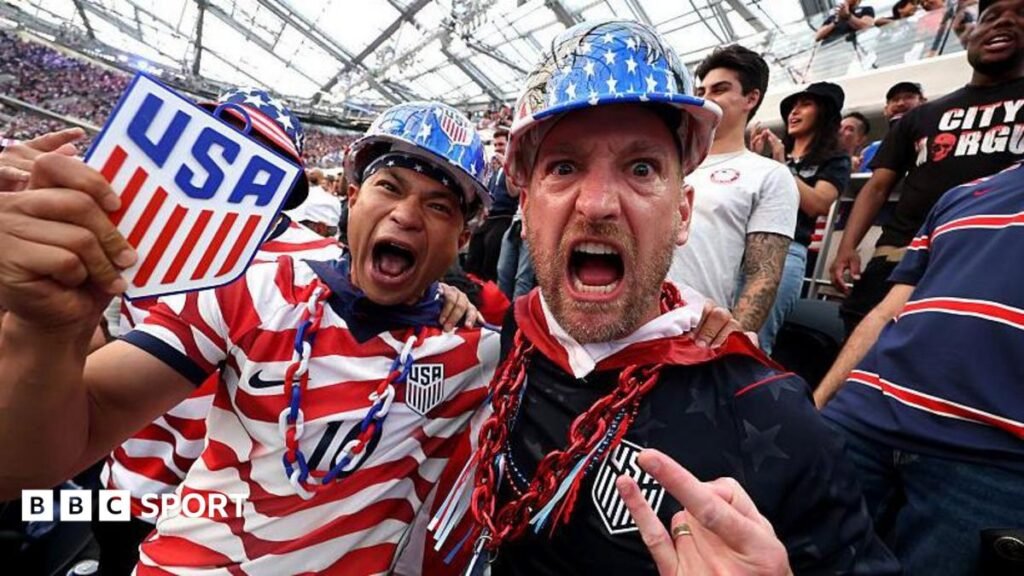
It also helps when the home team starts doing well. The US men’s team has come out running, the Americans have really supported them, and they’ve even let out some chants that are… actually pretty decent, at least the ones coming from fans in a small bar in Philadelphia.
Neil Johnston, BBC sports journalist:
I have attended eight games in New Jersey, Philadelphia, Toronto, Boston and Miami. Every field I’ve visited seemed full, so fears that games might have empty seats haven’t materialized as far as I’ve seen.
Alex Howell: In Kansas City, the World Cup has been embraced by almost everyone I’ve talked to and local businesses.
Gary Rose: Massively. Someone told me that Americans don’t really prepare for sporting events, but once they’re going, they go all in. That has been the case.
Over the weeks I have seen t-shirts from every country wandering around the tourist spots in Los Angeles. All the bars and even most stores broadcast the games on television, even some beachside shops and cafes in Santa Monica had placed televisions on the sidewalks and passersby stopped to watch.
For more tech updates, stay tuned to our blog.