
Pakistan’s Gateway to Global News, Tech Updates, and Emerging AI Trends.
Archaeology
- Home
- Archaeology

WWII fighter plane crash found in Hungary after nearly 80 years0
- Air Force, Archaeology, Military, SCIENCE, Science / Health, Science Mission Directorate, scientists, Space, Space Communications & Navigation Program, Space Launch System (SLS), Space Telescope, space-x-ipo, SpaceX, Technology
- October 22, 2026
After nearly 82 years, historians in Hungary have finally located a missing Soviet aircraft downed by a German ace pilot during World War II. After a monthslong investigation that involved painstaking archival dives and eyewitness interviews, a team led by Hungarian Aircraft Wreck Research Association co-founder István Kocsis pinpointed the Yakovlev Yak-1 fighter plane. The
READ MORERoman sarcophagus inside Westminster Abbey originally held a different body0
- Archaeology, SCIENCE, Science / Health, Science Mission Directorate, scientists, Space, Space Communications & Navigation Program, Space Launch System (SLS), Space Telescope, space-x-ipo, SpaceX
- October 21, 2026
A formerly inexplicable Roman sarcophagus discovered at England’s Westminster Abbey over 150 years ago is likely a rare example of medieval funerary recycling. Although archaeologists stopped short of definitively identifying who was buried inside, the team confidently narrowed down their candidates to a pair of high-ranking Benedictine monks. “We have two viable contenders for the
READ MORERoman child’s grave contains coin to pay afterlife entry fee0
- Archaeology, SCIENCE, Science / Health, Science Mission Directorate, scientists, Space, Space Communications & Navigation Program, Space Launch System (SLS), Space Telescope, space-x-ipo, SpaceX
- October 20, 2026
Not far from the Black Sea, a child’s grave uncovered in present-day Bulgaria has provided archaeologists a somber look at Roman funerary practices. Flagged in the city of Stara Zagora during a site survey for a new apartment complex and parking garage project, the burial contained stunningly preserved gold earrings as well as a single,
READ MORE


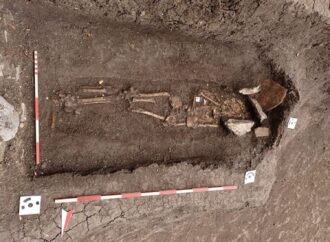
75,000 years ago, this Neanderthal was stabbed with a spear0
- Archaeology, Biology, Evolution, SCIENCE, Science / Health, Science Mission Directorate, scientists, Space, Space Communications & Navigation Program, Space Launch System (SLS), Space Telescope, space-x-ipo, SpaceX
- October 17, 2026
A small puncture wound through a 75,000-year-old Neanderthal shoulder blade may be the earliest evidence of death by spear on humanity’s family tree. Given forensic details such as the entry angle and overall damage, researchers believe the injury was made as an intentionally fatal “heart shot” that killed the ancient hominin within moments. The discovery
READ MORESled dogs have stubby legs for a reason0
- Animals, Archaeology, Biology, Dogs, Environment, Evolution, Pets, SCIENCE, Science / Health, Science Mission Directorate, scientists, Space, Space Communications & Navigation Program, Space Launch System (SLS), Space Telescope, space-x-ipo, SpaceX
- October 15, 2026
They’re some of Earth’s most powerful athletes, traversing thousands of miles of rough terrain in sub-zero temperatures, through blinding snow, and biting winds. Sled dogs have been helping humans travel across the planet’s coldest regions for centuries, hauling supplies, people, and equipment across the snow and ice. In the process, this important role that goes
READ MOREHuman teeth pinpoint when lead began poisoning medieval town0
- Archaeology, Climate change, Environment, HEALTH, Pollution, SCIENCE, Science / Health, Science Mission Directorate, scientists, Space, Space Communications & Navigation Program, Space Launch System (SLS), Space Telescope, space-x-ipo, SpaceX
- October 13, 2026
Thanks to some medieval human teeth, archaeologists have pinpointed when lead production first expanded across Europe during the Middle Ages. By examining dental enamel collected from graves located in central England, researchers now know the post-Roman society started mining and smelting again during the mid-7th century. As the team explains in a study published today
READ MORE


Latest Posts



Top Authors
-
matechpros@gmail.com
ADMINISTRATOR
-
OWS
ADMINISTRATOR

