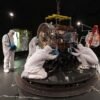
Two mirrors, each small enough to fit in the palm of your hand, are set to change how we understand the cosmos. The launch window for NASA’s Nancy Grace Roman Space Telescope is about to open. The telescope’s primary instrument is due to inform practically every area of astrophysics, but also tucked inside the telescope
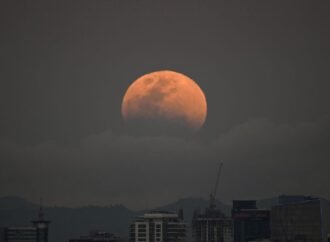
If you missed the spectacular solar eclipse earlier this month, you have a chance to catch another stunning astronomical phenomenon: a partial lunar eclipse and “blood moon” that will occur on Thursday night into Friday early morning. Earth’s shadow will cover nearly all of the bright lunar disk and will cast a reddish or orange
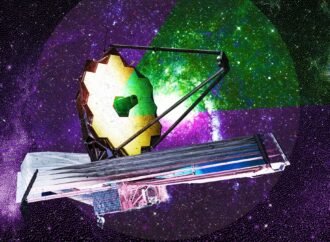
“If we consider what the James Webb Space Telescope is doing, it’s optimized towards looking at the very distant universe … but just a tiny patch of the sky,” says astrophysicist Rachel Mandelbaum of Carnegie Mellon University. “In contrast, Roman is able to look at a large area of the sky at once.” That broad
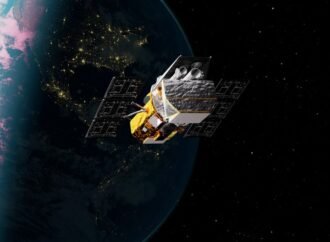
The Swift space observatory has been in operation since 2004. It specializes in gamma-ray bursts (GRBs), the most energetic electromagnetic explosions known in the universe. Its original mission was supposed to last just two years. More than two decades later, it continues to explore some of the most violent phenomena in the cosmos. Now it
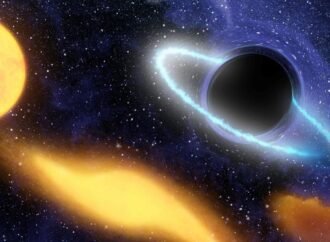
A team of astronomers has just detected the fastest star in the galaxy. Its anomalous speed has a more unsettling explanation: It orbits Sagittarius A*, the supermassive black hole at the center of the Milky Way, the mass of which is equivalent to four million times that of the sun. S301, as astronomers have named
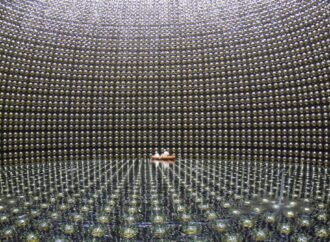
Seventy years ago, the physicists Clyde Cowan and Frederick Reines took a custom-built 10-ton detector, surrounded it with thick lead walls and wet sandbags, and placed it near a powerful nuclear reactor at the Savannah River Plant in South Carolina. They called the experiment Project Poltergeist, designed as it was to catch a ghost. More