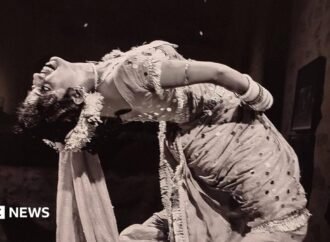
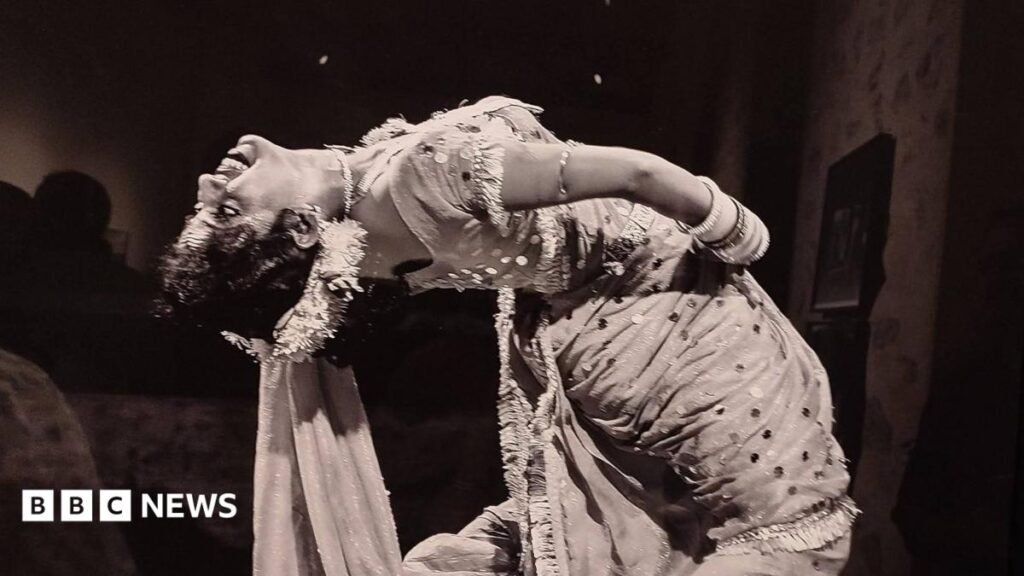
Few things could keep Vithabai Narayangaonkar, one of the greatest stars of Maharashtra’s folk theatre, away from the stage. Not even, it would seem, the birth of her child. In the 1960s, the singer, dancer and troupe leader was performing in Shikhar Shingnapur, a village in the western Indian state, when she went into labour.
Few things could keep Vithabai Narayangaonkar, one of the greatest stars of Maharashtra’s folk theatre, away from the stage.
Not even, it would seem, the birth of her child.
In the 1960s, the singer, dancer and troupe leader was performing in Shikhar Shingnapur, a village in the western Indian state, when she went into labour.
“She quietly stepped behind the stage into a makeshift tent while the rest of us continued performing,” her daughter, veteran folk artist Mangala Bansode, told BBC Marathi.
Outside, the restless audience kept shouting: “Where is Vitha?”
When Vithabai returned to the stage, she was cradling her newborn son, the seventh of her eight children.
“The audience was stunned, but they quietly left, saying, ‘We will watch your performance later’,” Bansode recalled.
Outspoken and quick-witted, Vithabai held audiences across Maharashtra in thrall for decades, earning the title of Tamasha Samradnyi – the empress of Tamasha, the state’s traditional travelling folk theatre.
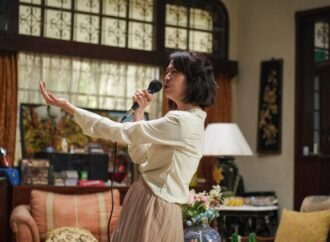
Now, more than two decades after her death, her life has inspired a Bollywood musical, Eetha, starring Shraddha Kapoor, and due for release on 4 December.
Directed by Laxman Utekar, Eetha is based on Yogiraj Bagul’s Marathi book chronicling Vithabai’s life.
Rooted in devotional poetry, Tamasha evolved into a lively mix of music, dance, comedy and drama. At its heart is Lavani, a song and dance tradition in which verses ranging from the bawdy to the politically incisive are performed to the beat of the dholki, a percussion instrument.
Eetha evokes the world of Tamasha in its heyday. Kapoor, who had never performed Lavani before, learnt to dance while wearing musical anklets weighing 4kg each.
“The lives of Tamasha artists have been very tough, so in their dance you see pain as well as joy,” Kapoor recalled at a promotional event.
For more tech updates, stay tuned to our blog.