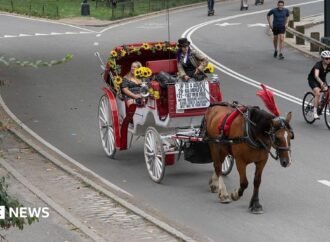
New York City Council is expected to outlaw horse-drawn carriages starting in June 2028, a ban that also has the support of the mayor. The legislation follows the death of a teenager who fell off a horse-drawn carriage in Central Park this year, and ongoing concerns about inhumane treatment of the horses. The teenager’s death
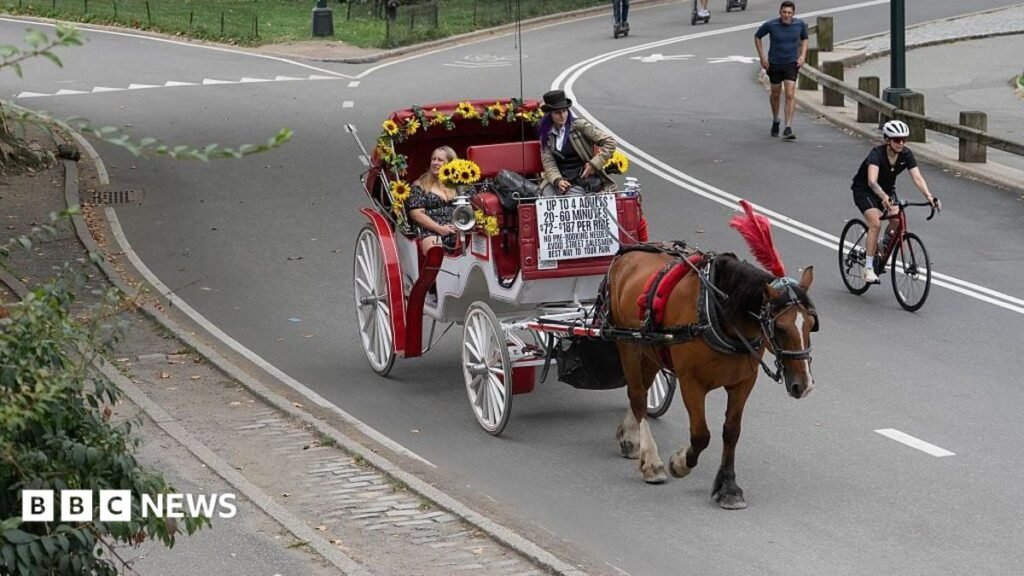
New York City Council is expected to outlaw horse-drawn carriages starting in June 2028, a ban that also has the support of the mayor.
The legislation follows the death of a teenager who fell off a horse-drawn carriage in Central Park this year, and ongoing concerns about inhumane treatment of the horses.
The teenager’s death led to Speaker of New York City Council Julie Menin’s support of the bill, which she said will come before the council for a vote on 22 October.
“Horse-drawn carriages have long been part of New York City’s history, but in an increasingly busy Central Park, this tradition has become a growing public safety liability,” Menin said in a statement to the BBC.
“Next week, the Council will take decisive action by voting on [this bill] to protect New Yorkers, visitors, and the horses themselves.”
The bill – called Romanch’s law for the teenager who died – has support from a council majority, a spokesperson for the speaker said.
A Mamdani official said the mayor, who also supports banning the industry, is constructing a plan to transition those in the horse-drawn carriage business.
“We have been working closely with the City Council, union partners, carriage drivers, animal welfare advocates, and community leaders to deliver a just transition that protects workers while ending horse-drawn carriages in Central Park once and for all,” a spokesperson said.
The latest version of the legislation includes an “industry transition framework” including potential job placement, training, career counseling, and financial compensation for those involved in the business. The bill does not allow the horses to be sold for slaughter or for the same purpose.
It is not the first time officials have pushed to end the industry, which is a longtime New York tourist attraction. Former New York City Mayor Bill de Blasio announced soon after his inauguration in 2014 that he wanted to ban the carriages in Central Park, citing poor treatment of the horses, and proposed a fleet of vintage electric cars to replace them.
In the end, he implemented new rules restricting where carriages can pick up tourists.
In June, Romanch Mahajan, who was visiting New York from India, was riding in a carriage when the horse pulling it bolted, causing the 18-year-old to fall and die.
His father, Deepak, later told the city council he could not “properly describe to you the real, true fear inside that carriage”.
Also this year, a carriage horse named Dennis died in Central Park from eating a toxic plant.
Some workers’ groups, including the Transport Workers Union – which says it represents 300 horse-carriage drivers and owners – have pushed back against legislation banning the industry. The Transport Workers Union argues the horses are treated well and that the industry employs hundreds of people.
Last year, the Central Park Conservancy, the nonprofit group that manages the park, said it was supporting legislation to ban the practice.
“We do not take this position lightly,” the conservancy’s president, wrote in a letter, “but with visitation to the park growing to record levels, we feel strongly that banning horse carriages has become a matter of public health and safety for park visitors”.
Check back often for more exciting news!