Seventeen-year-old Anastasiia Ryvbalchenko has also experienced a narrow escape. She and her fellow passengers were forced to leave their train at 4am, towards the end of a long of a journey from Odesa to Kirovohrad on 16 September. “On my way to Odesa, there had been a lot of evacuations and now on my way
Seventeen-year-old Anastasiia Ryvbalchenko has also experienced a narrow escape.
She and her fellow passengers were forced to leave their train at 4am, towards the end of a long of a journey from Odesa to Kirovohrad on 16 September.
“On my way to Odesa, there had been a lot of evacuations and now on my way back it was happening again,” she says. “I was already thinking that if there was another evacuation, I just couldn’t take it any more.”
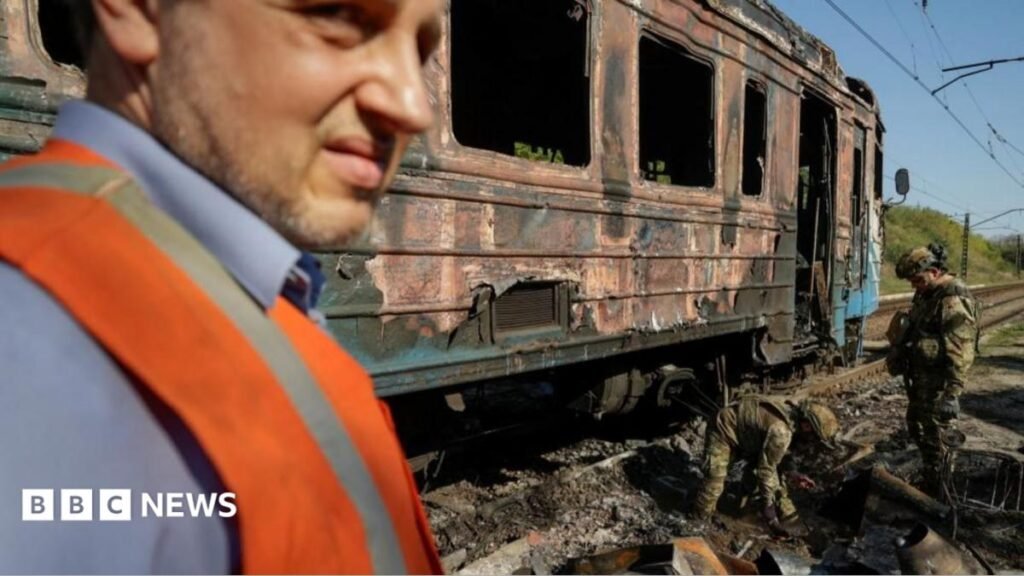
An hour and a half later, as passengers waited in the dark, a drone struck nearby.
“There was an extremely loud explosion and everyone started running into the woods,” she said.
It is not clear what the target was, and in this case the train was not damaged, but with further explosions lighting up the night sky, Anastasiia decided not to linger, continuing her journey on foot before being picked up by her parents.
“I’m not going to travel by train anymore,” she says.
Anastassia’s journey was more dramatic than most, but delays – some brief, others that last for hours – are now commonplace.
Since Russian drones first started attacking moving passenger trains towards the end of 2025, the routine for passengers has become increasingly familiar: leave the train, scroll Telegram channels for updates on drone and missile launches, send messages to warn friends and family that the train is delayed.
Check back often for more exciting news!