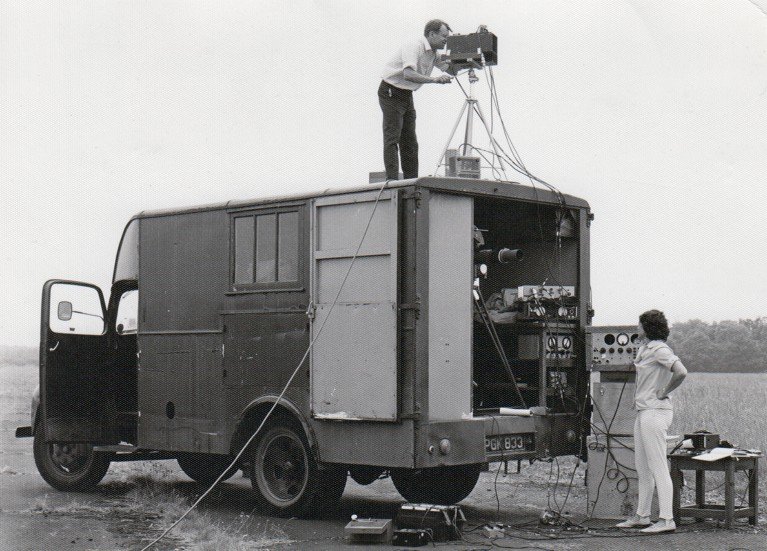
Shirley Jenkins operates a trials vehicle with a colleague in the Royal Aircraft Establishment’s infrared group in the 1970s. Credit: UK MOD © Crown copyright 2026 In the early 1980s, a BBC film followed Susan James as she took noise measurements in an airborne Westland Sea King helicopter. She then processed the data in an
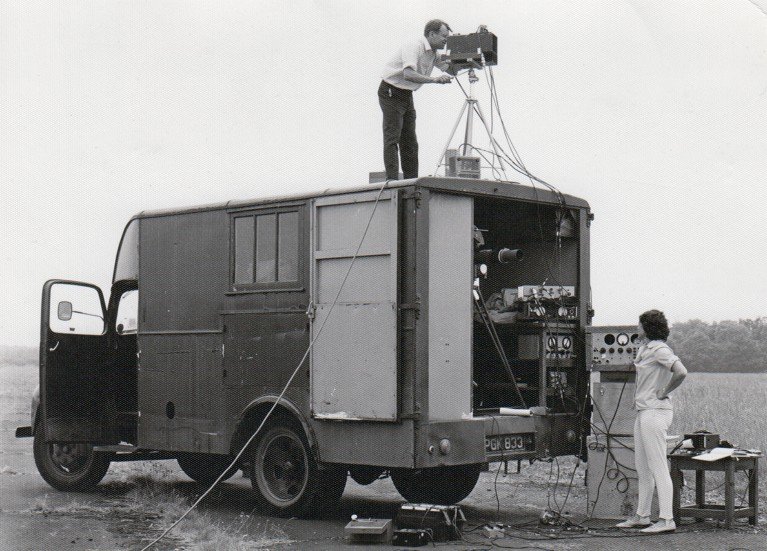
Shirley Jenkins operates a trials vehicle with a colleague in the Royal Aircraft Establishment’s infrared group in the 1970s. Credit: UK MOD © Crown copyright 2026
In the early 1980s, a BBC film followed Susan James as she took noise measurements in an airborne Westland Sea King helicopter. She then processed the data in an acoustics laboratory at the Royal Aircraft Establishment (RAE), a research centre run by the UK Ministry of Defence.
James joined the RAE at 19 years old in 1979 and was in her early 20s when she appeared in the film by the UK broadcaster, which aimed to promote careers in the UK government’s scientific civil service. The film described a role there as a “good job with prospects”.
At that time, the RAE was the largest research centre in Europe, with thousands of staff at its base in Farnborough. It ran the full spectrum of experimental, testing and analysis activities across programmes in aerodynamics, aircraft systems and weaponry.
Government scientists and engineers had proved their value during the Second World War, managing advanced research programmes and providing scientific advice to policymakers.
In 1976, it was estimated that around 5% of UK science and engineering graduates joined the scientific civil service, following a separate career path to that of the wider civil service. At that time, its centres employed 35,000 staff members, of which 18,000 were scientists.
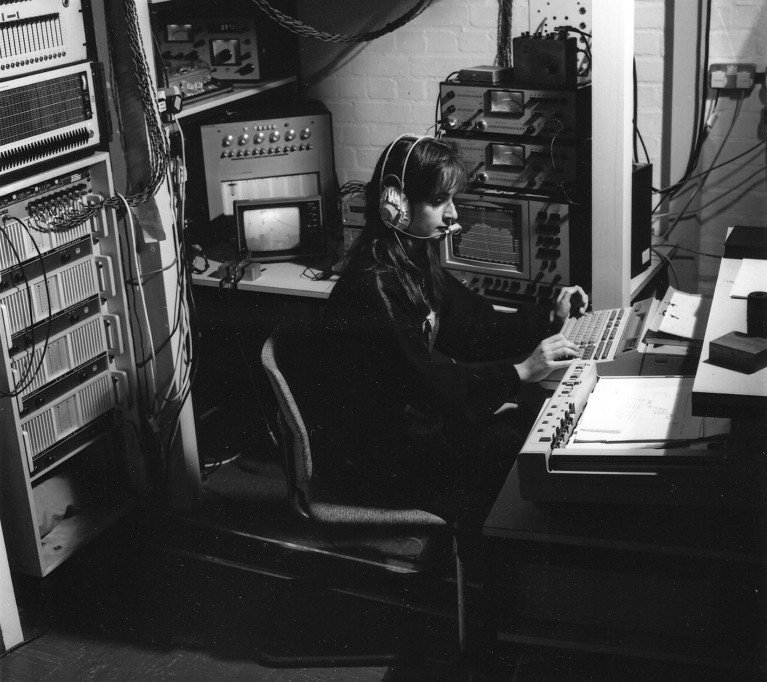
Susan James at work in the Royal Aircraft Establishment’s acoustics laboratory during the 1980s.Credit: UK MOD © Crown copyright 2026
Most worked in research establishments that were directly attached to government departments. Some worked at departmental headquarters in London, others were drafted into a scientific unit in the armed forces or positioned at an overseas embassy as a scientific counsellor.
Another of the more than 70 departmental research centres that existed in the 1980s was the Building Research Establishment (BRE) in Watford. This focused on building materials, methods of construction and related branches of civil engineering, and employed around 500 staff members. Anthony Bravery worked at the BRE as a timber specialist until his retirement in 2011.
In 2019, as part of my PhD research, I interviewed Bravery about his career. He and James were among 20 former government scientists who I spoke to about how organizational change and the privatization of the RAE and the BRE affected individuals’ working lives. The recordings, which last between 2.5 hours and 19.5 hours, are now in the British Library’s sound archive.
It was a privilege to spend time with these curious, intelligent and practical people, capturing descriptions of everyday routines, career aspirations and valued colleagues. I learnt what it meant to be a scientific civil servant during the latter part of the twentieth century.
Anthony Bravery
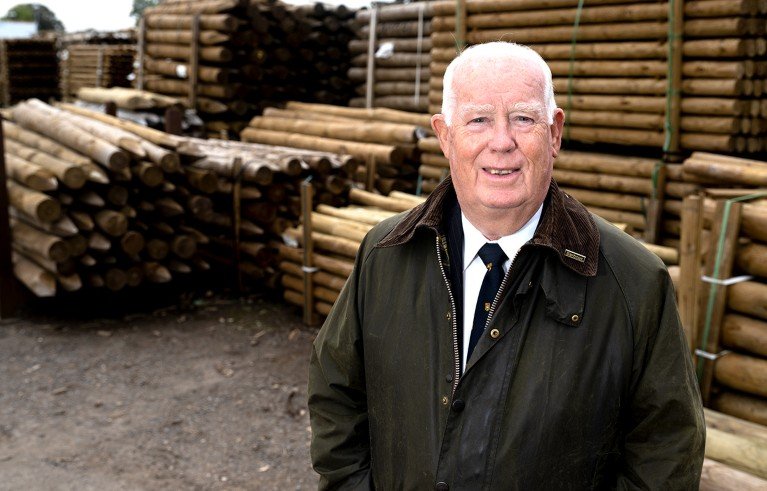
Credit: Bill Knight
Motivations for joining the scientific civil service were varied. Some people were attracted to a career at a research centre because of that establishment’s reputation, others because they wanted to work for the public good. David Dunford joined the RAE at the age of 16 in 1975, lured by the prospect of doing practical, hands-on work. The RAE supported his 1994 PhD in materials engineering, and he went on to work with international teams in industry and academia.
Paul Cannon, a space-weather researcher, joined the RAE in 1981. He describes the appeal of “undertaking research in a moderately open environment, which sat in between the two extremes of university and industry”. Mike Westby joined the RAE’s weapons systems department in 1988 and adds: “I didn’t want to do a PhD, I was kind of interested in researchy-type stuff and the RAE was doing research, whereas industry was design to manufacture. It’s like working in a university but probably with more stability and security.” For Steve Rooks, who worked in, and later led, air-systems research teams at Farnborough it was “the excitement of the work, the people [his staff] get to work with, the places they go, then the ability to work with so many different organizations”.
From my interviews, a picture emerged of staff buzzing with ideas and the freedom to innovate, yet constrained by the inflexible parameters of the civil-service systems. However, there was a time when this all changed, as Cannon recalls when, in 1982, the United Kingdom went to war with Argentina in a dispute over the sovereignty of the Falkland Islands. The rush to get equipment onto aircraft bound for the South Atlantic Ocean meant an end to both “navel-gazing” and lengthy contract deliberations with industry suppliers, he says.
Paul Cannon
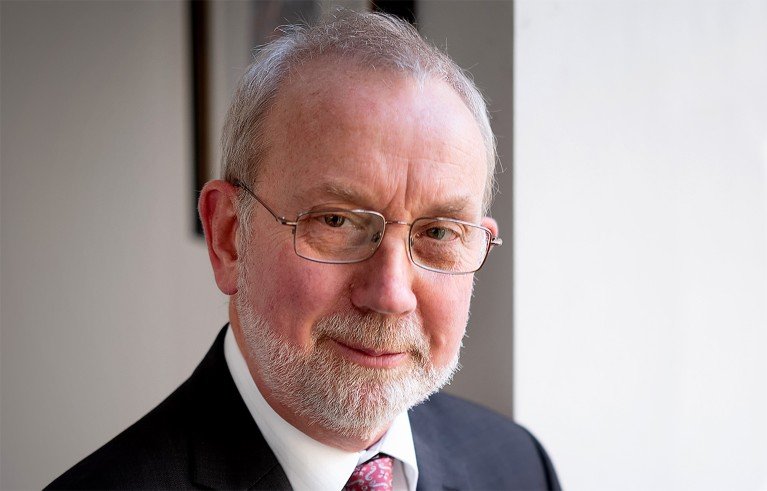
Credit: Bill Knight
Some of the people I interviewed talked about a well-defined career path, but also of rigid bureaucracy, which had its downsides.
Carol Atkinson joined the BRE in 1990 as a project manager after working as a research chemist at the British electronics company GEC. She says: “There was a lot of resentment over grades and perceived unfairness and who got promoted and who didn’t get promoted. I think the grade thing and the hierarchy bothered an awful lot of people.”
Although career progression was not linked to publications, the people I spoke to said they still wanted their name in print. “Our objective was not to get our salary at the end of the month, it was to publish a paper that somebody in Germany or France or Switzerland would say, ‘that’s really good stuff’,” says Bravery. “Being recognized nationally and internationally as somebody who knew their stuff, who was doing good new work, was the big motivator.”
Coffee breaks and Friday pub lunches were often key to checking in on colleagues’ progress.
David Dunford
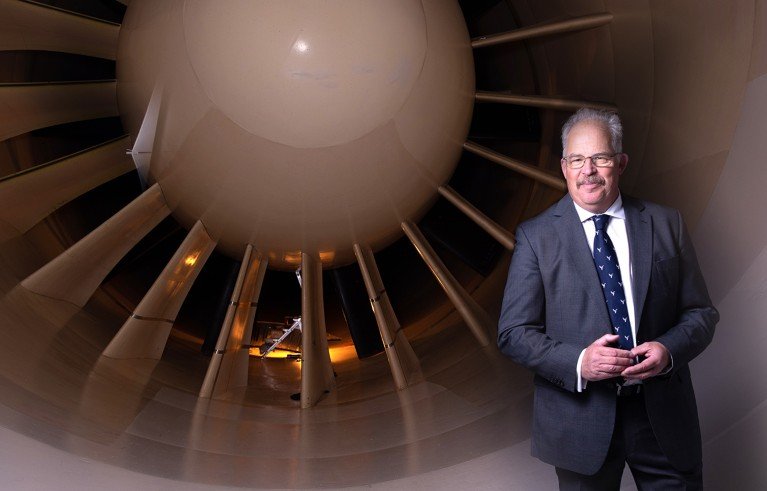
Credit: Bill Knight
Women’s experiences
Before equal opportunities legislation was introduced in the United Kingdom in the 1970s, working mothers at the research centres faced obstacles and restricted career progression that their male colleagues did not.
Materials scientist Sarah Herbert joined the RAE in 1971 after completing a PhD at what was then the Victoria University of Manchester, UK. She got married while studying for her PhD.
Sarah Herbert
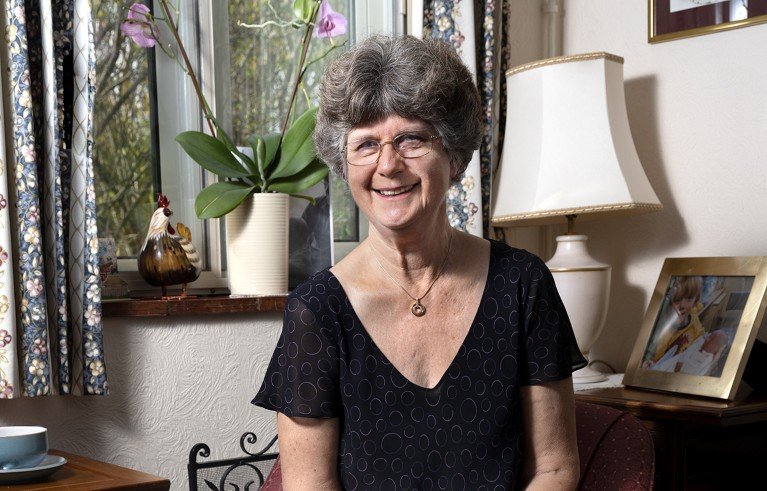
Credit: Bill Knight
Shirley Jenkins joined the RAE 17 years earlier, working on programmes that developed the use of infrared in defence countermeasures. In her 50-year career, she flew around 1,000 hours in ‘Canberra’ and ‘Comet’ aircraft, which were adapted by the RAE for scientific research.
Jenkins and Herbert described to me the prevailing attitudes at the time.
Jenkins says: “Even though I had two children and came back to work straight away, they still never really took me seriously. They didn’t feel they could trust me that I was going to be there and do it at the time.”
Herbert adds: “In those days there was no equality for women, and women didn’t work and generally didn’t have childcare, and they were absolutely convinced that if I had a family I would leave.”
When Herbert’s manager agreed that she could work part time to accommodate her caring responsibilities, he “patted my head, as if I was a little dog”, she says.
If women did return to work after having children, they often had to accept a position with less responsibility or status.
By the end of the 1980s, following the Employment Protection Act of 1975, which established the principle of paid maternity leave, although initially not for all women, James says that, employees had access to on-site childcare and six months’ maternity leave.
All change
In 1979, Margaret Thatcher, a former industrial chemist, became UK prime minister. Her Conservative government was determined to reform the civil service.
As Roger Courtney, director of the BRE from 1988 to 1990, explains: “You were working in a political context in which the civil service felt unloved. I mean no question about it … private sector good, public sector bad.”
An efficiency drive rationalized the service’s infrastructure and workforce. The BRE and the RAE became executive agencies first, operating at arm’s length from central government, and then private-sector entities. In 2001, the Defence Research Agency split into the privately owned QinetiQ and the Defence Science and Technology Laboratory (Dstl), which was retained by the government.
Old equipment was thrown out, smaller sites were closed and staff numbers were cut. Managerial processes and commercial targets transformed the workplace into something more akin to an industrial research and development laboratory or a technical services organization, precisely what some of the people I interviewed had chosen to avoid at the start of their careers.
For some, these changes removed the feeling of belonging to a secure, sociable world in which they felt in control of their own work. For others it signified the removal of an archaic environment that stifled creativity.
Dunford told me how working to tight delivery schedules introduced an alien set of pressures and thought processes.
Wendy Westby, an analytical chemist at Farnborough, describes “a lot of pressure on individuals to make sure they sold all of their time to project managers and that they were fully utilized. Nobody wants to be the person to pay for the half an hour it took to fix the piece of equipment that’s unexpectedly broken down”.
Jenkins was sceptical about the changing goals. “It then became much more important to do things on time and on budget and whether you actually achieved anything became sort of less important,” she says.
James regretted the loss of thinking time, which resulted in work that was “not as deep and robust as the kind of research we did in the past”.
Keep following us for the latest insights.