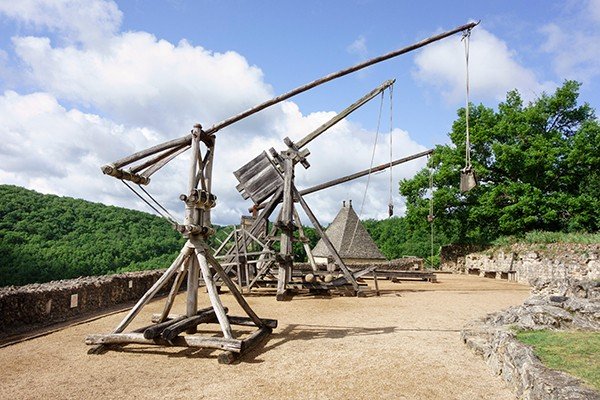
Hello Nature readers, would you like to get this Briefing in your inbox free every day? Sign up here. English armies used the trebuchet as a weapon during the siege of Stirling Castle in 1304, the battle during which researchers think ‘skeleton 150’ was killed. (Frank Bach/Alamy) Serious damage to an approximately 700-year-old skeleton is
Hello Nature readers, would you like to get this Briefing in your inbox free every day? Sign up here.
English armies used the trebuchet as a weapon during the siege of Stirling Castle in 1304, the battle during which researchers think ‘skeleton 150’ was killed. (Frank Bach/Alamy)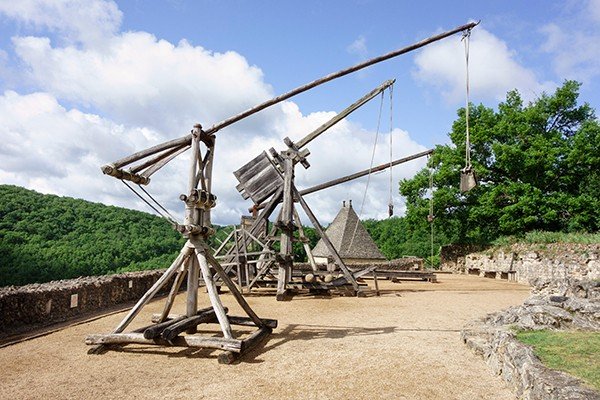
Serious damage to an approximately 700-year-old skeleton is the first confirmed archaeological evidence of trauma caused by a trebuchet projectile. ‘Skeleton 150’, found beneath the chapel of Stirling Castle, Scotland, was fractured in more than 160 places, which indicates “a high-velocity, high-force, high-speed impact in a short amount of time”, says forensic osteologist Lukas Waltenberger. The shape and placement of the injuries rules out other, more obvious causes such as falling from the castle’s walls or being trampled by a horse, researchers say. The results were presented at the European meeting of the Paleopathology Association in Berlin last week.
Science | 5 min read
Reference: European meeting of the Paleopathology Association abstract
The US National Institutes of Health (NIH) has begun turning away research grant applications for which the “primary function” is informing policymakers and legislators, according to internal documents seen by Nature. This means that the agency will likely fund fewer projects assessing how public policies — such as firearm regulations and environmental protections — affect human health. The documents say “NIH-funded research must empower decision-making by NIH mission-relevant stakeholder groups”, including patients, health-care workers and scientists, and state explicitly that policymakers don’t fall into this group.
Nature | 6 min read
A rise in global trading of mummified remains could pose a serious health risk to buyers and postal workers, researchers say. A team of archaeologists analysed more than 100 social-media and auction-house posts advertising the sale of mummified remains. They found that many items showed signs of biodeterioration, but the posts rarely included any safety information on how to properly ship or store the remains. Mummified remains can harbour dormant microorganisms such as fungal spores, which can become airborne when disturbed and cause serious infections, the team warns.
The Guardian | 4 min read
Reference: International Journal of Cultural Property paper
Features & opinion
An experimental surgery to treat Alzheimer’s disease has shot to popularity in China — despite limited evidence that it works. The procedure involves connecting lymphatic vessels in the neck to nearby veins, creating a route that, in theory, allows toxic Alzheimer’s-associated proteins to drain more easily into the bloodstream. The surgery is now being trialled in controlled studies around the world, eliciting a mix of qualified enthusiasm and deep scepticism from researchers. Some aren’t convinced that benefits — if there are any — will last. But “if the patient is able to improve even for a year, that’s a whole freaking miracle,” says microsurgeon JP Hong.
Nature | 13 min read
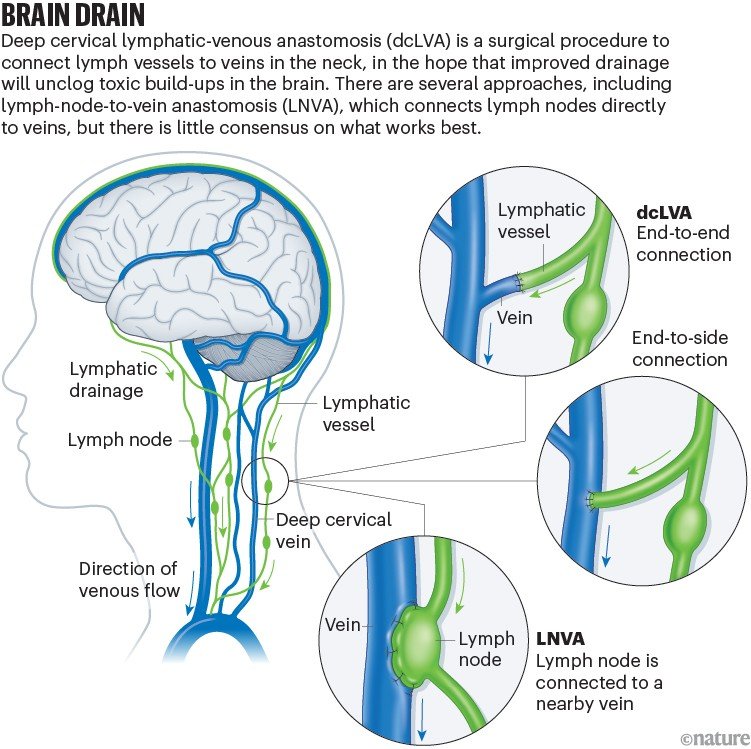
Graphic: Richard Tibbits/Nature
Environmental treaties should be recognized as tools that could shape mental health and psychosocial well-being before clinical intervention is needed, argues a group of climate scientists, psychiatrists and public-health researchers. Exposure to pollutants and the depletion of natural resources can increase the risk of mental-health conditions, but the impact on mental health of environmental interventions is rarely reported on. The authors suggest that policymakers examine existing environmental conventions to identify cases for which mental-health integration is most actionable and the resources needed to do so.
Nature | 12 min read
The move into urban environments has forced some wild species to adapt — and fast. Some lizards in Puerto Rican cities appear to have evolved longer limbs and grippier toes in a matter of years, and raccoons (Procyon lotor) in the United States are showing signs of domestication, such as a shorter snout. But not all animals are capable of such rapid change, and researchers suggest that those that can more easily shift their behaviour to meet the demands of urban living stand a better chance.
BBC Future | 6 min read
Today I’m considering how much time I’d save if my commuter train could accelerate from 0 to nearly 800 kilometres per hour in 5.3 seconds. An experimental train in China has just achieved that feat, breaking its own world record for short-distance acceleration.
As I’ll have to stick to the steady pace of the London Underground, I’ve got more time to read your feedback on this newsletter. Please send any thoughts to briefing@nature.com.
Thanks for reading,
Jacob Smith, associate editor, Nature Briefing
• Nature Briefing: Careers — insights, advice and award-winning journalism to help you optimize your working life
• Nature Briefing: Microbiology — the most abundant living entities on our planet — microorganisms — and the role they play in health, the environment and food systems
• Nature Briefing: Anthropocene — climate change, biodiversity, sustainability and geoengineering
• Nature Briefing: AI & Robotics — 100% written by humans, of course
• Nature Briefing: Cancer — a weekly newsletter written with cancer researchers in mind
• Nature Briefing: Translational Research — covers biotechnology, drug discovery and pharma
For more tech updates, stay tuned to our blog.