
The Blumstein research group’s unconventional OnlyFans account is helping to support marmot research. Credit: Laura Green, Jakub Porzycki/NurPhoto via Getty As an evolutionary ecologist at the University of California, Los Angeles (UCLA), Daniel Blumstein never expected to open an OnlyFans account to earn money. But in June, Blumstein and his team — which conducts long-term

The Blumstein research group’s unconventional OnlyFans account is helping to support marmot research. Credit: Laura Green, Jakub Porzycki/NurPhoto via Getty
As an evolutionary ecologist at the University of California, Los Angeles (UCLA), Daniel Blumstein never expected to open an OnlyFans account to earn money. But in June, Blumstein and his team — which conducts long-term research on marmots — posted on the site for the first time. Recognized widely as the home of creator-made adult content, the platform is enabling the team to raise funding for its work at the Rocky Mountain Biological Laboratory (RMBL) in Gothic, Colorado.

Exclusive: NSF set to issue lowest number of new grants in four decades
At the RMBL, the study of yellow-bellied marmots (Marmota flaviventris) — a species of large, ground-dwelling rodent — has been running for more than six decades. Now, the Blumstein group’s work is facing increasing financial pressure. There has been a “trifecta of challenges”, he says: the group’s grant from the US National Science Foundation (NSF) being stuck in renewal limbo, a broad shift in US research-funding priorities towards artificial intelligence and growing political pressure on universities, including UCLA. Taking inspiration from the television series Margo’s Got Money Troubles, in which the titular character uses an explicit OnlyFans account to stay afloat financially, Blumstein decided the idea was worth pursuing. And with that, OnlyMarms was launched.
Although the marmots don’t have any clothes on, the profile’s content is nevertheless family-friendly. The page has accrued 3,000 likes from subscribers, who are treated to videos of marmots in the wild from remote cameras.
It is free to subscribe to OnlyMarms, which generates money solely through viewer donations, paid in tips. Since its advent, the profile has made more than US$4,000, and is now earning around $100 a day in tips.
Marmot memecoins
The unconventional approach to fundraising has attracted global media attention, with OnlyMarms being featured in The New York Times and on the BBC news website. “I don’t think I truly realized just how viral it would go,” says Emily Renkey, a master’s student in the Blumstein lab and manager of the account.
Within months of OnlyMarms’ creation, and thanks to increased attention from the media coverage, members of the memecoin community independently launched the Solana $ONLYMARMS cryptocurrency. Memecoins are a type of cryptocurrency often inspired by internet trends. The trading fees from the coin, subsequently claimed by Blumstein’s project, have now risen to more than $100,000. These will go directly to research efforts, says Blumstein.
The group also launched voting for the inaugural Fat Marmot Week — inspired by the Fat Bear Week run by Katmai National Park in Alaska — on 24 August. In this online tournament-style contest, members of the public can vote for the marmot they think has plumped up most effectively in preparation for winter hibernation, with donations to the project and the RMBL encouraged.
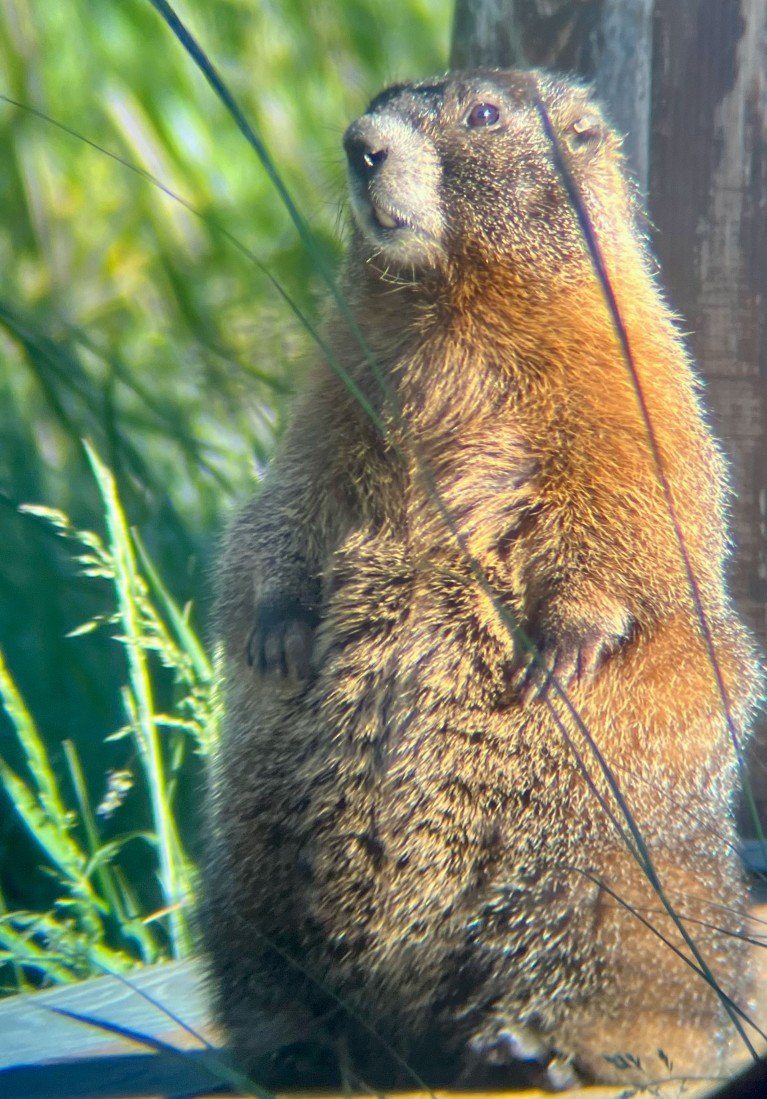
Long-running research at the Rocky Mountain Biological Laboratory in Gothic, Colorado, is helping researchers to understand how marmots respond to climate change. Credit: Brian Booher
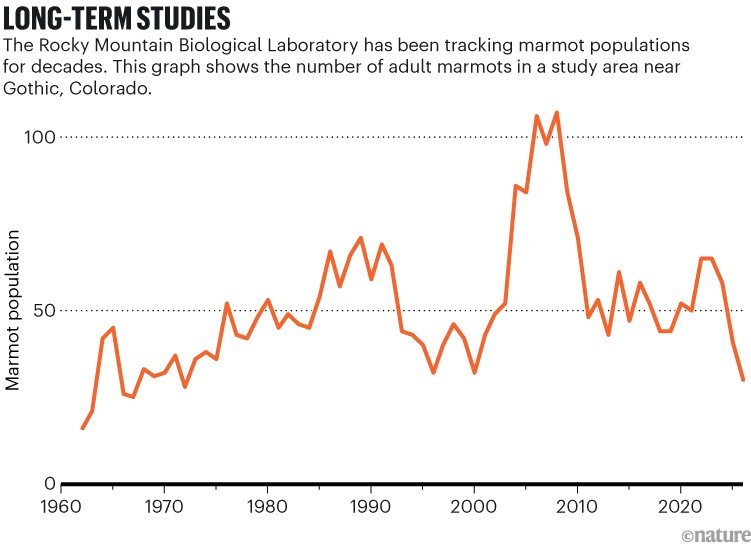
Despite the financial benefits, Blumstein says that OnlyMarms’ real value might be as a science-communication tool: putting decades of ecological work in front of the public. Since 1962, generations of researchers working on the marmot project at the RMBL, known as ‘marmoteers’, have tracked hundreds of yellow-bellied marmots in central Colorado, recording where individual marmots go, how they behave and interact and using biological samples to study their physiology, genetics and reproductive success (see ‘Long-term studies’).
Yellow-bellied marmots’ dependence on seasonal snow and vegetation makes them valuable indicators of how mountain wildlife responds to environmental change. As one of the longest-running and most complete wildlife records in North America, the project’s findings give important insight into the long-term adaptability of animals in a warming climate.
For more tech updates, stay tuned to our blog.