Potential links between pesticide exposure and health problems are hard to tease out.Credit: brt COMM/Alamy In May, Vermont became the first US state to pass legislation that bans most uses of paraquat, a chemical herbicide linked to an increased risk of Parkinson’s disease. Other states have also examined paraquat’s safety. California’s Department of Pesticide Regulation
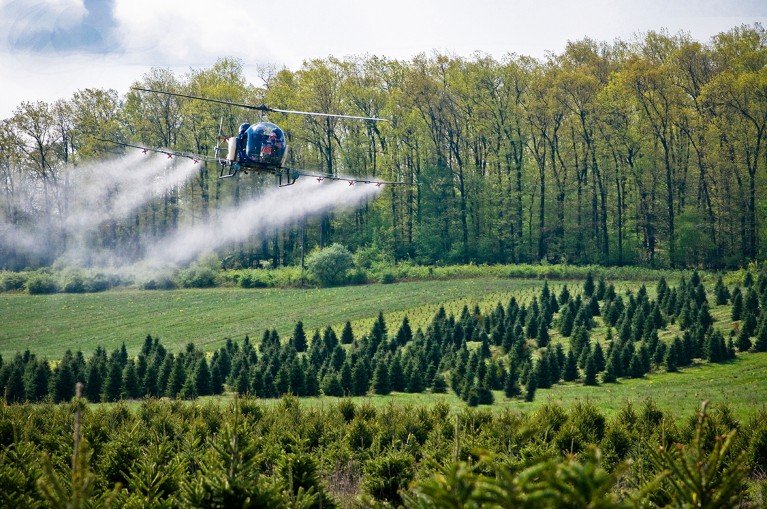
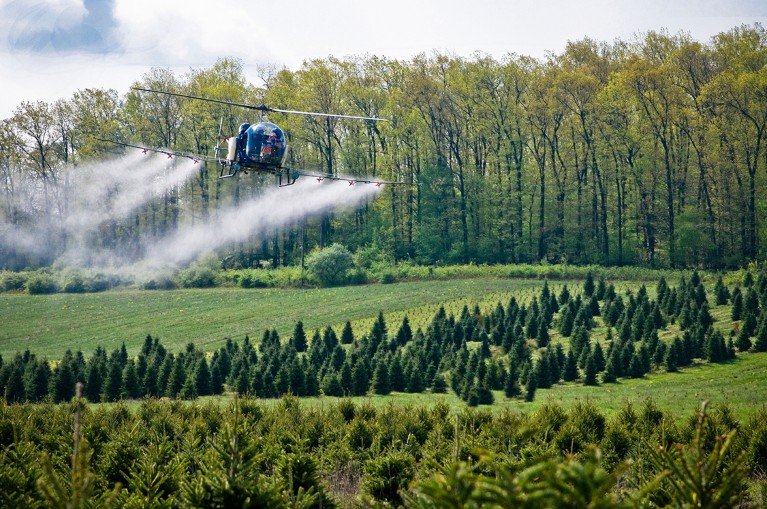
Potential links between pesticide exposure and health problems are hard to tease out.Credit: brt COMM/Alamy
In May, Vermont became the first US state to pass legislation that bans most uses of paraquat, a chemical herbicide linked to an increased risk of Parkinson’s disease. Other states have also examined paraquat’s safety. California’s Department of Pesticide Regulation studied the chemical in 2024, but chose not to ban it. However, in August, after persistent advocacy from farm workers and environmental groups, the state announced plans to phase out paraquat over a two-year period.

Nature Outlook: Parkinson’s disease
Paraquat is already banned in 70 countries, including China, Brazil, Turkey and member states of the European Union (where it’s been prohibited for nearly 20 years). And paraquat isn’t the only chemical under scrutiny. Other pesticides have been identified as potential triggers of Parkinson’s disease, including the heavy metals; the fish poison rotenone and the solvent trichloroethylene (TCE), which used in dry cleaning.
Although many researchers are certain that environmental factors play a fundamental part in Parkinson’s risk, they have struggled to convince regulators, particularly at the US federal level. Population studies take decades to complete, and the interplay between environmental toxicants and individuals’ genetic risk is difficult to tease out. But many neurologists and Parkinson’s advocates think that the science is sufficient to link some chemicals to the condition.
The delay in regulatory action is not caused by a lack of research, says Beate Ritz, an epidemiologist at the Fielding School of Public Health at the University of California, Los Angeles. “You can pile on as much science as you want to; it won’t change a thing until there is political will.”
Genetics and environment
It’s widely accepted that Parkinson’s disease is linked to a combination of factors, including genetics, changes to the brain as it ages and environmental triggers.
Genetics might be the most well-understood factor. About 20 gene variants have been linked to Parkinson’s. These variants are thought to cause the accumulation of proteins that clump to form Lewy bodies — aggregations that damage dopamine-producing nerve cells and deplete the brain’s supply of this ‘feel-good’ neurotransmitter. The loss of dopamine affects the brain’s ability to control movement.
But genetics accounts for only about 5–15% of cases of Parkinson’s disease. Other causes include behavioural factors such as physical activity, diet and smoking. Head trauma, some medications and even having red hair (because of a mutation in the MC1R gene) could also increase risk.
The potential link between chemicals and Parkinson’s was discovered in the early 1980s. Neurologist William Langston and his colleagues at the Santa Clara Valley Medical Center in San José, California, found that a small number of people who had taken a synthetic opioid called MPTP exhibited Parkinson’s-like symptoms1. Langston noted that when MPTP entered the brain, it was quickly converted to the toxic metabolite MPP+, which damages dopamine-producing neurons and is structurally similar to chemicals such as paraquat.
There’s seldom a one-to-one correlation between a toxicant and the development of Parkinson’s, says Rebecca Gilbert, a neurologist specializing in Parkinson’s disease and chief mission officer of the New York City-based American Parkinson Disease Association. She says it’s rare that someone’s Parkinson’s can be traced directly to them playing on their grandfather’s farm that was sprayed with paraquat when they were seven years old. Instead, it’s typically an amalgam of several risk factors. “I picture it like a glass of water,” Gilbert says. “You pour in that exposure to the spraying when you were seven, and then you pour in genetics, and then you pour in a little TCE.”
A body of evidence
Part of the challenge of deciphering how different chemicals contribute to Parkinson’s disease is that much of the damage occurs slowly, long before a person is diagnosed. And during those years, other factors can modify disease progression — making it difficult to pinpoint which exposures matter.
Study participants can’t be exposed to pollutants deliberately, so scientists seeking to establish that association are left with epidemiological and animal studies. But epidemiological studies take decades, and no country has an official registry of people with Parkinson’s disease for researchers to contact. And animal studies can’t completely mimic either the age-related loss of dopamine-producing brain cells or the full range of Parkinson’s symptoms.
Ray Dorsey, a neurologist at the Atria Health and Research Institute in New York City, studies environmental triggers of Parkinson’s. In work published in 2023, he highlighted a handful of case studies of people who developed Parkinson’s after TCE exposure2. One of these looked at 99 pairs of twins and found that exposure to TCE increased the risk of Parkinson’s by more than 500%. “We’re paying a really high price for dry-cleaning things,” Dorsey says.
One of the most well-known epidemiological studies of Parkinson’s involved military personnel stationed at Camp Lejeune, North Carolina. In 1982, the US Marine Corps found that water on the base was contaminated with volatile organic compounds, most notably TCE. A study3 published in 2023 focused on the health conditions of people who had been at Camp Lejeune for at least three months between 1975 and 1985. When researchers followed up these individuals between 1997 and 2021, they found that their rate of Parkinson’s disease was 70% higher than it was among personnel who had been living at Camp Pendelton, California — where the water was not contaminated — for at least three months during that same ten-year period3. Even among the Camp Lejeune veterans who did not have Parkinson’s, there was a higher prevalence of symptoms that might pre-date a Parkinson’s diagnosis, such as constipation, tremors and loss of sense of smell.

Use of the weedkiller paraquat has been linked to Parkinson’s disease.Credit: Romeo Gacad/AFP via Getty
Ritz uses geographical information system modelling to track environmental exposures and their link to conditions such as Parkinson’s. One of her focuses is farming communities. In a study published in 2024, she and her colleagues analysed people living or working near three agricultural counties in central California where farms were treated with paraquat4. The data went back to 1974, and peoples’ exposure times ranged from about 8 to 30 years. The researchers found that having higher exposure at work or at home increased the chance of getting Parkinson’s by 91%.
It’s intuitive to study people living and working in farming communities because of their direct contact with chemicals and the ability to track which products are used. But Dorsey co-authored a 2025 paper that found that the risk could extend to a wider population5. The study tracked people living near golf courses in Minnesota and Wisconsin. The researchers compared a 5,113-person control group and 419 people with Parkinson’s and found that living within 1.6 kilometres of a golf course raised the chance of getting Parkinson’s by 126%, compared with the risk for people who lived at least 9.6 kilometres away. The researchers also observed that this risk dropped the farther away people lived. The authors posited that the increased risk close by could be due to exposure to pesticides through inhalation and groundwater. Researchers didn’t measure the types or levels of pesticides, but noted that they are frequently used on golf courses, particularly in the United States, which uses as much as 15 times more pesticides on golf courses than do European countries.
“It shouldn’t be terribly surprising,” Dorsey says, “that chemicals designed to damage the nervous system of insects might have similar consequences on the nervous system of humans.”
Rotenone is another pesticide that could contribute to Parkinson’s. But there are few human studies that link it to the condition. One commonly cited study from 2011 compared 110 people with Parkinson’s (mostly farmers) who had formerly applied restricted-use pesticides on private property and a control group of 358 people from Iowa and North Carolina who regularly used chemicals at work in the 1990s, but were not cognitively impaired or diagnosed with Parkinson’s. Researchers found that people who had worked with rotenone — which degrades the function of mitochondria — had a 2.5 times higher risk of developing Parkinson’s than did people in the control group6. More-recent animal studies lend credence to this link. A 2025 study found that rats exposed to rotenone for 21 days had dysfunction in motor cortex synapses and upregulation of C1q (a glycoprotein) in the substantia nigra, a part of the brain that is affected in Parkinson’s7. This increased activity suggests an inflammatory response in that region of the brain.
Next steps
For Parkinson’s researchers, chemicals linked to the condition can’t be banned quickly enough. But regulators in the United States seem more hesitant than their counterparts in many other countries.
The European Union banned TCE a decade ago. The US Environmental Protection Agency (EPA) released a review of TCE in 2024 that prohibited its use in consumer products and many industrial and commercial products as of 15 September 2025. There are exceptions for some applications, however, including one lasting 50 years for what the EPA calls “essential laboratory use”.
Paraquat is undergoing review by the EPA, in a process conducted on regulated pesticides at least every 15 years. The agency has requested more data from manufacturers, and has said that it will host a roundtable to solicit public input.
Rotenone is banned in the European Union and the United Kingdom, but continues to be used in the United States and Canada to control invasive fish populations.
“The EPA demands an absurd level of proof that something is dangerous,” says Tim Greenamyre, a neurologist at the University of Pittsburgh in Pennsylvania. “They don’t like epidemiological studies,” he says, but they also “throw out animal studies because they say toxicants aren’t given at the exact dose that humans get”.
Greenamyre has a personal stake in this issue. He studied rotenone in his lab for decades and was himself diagnosed with Parkinson’s in 2021. Because of the lack of research on chemical causes of the disease, he says, any connection between his exposure and his diagnosis would only be speculative. But he hopes to help fill that gap in knowledge: he has received funding to study the mechanism by which rotenone, TCE and paraquat might trigger Parkinson’s.
Another open question is how many other chemicals might cause damage to the brain similar to that in Parkinson’s. Ritz’s current research is focusing on organophosphates and organochlorides, but she says there are many other potential offenders, including carbamates, pyrethroids and neonicotinoids — all pesticides.
Researchers such as Ritz have access to pesticide report systems that record who is spraying which chemical, where and when. But by the time they finish studying one pesticide, it has been replaced with a different one, which is later replaced by yet another.
“We are basically 20–30 years behind what’s happening in the fields,” Ritz says. And with every new contaminant that enters the scene, the potential that one might trigger Parkinson’s ticks up a notch.
Keep following us for the latest insights.