➡️ Did someone forward you this email? If you would like to receive this information directly, every morning before the markets open in New York, sign up here. ONE BIG THING At Google’s DeepMind, absence did not make the heart grow fonder There’s an extraordinary quote in Bea Nolan’s account for Fortune of how Demis
➡️ Did someone forward you this email? If you would like to receive this information directly, every morning before the markets open in New York, sign up here.
ONE BIG THING
At Google’s DeepMind, absence did not make the heart grow fonder
There’s an extraordinary quote in Bea Nolan’s account for Fortune of how Demis Hassabis lost his role as CEO of DeepMind, the London-based lab that created Google’s Gemini AI product. Apparently, Hassabis was largely absent from company offices: “I can’t say that I’ve ever seen Demis walk around the office in the Gemini area,” one DeepMind engineer said. (To be fair, he made plenty of media appearances.)
DeepMind had also seen a recent exodus of talent—in June, Google lost Gemini co-lead Noam Shazeer to OpenAI and Nobel laureate and AlphaFold co-inventor John Jumper to Anthropic. And the product had fallen behind its competitors in terms of capabilities. So it is perhaps not surprising that parent company Alphabet, based 6,000 miles away in Mountain View, California, wants more direct control. Hassabis, who will now become the company’s chairman, will be replaced by DeepMind’s chief technology officer, Koray Kavukcuoglu, who is based in Mountain View and will report directly to CEO Sundar Pichai at Alphabet.
THE MARKETS
The price of oil ticks up again
- S&P 500 futures were up 0.14% this morning. The index closed up 0.62% in its last session.
- In Europe, the Stoxx 600 was down 0.02% in early trading and the U.K.’s FTSE 100 was down 0.3% before lunch.
- Asia: South Korea’s KOSPI was up 0.65%. Japan’s Nikkei 225 was up 2.08%. India’s Nifty 50 was down 0.05%. China’s CSI 300 was up 0.16%.
- Brent crude was back over $84 per barrel this morning.
- Bitcoin was at $65.1K.
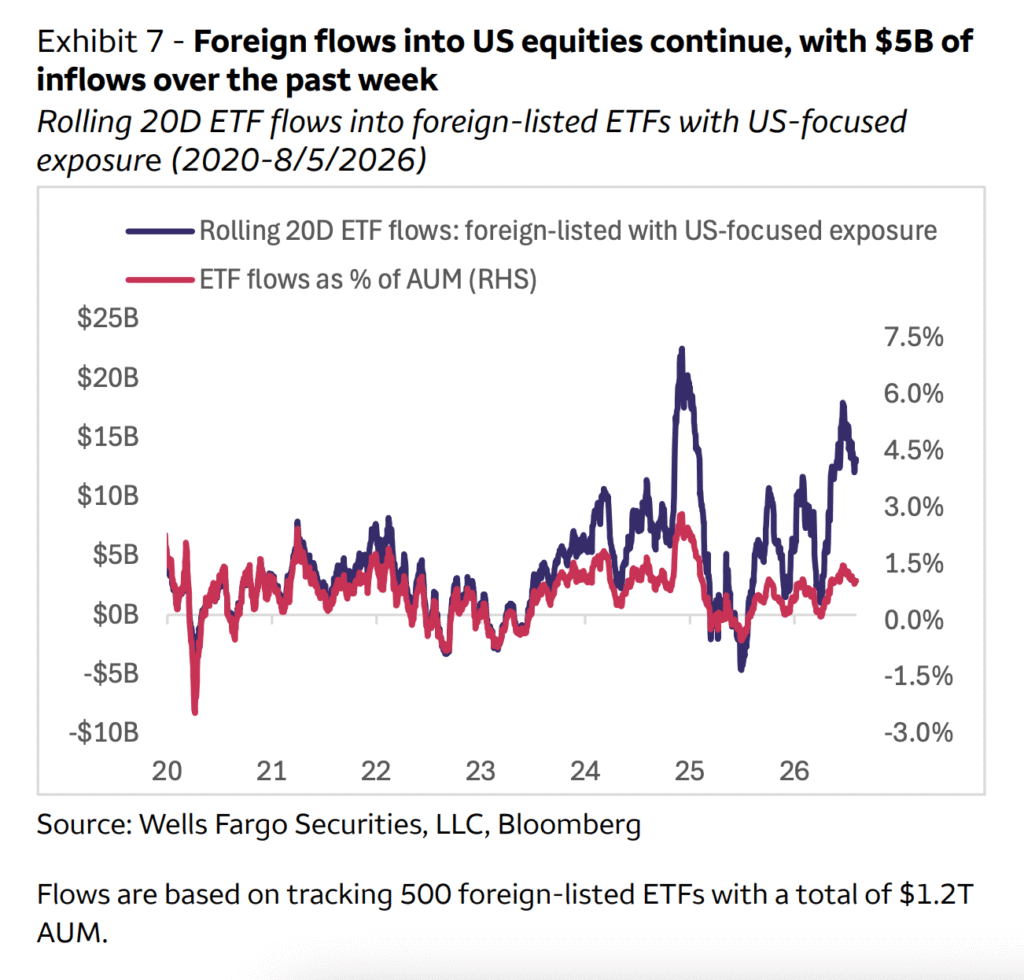
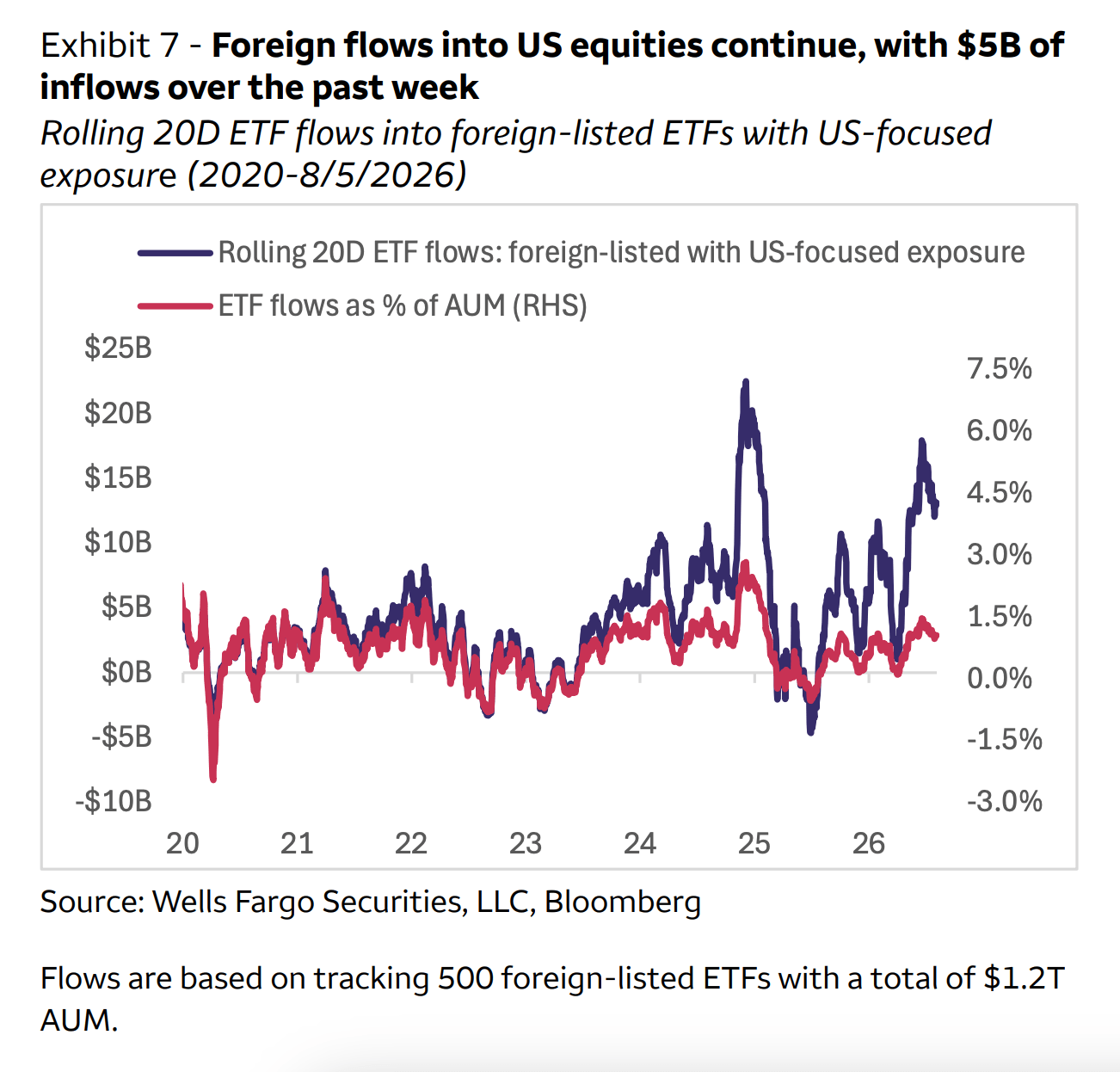
‘Sell America’ never happened—at least in stocks
As this chart from Wells Fargo’s Ohsung Kwon shows, foreigners never really stopped buying U.S. equities:
MORE FROM FORTUNE
Forget DeepSeek. China’s real ‘Sputnik moment’ is happening on campus as American universities lose their advantage – Mia Osmonbekov
By propping up the yen, the U.S. and Japan are actually admitting dollar dominance isn’t what it used to be, top economist warns – Jason Ma
Trump is betting that the U.S. naval blockade choking Iran’s economy can achieve what bombs and missiles couldn’t as more oil sneaks out of the Gulf – Jason Ma
‘Millennials are not punk kids anymore’ — Ocasio-Cortez sees a ‘generational tidal wave’ driven by anger over economic futures sidelined by boomers – Jason Ma
Mysterious drone flights continue plaguing Europe after an explosive-laden drone was found at a German airport used to support Ukraine – The AP
Corcoran Group CEO says Gen Z’s housing market struggles mirror what boomers faced 30 years ago: ‘Stop buying Starbucks coffee,’ she advises – Orianna Rosa Royle
AI
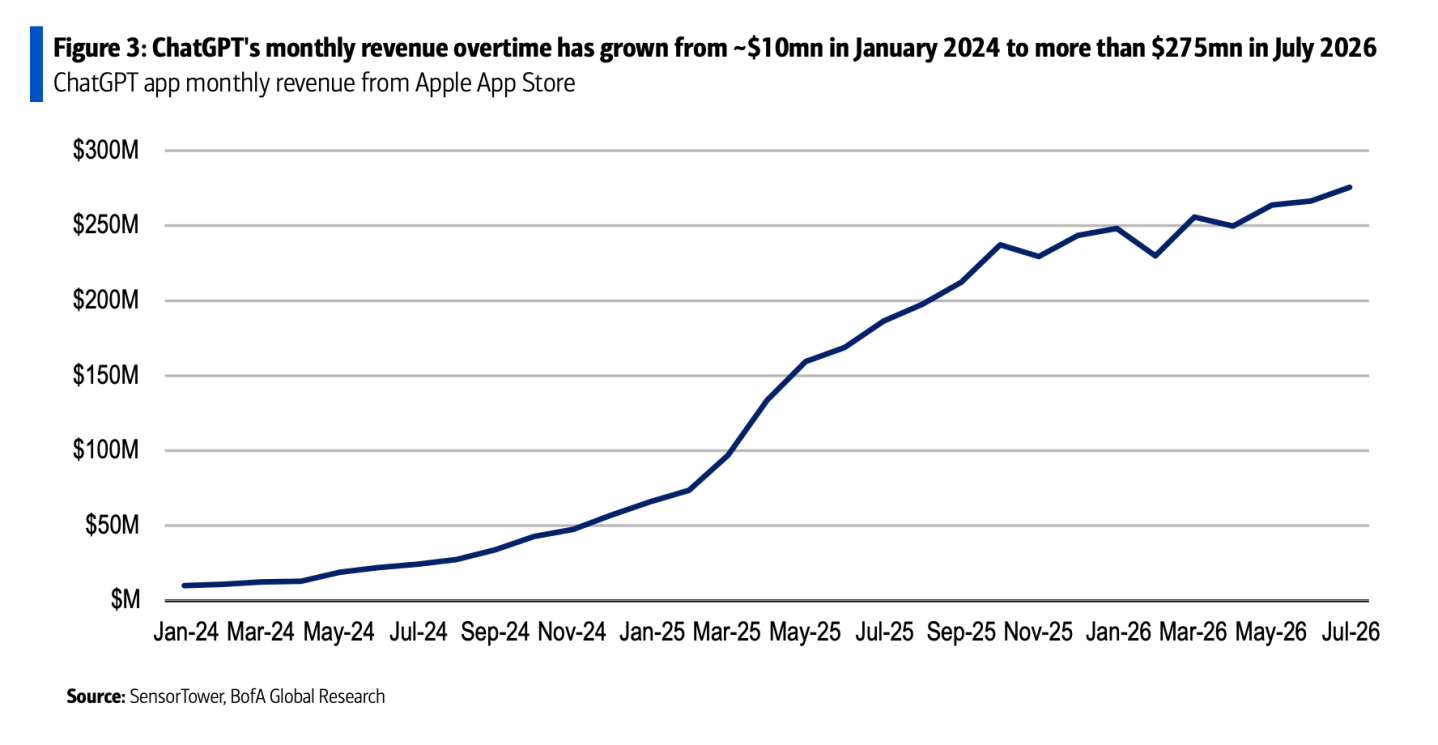
OpenAI’s revenues are plateauing, Bank of America says
ChatGPT’s monthly revenue from Apple’s App Store has flattened over time, according to this Sensor Tower data published by Bank of America’s Wamsi Mohan. It hit $265 million per month in July:
By amazing coincidence, app store revenue for Anthropic’s Claude went through the roof this year, as this next chart shows. (Ignore the flatline for Google’s Gemini—that’s likely an artifact of Google pulling its billing mechanism in-house so it doesn’t have to pay fees to Apple.)
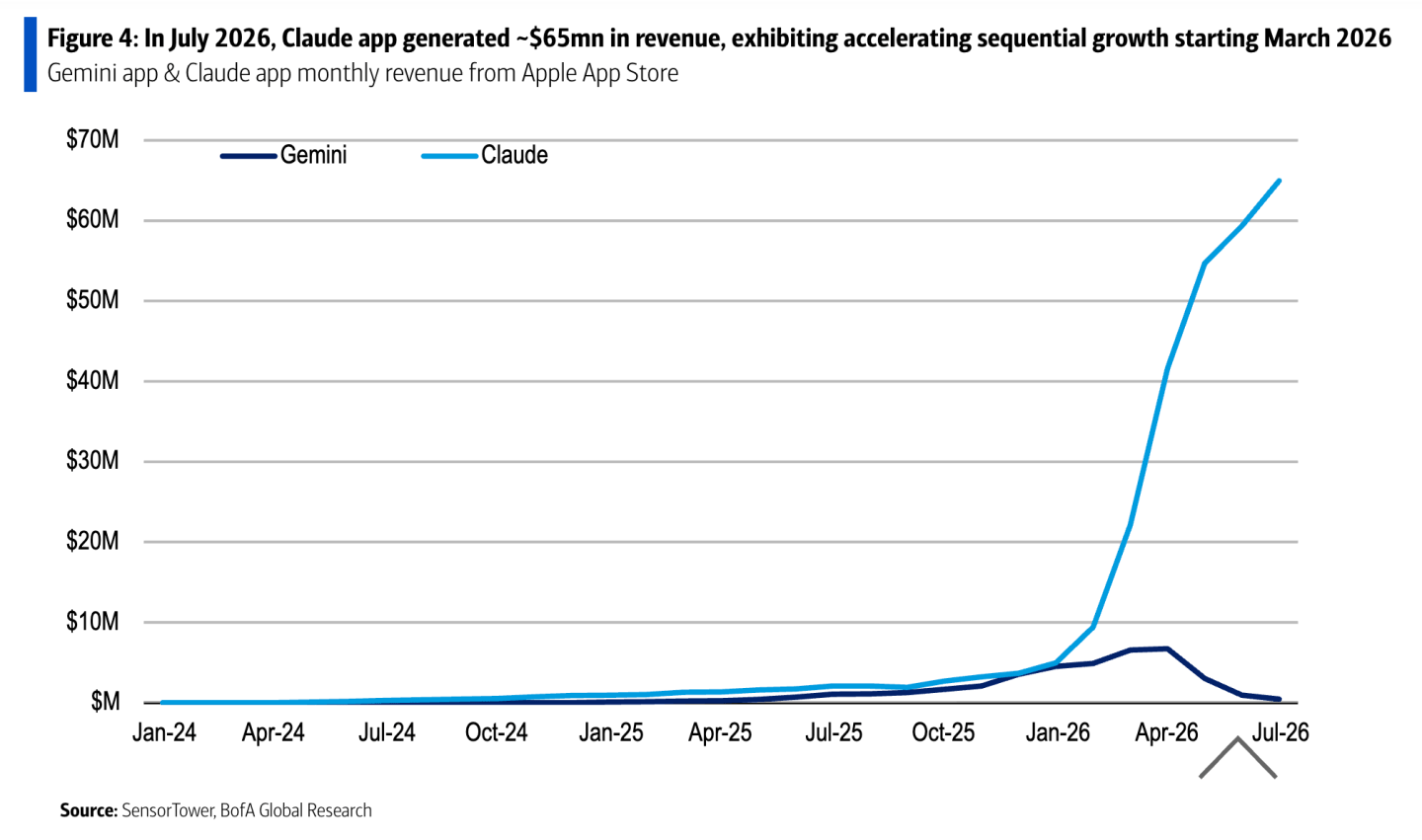
CHART OF THE DAY
Everyone is profiting off AI except the people who make AI
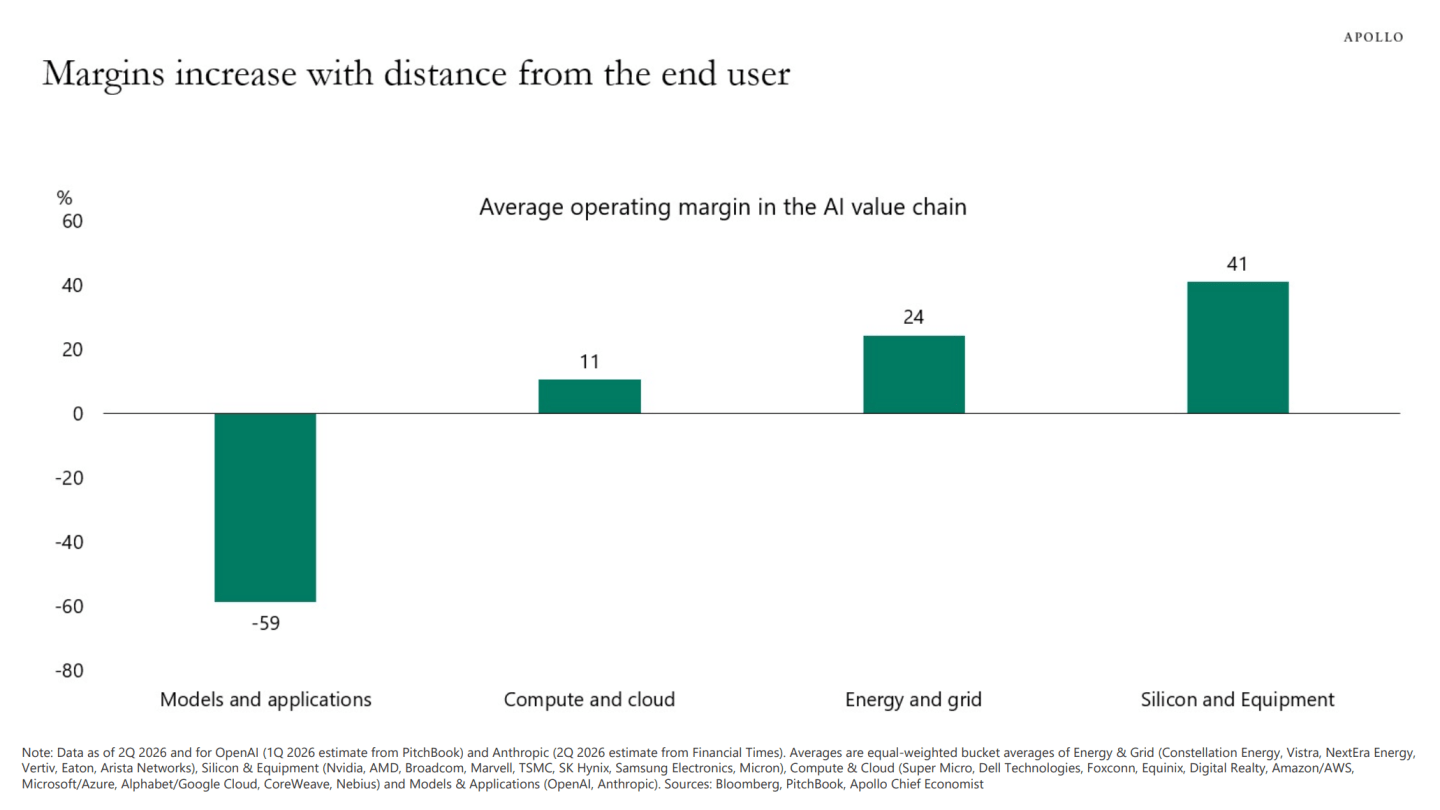
“Is AI a bubble?” This is the best, simplest explanation we’ve seen so far. It comes from Torsten Sløk of Apollo Global Management. He broke out the various sectors of AI into four buckets: the models themselves (OpenAI, Anthropic, etc.) and then their non-AI suppliers of things like cloud services, chips, and energy. Lo and behold, everyone in the sector whose primary business is not building an AI model is profitable. Only the model-makers are money losers—which implies that they are running on investment capital, not their own revenues. “Will the ROI show up for AI’s end customers fast enough to sustain the spending that is generating those upstream margins?” Sløk asks.
IRAN
Iran and the U.S. test who can bear most pain over the closure of the Strait of Hormuz
The war between Iran and the U.S. appears to have entered a stalemate as Iran refuses to reopen the Strait of Hormuz and the U.S. watches Iran’s economy crumble.
“We are low-keying it,” President Trump said to Axios over the weekend. “We are only semi-negotiating with them. We are just watching Iran with its huge inflation and the fact they have no money.” Centcom said it had turned away 55 ships that attempted to sail to Iranian ports in recent days.
Iran appears to be willing to see how much political damage it can inflict on Trump by keeping oil prices high and continuing a war that is unpopular with voters. In turn, the U.S. appears to be content to see if a break in hostilities will focus Tehran’s attention on its precarious economic position.
Iran on Saturday published a list of demands including a complete end to hostilities, the removal of U.S. forces from the Strait, and the lifting of sanctions and the payment of war reparations.
Those demands are similar to what Trump had previously agreed to in the “memorandum of understanding” back in June, with the exception of reparations, the NYT notes. But Trump is unlikely to agree to any pact that leaves Iran with even partial control of the Strait.
JOBS, AND THE LACK THEREOF
U.S. unemployment would be 5% if it weren’t for ghost workers leaving the market
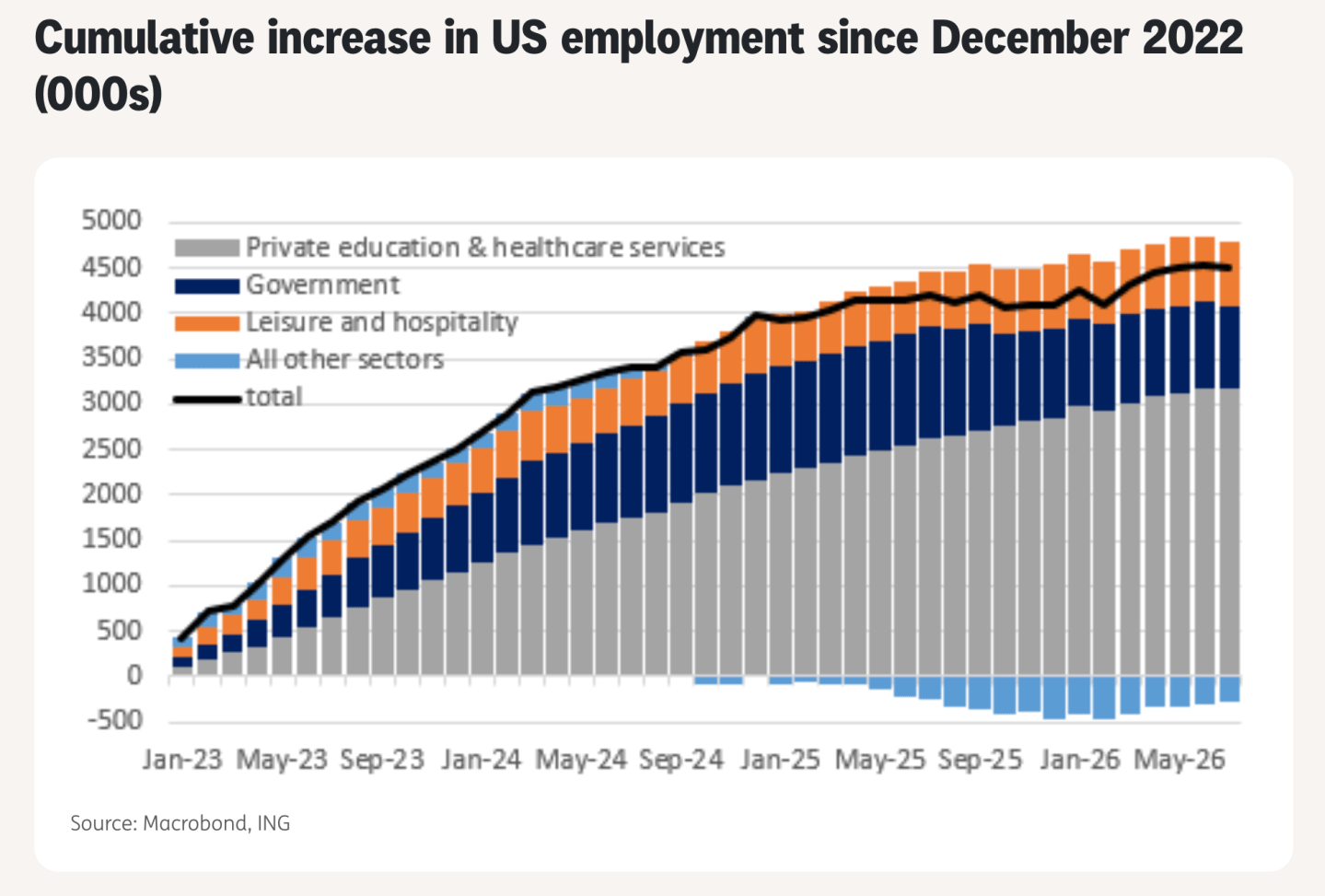
As you no doubt know by now, the U.S. reported a decline of 23,000 jobs in July—a depressingly weak report. Counterintuitively, unemployment went down, to 4.1% from 4.2%.
Government jobs were cut by 53,000 as schools and other services shut for the summer. But the numbers also revealed that unemployment only declined because many unemployed workers simply gave up trying to find a job, or retired.
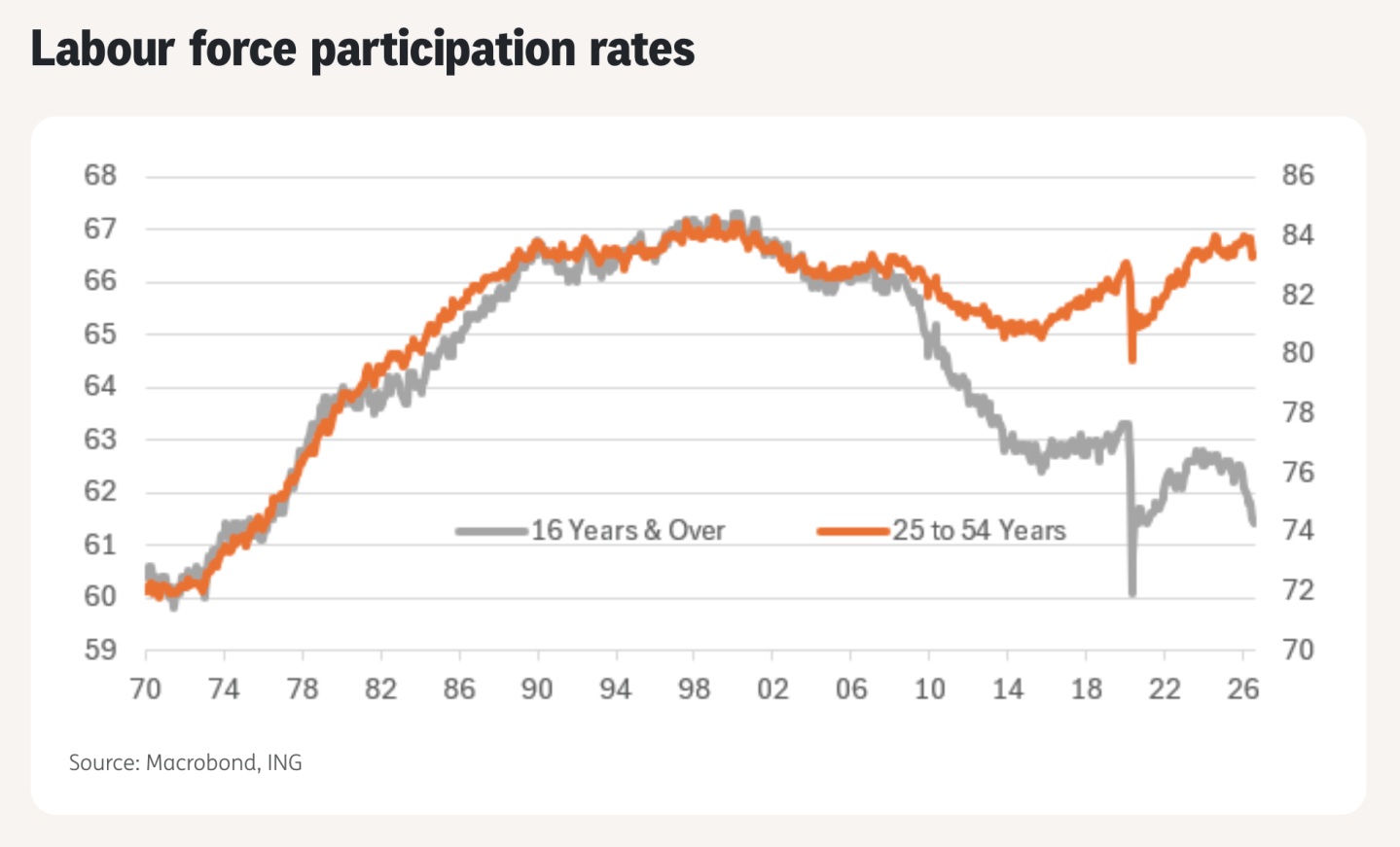
The best explanation of this new, bad trend came from James Knightley at ING. “We have to look at the participation rate. It fell to 61.4%, which, outside the pandemic, we must go all the way back to the mid to late 1970s to find a lower reading. A quarter of a million people left the labour force last month. Within that, the number of people classifying themselves as employed fell 87k while the number of people classifying themselves as unemployed fell 178k. Therefore, the fall in the unemployment rate was caused by disengagement rather than for any positive reason,” he told clients.
If the participation rate had held steady, “we would have a U.S. unemployment rate in excess of 5%,” he wrote. These charts show the trend:
Young people aren’t working
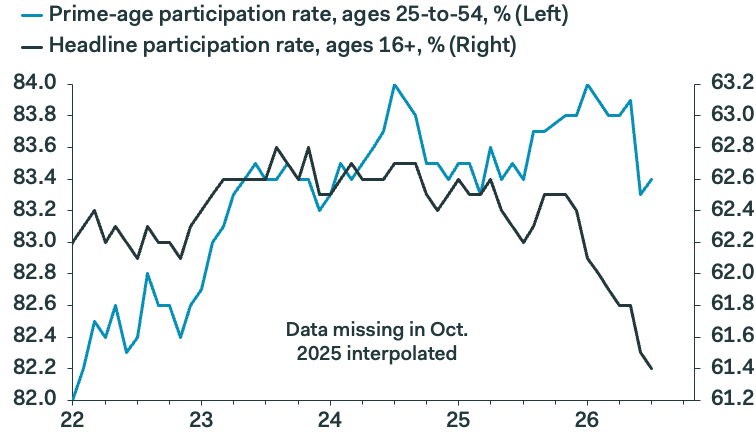
It’s young people who are losing out on the jobs, according to Bill Adams, chief U.S. economist at Fifth Third Commercial Bank. “Unemployment among workers aged 20-24 without prior work experience, a good proxy for the Class of 2026, was 242,000, down slightly from 253,000 in July of 2025. The last two years have seen the highest unemployment for recent grads since 2016,” he said in an email.
This chart from Pantheon Macroeconomics shows how employment among younger people is dropping off a statistical cliff:
Did the Fed’s Warsh just get his credibility back?
Some analysts on Wall Street have been mean about new Fed chairman Kevin Warsh recently, saying he lacks “credibility” because he won’t give forward guidance and he hasn’t raised interest rates even though inflation has been above 2% for five years. But the weak jobs number shows that raising interest rates at the last FOMC meeting would have been the wrong call, given that the labor market needs all the cheap money it can get.
“The loss of 23,000 jobs is another reason the Fed was right to hold off on raising rates in July,” said Jamie Cox, a managing partner at Harris Financial Group.
Charlie Ripley, a senior investment strategist at Allianz Investment Management, agreed: “If anything, it raises the bar for any Fed rate increases heading into the fall.”
The U.S. will report a new consumer price inflation (CPI) number on Wednesday—the nightmare scenario for the Fed is if inflation is up while the job market is down. That would make its next interest rate decision an impossible call.
NUMBER OF THE DAY: AI’s contribution to GDP growth
0.2 percentage points
The contribution to GDP growth of the AI industry, as calculated by Pantheon Macroeconomics’ Samuel Tombs and Oliver Allen. That’s surprisingly small. Why? “The sums pouring into AI infrastructure are enormous, and a naïve reading of the national accounts implies that this capex wave now is the source of about half of overall GDP growth,” they said in a recent note. However, “most AI equipment is imported,” meaning U.S. dollars leaving the country—and that is counted as negative for GDP. “Spending on AI hardware—semiconductors, computers, and telecoms equipment—subtracted 0.8pp from year-over-year GDP growth in Q2,” they say.
THE FRONT PAGES TODAY
Donald Trump is dismantling US guardrails, warn former security officials – FT
Abel puts a big chunk of Berkshire’s cash to work – CNBC
Private Credit Is Under Growing Strain, Despite Industry’s Upbeat Tone – WSJ
Behind Bessent Moves, Wall Street Sees Sign of Bond-Market Angst – Bloomberg
MacKenzie Scott Steps Back Into Spotlight With New Book – NYT
ONE MORE THING
President Trump is obsessed with grass
All told, Trump mentioned grass—its quality, whether it should be paved over or not—in at least 45 public events or interviews over the past 18 months, The AP reported. That’s once every 12 days. And that doesn’t include the numerous social media posts that Trump has also made on the topic.
He’s already far outpaced the 26 times he mentioned grass during the entirety of his first four-year term.
That’s not all. Trump recently hosted Matt Koch, the lawns research fellow for Scotts Miracle-Gro Company, in the Oval Office to discuss planting new grass on the White House’s South Lawn. “An amazing dialogue, talking grass for half an hour,” Koch said. “Going back and forth about grass.”
The White House declined to comment. But Trump has made clear where his interest in—and knowledge of—grass comes from. “I know a lot about grass because I own a lot of golf courses,” he said while announcing the recipients of the Kennedy Center Honors last August. “And, if you don’t have good grass, you’re not in business very long.”
For more tech updates, stay tuned to our blog.