
YouTube HILLSBORO, N.D. — The Kritzberger family has farmed in the Red River Valley for more than a century. They once had livestock. Now they grow sugar beets, soybeans and grains. Like many farmers, they labor to balance the books. “We’re in an incredible amount of debt,” Ang Kritzberger said as she walked the farm
YouTube
HILLSBORO, N.D. — The Kritzberger family has farmed in the Red River Valley for more than a century. They once had livestock. Now they grow sugar beets, soybeans and grains.
Like many farmers, they labor to balance the books.

“We’re in an incredible amount of debt,” Ang Kritzberger said as she walked the farm on a recent fall morning.
For the past 10 years, the Kritzbergers have had another worry. Their daughter Nina has Type 1 diabetes. That landed the family in a national debate about how to protect patients from high insulin costs.
Nina was diagnosed when she was 7.
“I slept by her bedside for the first 60 days,” Ang Kritzberger said. “And I had to stick her finger every two hours, 24 hours a day, to make sure that she was OK.”

Ang Kritzberger with daughter Nina, who has Type 1 diabetes. Nina’s condition landed the family in a national debate about how to protect patients from high insulin costs.
Hannah Norman/KFF Health News
hide caption
Hannah Norman/KFF Health News
The Kritzbergers also pay a lot out-of-pocket every year for medical care, despite having insurance — at least $8,000 for drugs, supplies and medical appointments.
That’s not uncommon. Soaring insulin prices for years forced people with diabetes to pay hundreds, even thousands, of dollars. Many rationed insulin, with sometimes deadly consequences.
But today, there’s a growing movement across the country to cap what people with diabetes pay for insulin. That’s brought together Democrats and Republicans, tapping an emerging consensus that the government should protect people from high drug prices.
“Typically, Republicans are more on the free-market side of things, Democrats are more supportive of intervening,” said North Dakota state Sen. Sean Cleary, a Republican. “But in this case, I think there was broad-enough agreement that this market just wasn’t functioning for folks.”

Cleary co-sponsored legislation last year to cap patients’ insulin bills at $25 a month. North Dakota is one of 29 states that have enacted such measures.
The cap limits what patients have to pay out-of-pocket every month for insulin — even if they have a high deductible that might force them to pay thousands of dollars before coverage kicks in for other healthcare, such as physician visits, hospitalizations or other prescriptions.
Patient advocates including the American Diabetes Association began pushing for out-of-pocket caps and other protections amid spiking insulin prices and stories of patients who had died because they couldn’t afford their medicine.

North Dakota state Sen. Sean Cleary, a Republican, co-sponsored legislation last year to cap patients’ insulin bills at $25 a month.
Hannah Norman/KFF Health News
hide caption
Hannah Norman/KFF Health News
About a fifth of the estimated 40 million Americans with diabetes depend on insulin. The drug has been in use for a century. But steep price hikes boosted patients’ out-of-pocket costs, which hit an average $470 a year in 2018 for people with private health insurance, according to federal data.
Prices have since moderated as drug companies faced a public backlash. Average yearly out-of-pocket costs for people with private insurance declined to $220 in 2025.
But for many families like the Kritzbergers, the prospect of a government cap offered protection from future price hikes and some relief from the anxiety of a serious disease.
Nina Kritzberger, now 17, said she already has a lot to worry about.
“I have to make sure I have insulin, a spare pump, a spare Dexcom,” she said, ticking off the equipment that patients with diabetes rely on. “Oh, what if my pump doesn’t work, or my Dexcom? Then I have to bring a testing kit. What if I go low? I need Gatorade, glucose.”
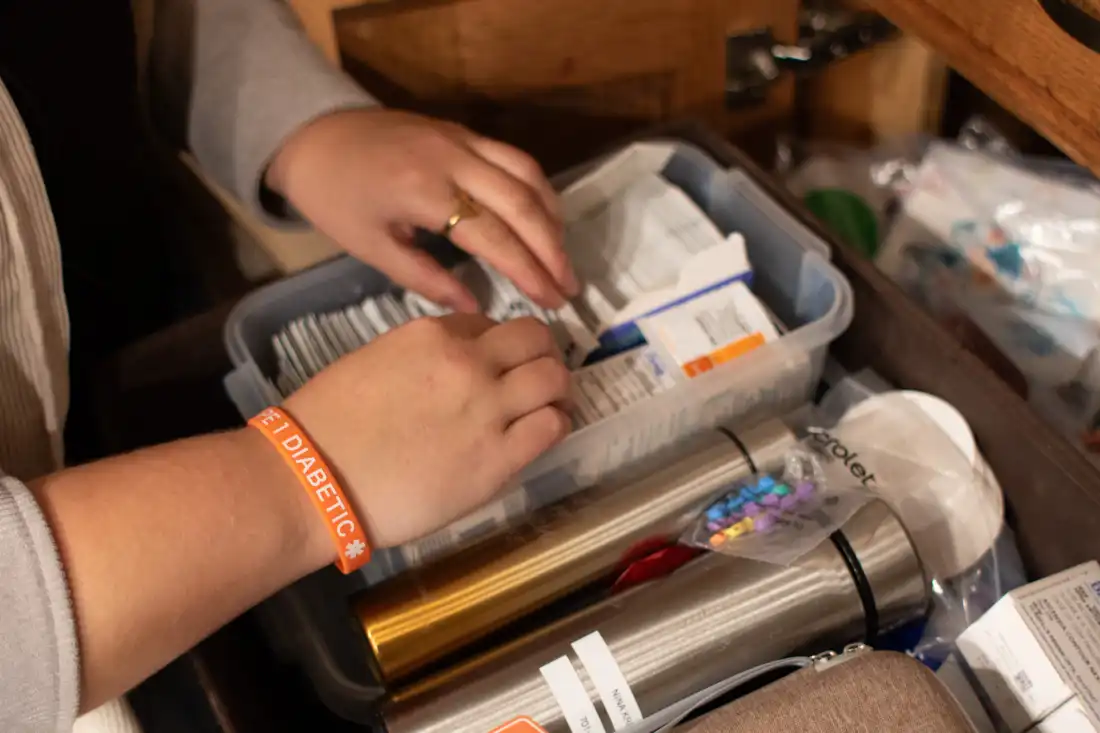
The Kritzbergers pay a lot out-of-pocket every year for medical care, despite having insurance — at least $8,000 for drugs, supplies and medical appointments.
Hannah Norman/KFF Health News
hide caption
Hannah Norman/KFF Health News
A missed dose of insulin could land her in the hospital. “My body would start attacking itself and start shutting down,” she said. “And then I would die.”
The price cap strategy initially caught on with Democrats. In 2019, Colorado became the first state to enact what was called an insulin copay cap. State-regulated health plans there cannot charge patients more than $100 for a 30-day supply of the drug.

In 2022, President Joe Biden signed legislation that capped insulin prices for Medicare enrollees at $35 a month. Biden and congressional Democrats wanted to extend the cap to people with private health insurance, including Americans with employer-provided coverage. But Republican opposition sank that proposal.
In North Dakota, state Sen. Tim Mathern led the effort to enact an insulin copay cap for health plans regulated by the state. For a long time, Mathern struggled to find supporters. He’s one of only five Democrats in the Senate. There are 42 Republicans.
“One is very lonely being a Democrat,” Mathern said, “especially if you espouse the more progressive end of public policy.”

North Dakota state Sen. Tim Mathern, a Democrat.
Hannah Norman/KFF Health News
hide caption
Hannah Norman/KFF Health News
Health insurers and the state chamber of commerce said price relief for people with diabetes would mean higher insurance premiums for everyone else. “We do not make health insurance more affordable by passing coverage mandates,” Blue Cross Blue Shield of North Dakota lobbyist Megan Hruby told lawmakers.
The industry tapped into many lawmakers’ skepticism about regulation, said Janelle Moos, a state lobbyist for AARP. The nonprofit advocacy group for older Americans supported the insulin bill.
“It wasn’t the role of government,” Moos said she was told by many GOP lawmakers. “In a state like ours, we hear that all the time.”
Ang and Nina Kritzberger joined other families driving hours across the state to testify at the Capitol in Bismarck.
It was intimidating at first, Ang Kritzberger said. “It was me and six other lobbyists that were going to be giving their testimony against me,” she recalled.
But supporters of the insulin bill showed that a similar measure that limited out-of-pocket costs for state employees with diabetes had little impact on insurance premiums.
It also became clear that many lawmakers, including Republicans, had grown very frustrated with drugmakers, health insurers and others in the healthcare industry.
“Why are folks paying hundreds of dollars a month for a drug that’s been commercially available for decades?” asked Cleary, the state senator. “I just kept coming back to the fact that this market seems so broken and these families are having to make impossible decisions about rationing medication or skipping treatment.”
State Rep. Carrie McLeod is also a Republican, and a diabetes educator. She said the healthcare system had become too focused on the bottom line. “The insurance companies started out to really help people with catastrophic needs, but things have gotten out of control,” McLeod said.
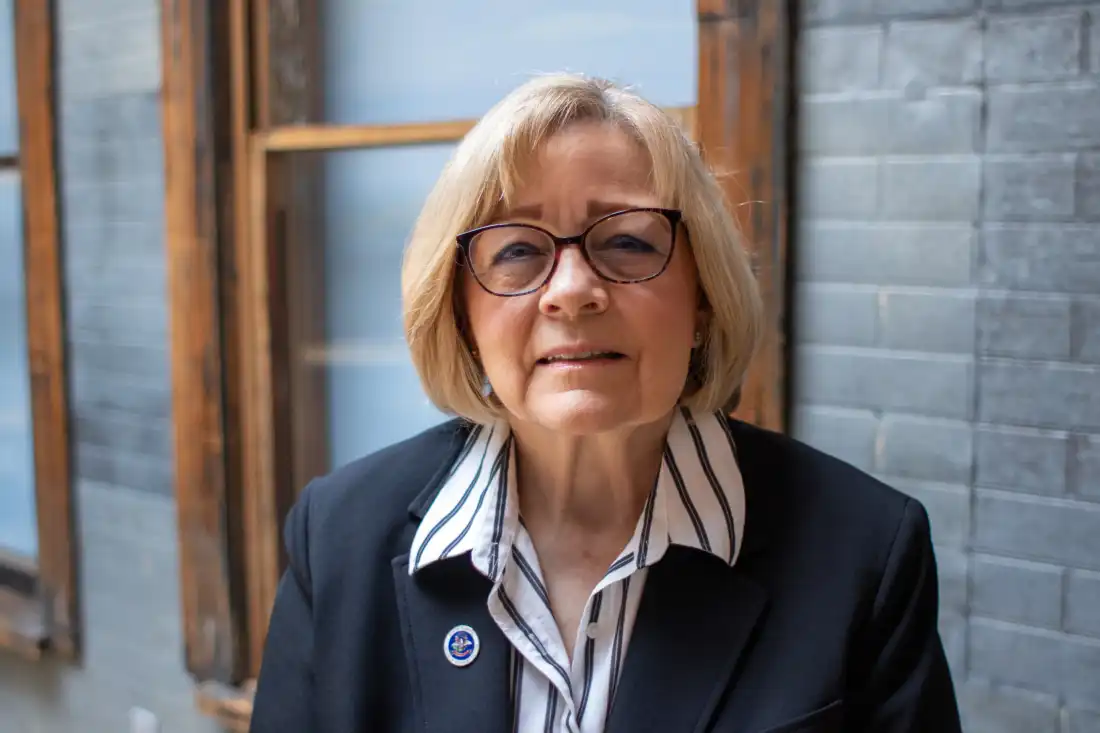
North Dakota state Rep. Carrie McLeod is a Republican and a diabetes educator.
Hannah Norman/KFF Health News
hide caption
Hannah Norman/KFF Health News
When the insulin bill came up for a vote last year, it passed with overwhelming bipartisan support.
The cap won’t suddenly make healthcare affordable. For one thing, states can regulate only some health plans. Health insurance provided by larger employers is typically regulated by the federal government.
But polls suggest government regulation of healthcare prices is drawing Americans together.
About 7 in 10 U.S. adults — including 68% of Republicans and 77% of Democrats — said in a KFF survey earlier this year that there isn’t enough government regulation to limit the price of prescription drugs.
Congress is now considering a national cap on insulin prices. Among the bipartisan list of co-sponsors is Sen. Kevin Cramer, a North Dakota Republican.
Back on her farm, Ang Kritzberger says the insulin debate showed something else.
“We’re very connected in North Dakota,” she said, recalling how her neighbors had recently helped a farmer with brain cancer harvest his sugar beets. “It’s all about being connected and finding that common ground.”
KFF Health News is a national newsroom that produces in-depth journalism about health issues and is one of the core operating programs at KFF — the independent source for health policy research, polling, and journalism.
{For more tech updates, stay tuned to our blog.|Keep following us for the latest insights.|Check back often for more exciting news!}