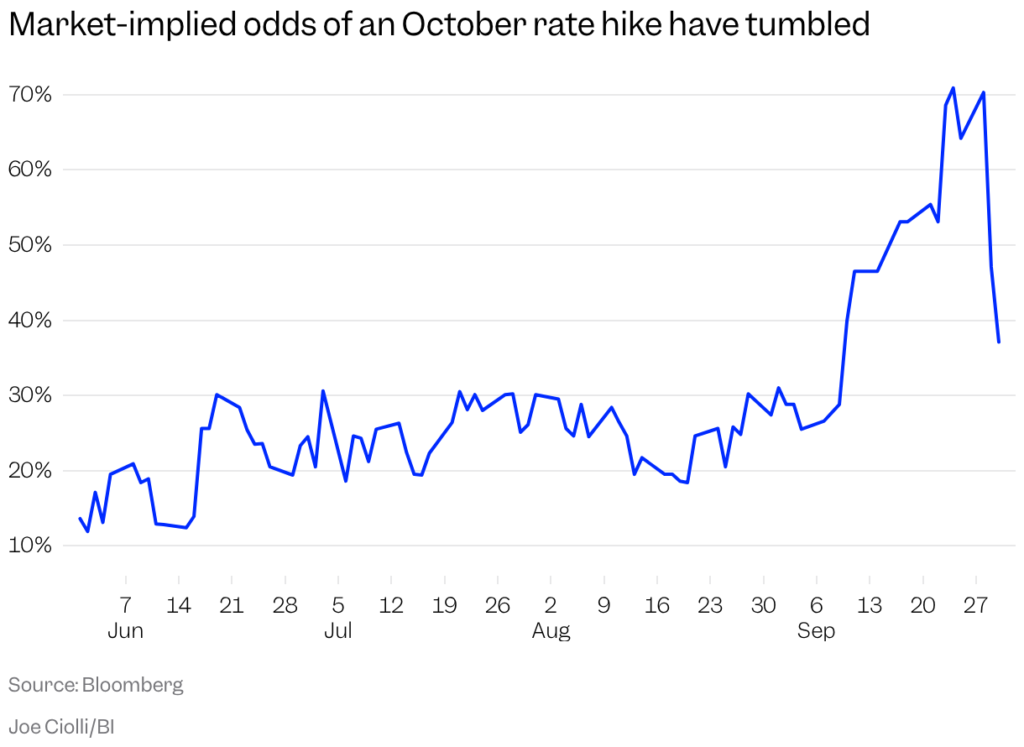
The Fed gives an update on interest rates every month or two. But what investors think the central bank will do next can shift in less than a day. This week is a great example. Heading into Tuesday, investors were pricing in a 70% chance of an October rate hike. But then, in the afternoon,
The Fed gives an update on interest rates every month or two. But what investors think the central bank will do next can shift in less than a day.
This week is a great example. Heading into Tuesday, investors were pricing in a 70% chance of an October rate hike. But then, in the afternoon, New York Fed President John Williams suggested that the bank could wait until December. The probability plummeted.
Fast forward to Wednesday morning, when the Fed’s preferred core inflation measure came in cooler than expected, denting the case for an immediate rate hike. By the end of the day, odds of an October move had fallen to 37%.
The entire episode played out over roughly 18 hours.

Here comes the jobs report
As if investor expectations hadn’t been whiplashed enough this week, we have the September jobs report coming tomorrow. With rate-hike odds shifting so dramatically, the script for what traders should expect has been rewritten.
Let’s walk through some scenarios, and the most likely market reaction to each:
- Hot jobs / wages: October hike odds snap back, short-term yields rise, and stocks likely fall as investors brace for another round of higher rates.
- Weak report: A Fed pause looks likelier, short-term yields fall, and stocks likely rise on the prospect of a less hawkish Fed. Concerns of an economic slowdown may linger.
- Somewhere in between: The Fed gets room to wait, short-term yields ease, and stocks likely rise as the soft-landing narrative gets another lease on life. This is the preferred outcome for investors.
The market’s bigger problem remains
But there’s a catch. None of these outcomes necessarily solves the bond market’s biggest problem — one that transcends the Fed’s next move: elevated long-term yields, which are already at multi-decade highs. These are the rates that impact things like mortgages, credit cards, and car loans.

Long-term Treasury investors aren’t simply focused on whether the Fed hikes in October or December. They’re weighing Washington’s enormous deficits and the growing supply of government debt, along with the risk that inflation stays stubbornly high. Throw in the debt-fueled AI buildout, and investors are demanding serious compensation to tie up their money for the next few decades.
The Fed isn’t going to be able to fix that — certainly not with one meeting that’s still four weeks away. If policymakers skip an October hike and long-term yields still refuse to come down, don’t say you weren’t warned.
Your guide to what’s moving markets
For more tech updates, stay tuned to our blog.