Receive the daily Popular Science newsletter💡 Breakthroughs, discoveries and DIY tips delivered six days a week. By registering, you confirm that you are over 16 years of age, will receive newsletters and promotional content, agree to our Terms of Use, and acknowledge the data practices in our Privacy Policy. You can unsubscribe at any time.
Amateur and professional astronomers alike have captured incredible photos of Jupiter from Earth over the years, while space probes like NASA’s Juno have gotten up-close glimpses of the gas giant. But just because an image of the largest planet in the solar system is a little grainy doesn’t make it any less interesting or creative. During a recent visit to the Hooker Telescope at the Mount Wilson Observatory in California, musician, director and retro technology enthusiast Chris Graue decided to try to take some pictures of Jupiter using one of the strangest offerings in video game history, the Game Boy camera.
Released in 1998, the Game Boy camera expanded the pixelated capabilities of the iconic gaming device to incorporate photography. However, its uses were quite limited from the beginning. The 128-megapixel add-on was only capable of generating small four-color grayscale images printed through its small, receipt-like printer. But while the camera was more of a novelty than a useful tool, it still generated a cult following that has lasted long after Nintendo discontinued the product in 2002.
Graue’s experiment in astrophotography required some modifications to work correctly. First, he and his friends attached C-mount lenses to the Game Boy camera and then used a specially designed 3D-printed adapter to allow it to slide into the eyepiece of the observatory’s 60-inch telescope. Once in place, this meant that the Game Boy camera technically shot through a 730,000 millimeter lens.
However, Jupiter was not Graue’s first subject. He initially attempted to take some images of the moon, but quickly discovered that Earth’s satellite was simply too close for the ultra-powerful observatory’s telescope.
“What I see is cool, but the moon is not identifiable,” he said in his social media post.
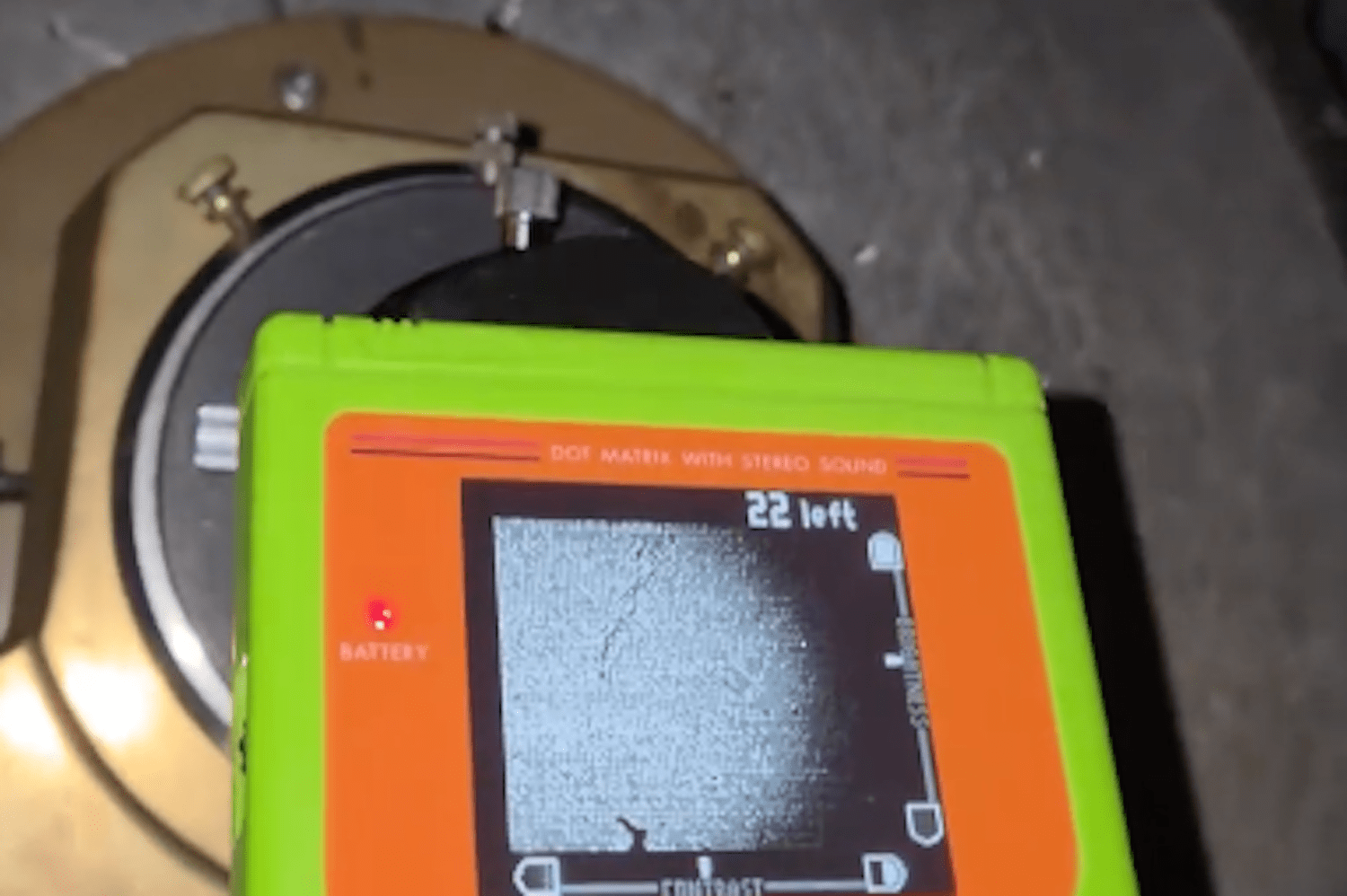
At an average distance of 444 million miles from Earth, Jupiter turned out to be a much more appropriate target for this test. The Game Boy camera photos aren’t exactly discernible without proper context, but Graue managed to snap some photos that highlight Jupiter’s cloud bands, as well as a view of the gas giant’s edge. Regardless of the clarity, it was certainly a successful experiment.
“The answer is yes: if you’re committed enough, you too can take a photo of Jupiter with your Game Boy camera,” Graue stated.
Their photo shoot couldn’t have taken place in a more appropriate location. According to English poet Alfred Noyes, Jupiter was the first object observed during the Mount Wilson Observatory’s “first light” event for its 100-inch telescope in 1917.

2025 PopSci Best of what’s new
Keep following us for the latest insights.