Get the Popular Science daily newsletter💡 Breakthroughs, discoveries, and DIY tips sent six days a week. By signing up, you confirm you are 16+, will receive newsletters and promotional content and agree to our Terms of Use and acknowledge the data practices in our Privacy Policy. You may unsubscribe at any time. Between 20 and
Between 20 and 30 percent of Americans bite their nails, according to The Cleveland Clinic. Why? Among other reasons, nail biting “often has a self-soothing quality—in fact, it provides a sense of calm—so people may use it as a coping mechanism.” It’s also common to bite nails while bored or stressed.
Whatever the reason, you may be wondering if biting your nails is scientifically gross, so let’s explore its health impacts. (Short answer: 1000xYes, it’s gross.)
Turns out your hands are dirty
You know how you’re supposed to wash your hands before eating? There’s a reason for that: hands are filthy, mostly because they’re always touching everything. Biting your fingernails is worse than eating without washing your hands—you’re sticking your fingers directly into your mouth.
And fingernails themselves are uniquely gross. A widely cited 1988 study in the Journal of Clinical Microbiology by researchers from the University of Pennsylvania and Johns Hopkins University found that under the fingernails is the region of the hand with the most bacteria, by a long shot. “The subungual spaces had an average log10 CFU of 5.39, compared with a range from 2.55 to 3.53 for other hand sites.” Those numbers might not sound that different, but we’re talking about a logarithmic scale of 10, where 5.39 is 10 to the power of 5.39, which works out to around 245,000. And 2.55 works out to about 355, which is far smaller. So, mathematically, it’s pretty nasty under your fingernails.
Research also suggests that biting your nails means more bacteria in your mouth. A widely cited 2007 study published in Oral Microbiology and Immunology by researchers at Atatürk University in Turkey tested the saliva of 25 nail biters and 34 non-nail biters. 76 percent of nail biters tested had some kind of Enterobacteriaceae in their sample, compared to just 26.5 percent of non-biters. A 2017 study published in the Annals of International Medical and Dental Research by researchers tested 200 saliva samples—half from chronic nail biters and half from non-nail biters. The results were similar: 58 percent of chronic nail biters tested positive for Enterobacteriaceae, compared to just 16 percent of non-nail biters.
Basically, there’s a lot of bacteria, dirt, and fungus under your nails, and biting your nails means putting those things directly into your mouth. Decide for yourself whether that’s gross.
You’re damaging your fingers and teeth
But this isn’t just about bacteria getting in your mouth—the habit is gross in other ways. A 2022 paper published in the International Journal of Environmental Research and Public Health outlines a number of negative impacts of nail biting.
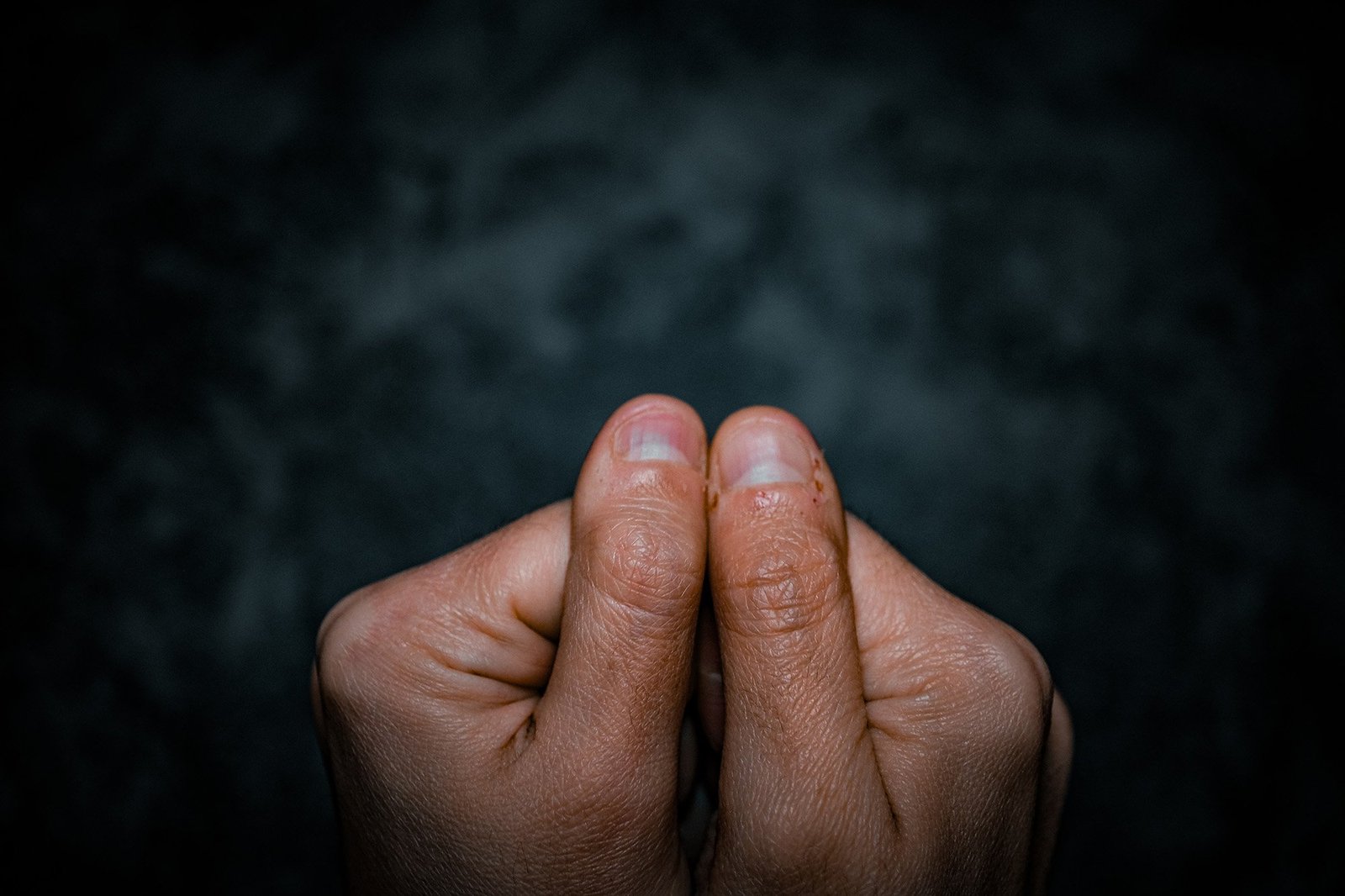
First, there’s the damage to your fingers: “Patients typically present with abnormally short and uneven nails, absent or ragged cuticles, and nail folds in different stages of healing,” the paper states. “Other visible changes in the nail and periungual regions include linear and pinpoint hemorrhages, longitudinal melanonychia, transverse grooves, brittleness, macrolunula, and pterygium, a scar in the nail matrix.” Basically, biting your nails causes a lot of visible problems, and it’s probably not just your doctor who notices them.
The damage isn’t limited to your hand. The paper mentions damage to your teeth, worn down by chewing, and to your gum tissue.
I could keep going. UCLA Health summarizes these problems quite well, while also mentioning the delightful potential for fungal and skin infections.
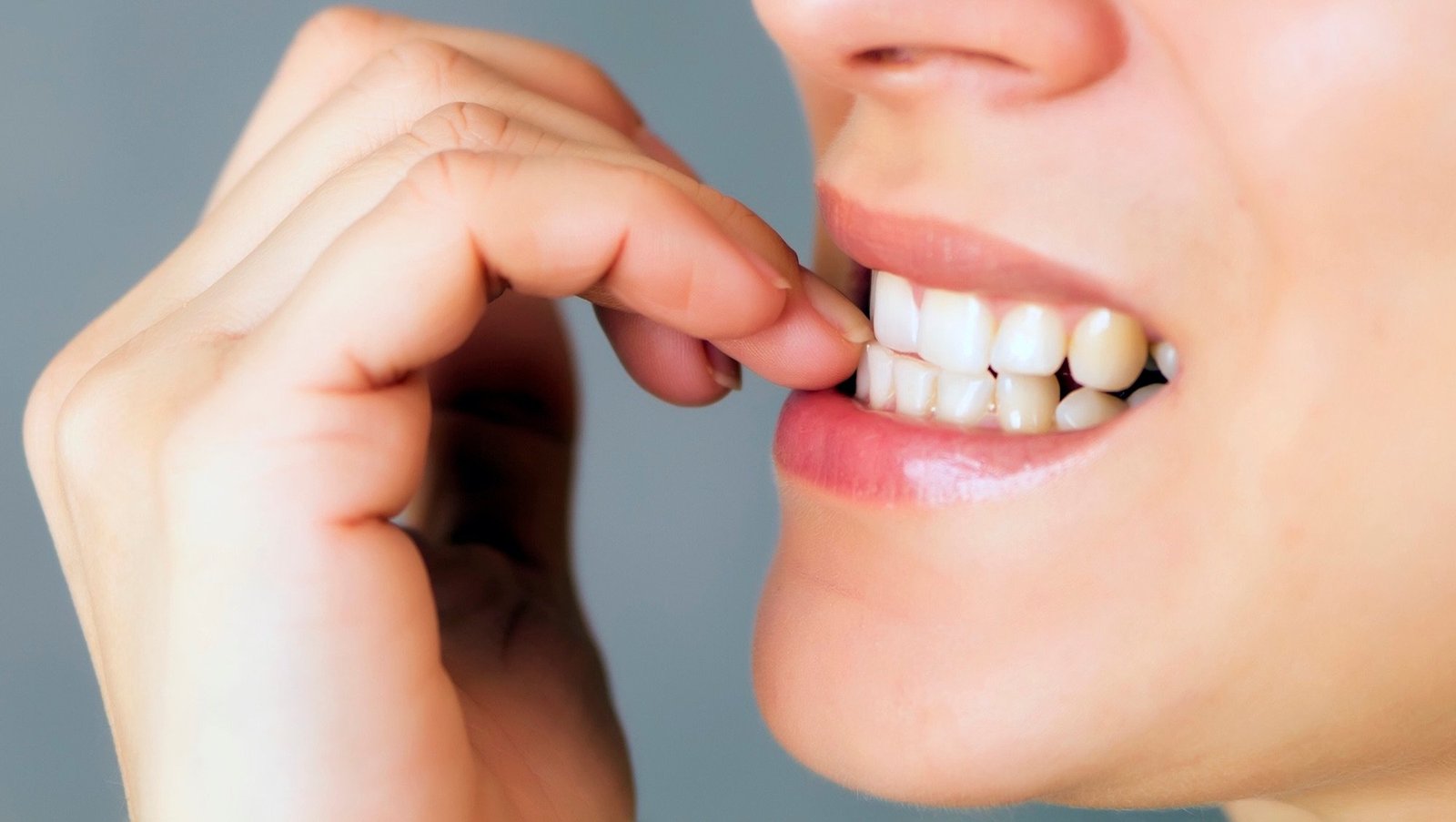
If all of this has you questioning your fingernail biting habit, you’re not alone—I grossed myself out while writing this. But quitting fingernail biting isn’t easy. People bite their nails for a variety of reasons, many of them psychological. For this reason, the Cleveland Clinic recommends behavioral therapy as one way to stop biting your fingernails. Self-care and finding other ways to relax are another option.
The American Academy of Dermatology recommends regularly trimming your nails to reduce temptation—you’re less likely to bite if your nails are already short. They also recommend applying nail polish, the idea being you’ll be less likely to bite your fingers if you put work into making them look nice. There’s also bitter nail polish specifically designed to help break the habit of nail biting. At the very least, clean underneath your nails regularly.

2026 Popular Science Home of the Future Awards
For more tech updates, stay tuned to our blog.