Last month, 1 in 5 passenger vehicles sold in Australia were electric; However, when it comes to heavy vehicles, the decarbonization story has a long way to go. The real heavy lifting in logistics is done by trucks, and Australian company Janus Electric is proving it has a viable, immediate solution, and North American fleet
Last month, 1 in 5 passenger vehicles sold in Australia were electric; However, when it comes to heavy vehicles, the decarbonization story has a long way to go. The real heavy lifting in logistics is done by trucks, and Australian company Janus Electric is proving it has a viable, immediate solution, and North American fleet operators are taking notice.
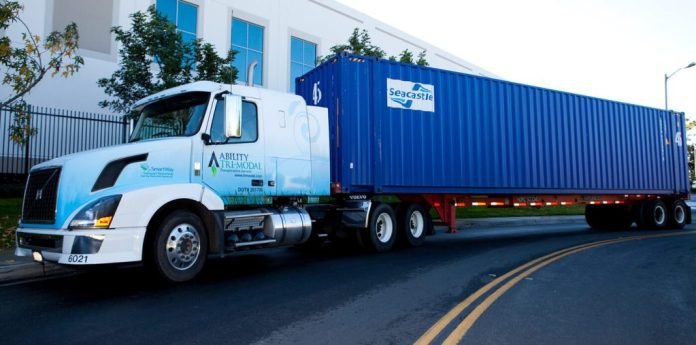
The company has just announced a massive update to its order book in the United States, Canada and Australia. The biggest news is a new order from their current US customer, Ability Tri-Modal. This deal alone has a gross contract value of approximately A$10 million.
This is a big win for an Australian company taking its technology to the global stage. It also highlights a growing trend in the transportation industry where operators are looking to electrify their existing fleets rather than wait for new electric trucks to come off the production line.
Expanding the US footprint
Ability Tri-Modal is not a newcomer to the Janus Electric ecosystem. As the Australian company’s first US fleet customer, it already had four conversions on its books. Now, they have signed a binding order for 16 additional diesel-to-electric conversion kits.
This brings their total commitment to 20 vehicle conversions. In addition to the trucks, the order includes 18 sets of swappable batteries and contracted recurring revenue. The new equipment is expected to begin hitting the road in the second quarter of fiscal 2027.
These trucks will be supported by the Janus charging and shifting station infrastructure currently being developed at the Ability Tri-Modal operations base in Carson, California. It’s a brilliant validation of the technology when a pilot customer returns and orders a significantly larger batch.
The enormous scale of the emissions problem
The logistics and freight transport sector is responsible for a large portion of global carbon emissions. Heavy-duty diesel trucks generate an incredible amount of carbon, emitting not only greenhouse gases but also harmful particles. Cleaning up this sector is not just a good idea, it is an absolute necessity if we are to achieve any of our global climate goals.
However, the sheer volume of trucks on the roads makes this a monumental task. You can’t simply take millions of diesel trucks off the roads overnight without completely collapsing the supply chains that keep our supermarkets supplied and our industries running. For this reason, a modernization solution is attractive in the short and medium term.
By electrifying the existing fleet, operators can dramatically reduce their emissions profile without having to wait for new electric truck manufacturing capacity to catch up with global demand. It provides a crucial bridge that allows the transportation industry to decarbonize at a pace that truly matches the urgency of the climate crisis.
The Ultimate Hardware Mod
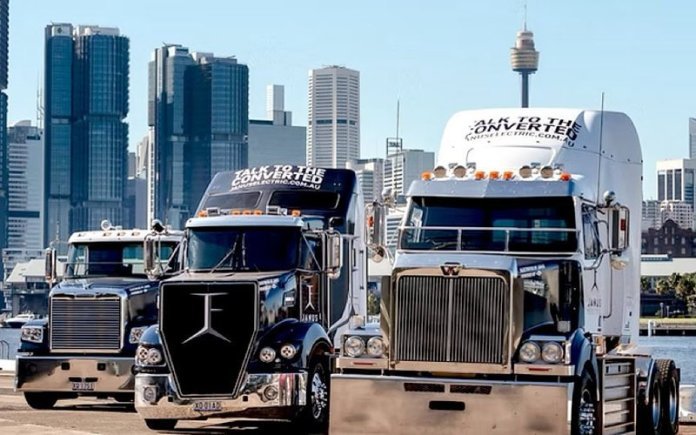
By simply taking a perfectly good truck chassis, removing the dirty diesel engine, and putting in an electric transmission, you get an immediate improvement. It is the ultimate hardware mod for a logistics company. You get all the torque, efficiency, and smooth performance of an electric vehicle without having to ditch the perfectly functional metal casing of the original truck.
Sure, it may not have the aerodynamic acumen or software available in something like a Tesla Semi, the reality is that not everyone has the financial position to simply buy a new one, so breathing new life into an old piece of hardware has a certain appeal.
When you think about the overall maintenance costs of a traditional diesel engine, the conversion makes even more sense. A heavy-duty diesel engine has hundreds of moving parts, requires constant maintenance, and is incredibly noisy. Replacing it with a solid-state electric motor is like going from a noisy, spinning mechanical hard drive to an ultra-fast solid-state drive.
The entire system simply runs more smoothly, with significantly less risk of a catastrophic hardware failure halting its operations.
The Conversion Economy in California
One of the biggest obstacles to electrifying heavy transportation is the initial capital cost. This is where the California government has really stepped up. The incentives available in the state make the financial arguments for diesel-to-electric conversions incredibly compelling.
Janus Electric, along with its authorized California distributor Electric Vehicle Choice, previously obtained significant incentive approvals for the first four Ability Tri-Modal vans. These included Heavy Vehicle Incentive Program vouchers worth approximately $112,000 per truck. On top of that, they got a Plus grant from the Port of Los Angeles of approximately $54,000 per vehicle.
When those programs are combined, qualified operators will receive approximately $166,000 in support per truck. This effectively reduces the net cost of a Janus conversion to almost zero. It’s a striking example of how a specific government policy can instantly accelerate the adoption of zero-emission technology.
Importantly, these Californian incentives are completely technology neutral. They recognize that removing a polluting diesel engine from an existing chassis and replacing it with an electric powertrain is as valuable as building a new zero-emissions vehicle from scratch.
Building a huge pipeline in North America
With the Ability Tri-Modal order secured, subject to those crucial incentive vouchers, Janus Electric now has 45 vehicle conversions contracted across North America. This is divided between 20 in the United States and 25 in northern Canada. But the company does not stop there.
They are currently submitting proposals to several other fleet operators in California. Preliminary modeling is also being drawn up for what could be a massive 50-truck pilot program with a major logistics developer in Texas. If that lands, it will be an absolute change for the company.
Janus Electric has also been working closely with the Harbor Trucking Association. This is a big deal because members of this association collectively operate more than 33,500 trucks. Getting your foot in the door provides incredible access to fleet operators throughout the US port drayage market.
Testing in extreme environments
Once this initial phase is successfully completed, the plan is to move forward with a much larger rollout. This next stage will include another 20 vehicle conversions, 60 swappable battery packs and seven charging stations. The timing of all this aligns perfectly with that of its battery partner, Electrovaya, which is conducting truck testing in Ontario.
The partnership with Electrovaya is a very strategic move for the launch in Canada. Electrovaya is known for its high safety and long lasting lithium ion batteries. When you change heavy vehicle batteries multiple times a day in freezing conditions, you absolutely need chemicals that don’t degrade quickly.
It will be fascinating to see the data obtained from these cold climate deployments. If the Janus Battery Swapping System can withstand a Canadian winter, it can pretty much withstand anything the logistics industry throws at it.
The Australian market needs a big boost
While the North American market is booming for Janus Electric, things in Australia are moving a little slower. The company is certainly making progress, driving a number of opportunities in the mining, liner transportation and quarrying sectors.
There is a signed Memorandum of Understanding for eight road train conversions for a mining operator. The price has been agreed upon and they are just working on the final due diligence. They also have a letter of intent from a repeat customer for five other truck conversions.
However, the big frustration is the lack of sensible government policy. Unlike California’s technology-neutral framework, Australian incentive programs do not systematically treat heavy vehicle conversions from diesel to electric at the same level as new zero-emission trucks. This is a massive oversight that is holding back the decarbonisation of our local transport sector.
Honestly, it’s surprising that our local incentives are so poorly structured. We have Australian companies doing incredible engineering work, but their product is actively discouraged by the local environment. A zero-emission vehicle is a zero-emission vehicle, regardless of whether it rolled off a production line yesterday or was retrofitted into a five-year-old Kenworth.
“The United States is becoming a very substantial order book for Janus. California’s technology-neutral incentives make our conversion solution one of the most cost-effective paths to zero emissions for fleet operators, and that is translating directly into firm orders.
With Canada entering its first commercial phase and strong pipeline construction in Australia, our focus is now on scaling manufacturing and delivery to convert this order book into vehicles on the road and long-term recurring revenue.”Ben Hutt, CEO and CEO of Janus Electric Holdings Limited.
The way forward for heavy transport
The transition to zero-emission heavy transport will not happen overnight. But companies like Janus Electric are showing that we don’t have to wait for entirely new vehicle platforms to start reducing emissions. Converting existing diesel trucks to electric vehicles is a practical solution that is already available.
The magnitude of the Ability Tri-Modal order shows that major fleet operators are ready to adopt this technology. When the economics stack up, as they clearly do in California, the decision to go electric becomes a simple business calculation. It’s a shame Australian policymakers haven’t realized this yet.
As a big fan of electrification and sustainable technology, it’s incredibly exciting to see an Australian company take the fight to the world stage. I will be watching their progress very closely over the next few years as these converted trucks begin hauling cargo across North America. The heavy transport sector is ripe for disruption and battery swapping could be the ideal application to get it all going.
For more information, go to Janus Electric
.
Check back often for more exciting news!