
If your Instagram account is public, your photos, including your profile photo, can now be targeted by other people’s AI creations, unless you change a hidden setting in the app. Meta’s new Muse Image model, introduced Tuesday, allows users to generate AI images using public Instagram posts by tagging another person’s account in a message.
If your Instagram account is public, your photos, including your profile photo, can now be targeted by other people’s AI creations, unless you change a hidden setting in the app.
Meta’s new Muse Image model, introduced Tuesday, allows users to generate AI images using public Instagram posts by tagging another person’s account in a message.
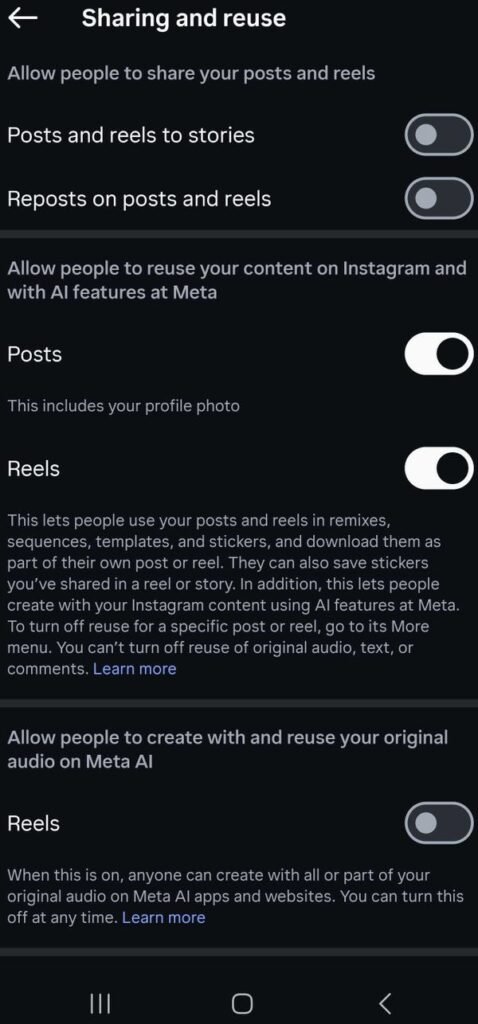
Public accounts are enabled by default, allowing others to reuse posts, reels, and profile photos unless users manually turn off the feature.
The controls are only available in the Instagram app, under the “Share and Reuse” tab in the settings menu, where users can turn off separate toggles for posts and reels.

Meta privacy settings by default allow others to reuse your Instagram content and modify it with AI. Katherine Tangalakis-Lippert
Existing AI-generated images created with your content will not be removed, and Instagram says on its help page about the feature that users will not be notified if others use their content.
The feature is part of Meta’s broader push to compete in generative AI, as the company launches Muse Image to compete with rival image generation tools from OpenAI, Google, Midjourney and Adobe by making AI image creation a built-in feature for Instagram’s billions of users.
The launch is the latest flashpoint in Meta’s long-running privacy battles. The company has faced years of scrutiny over its corporate and user-facing data practices, including criticism for using public posts to train AI models by default and requiring users to opt out rather than opt-in.
Privacy advocates have long argued that such policies leave users with very little control over how their content is reused.