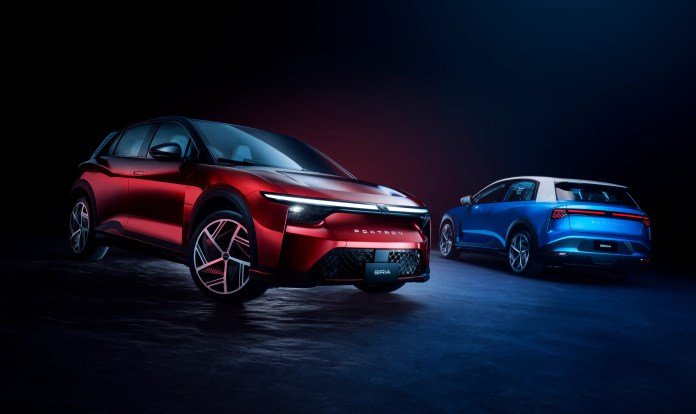
Mitsubishi Motors is finally jumping back into the pure electric vehicle race in Australia. While it’s not the electric version of the EVO that many want so dearly, instead, the Japanese automaker has confirmed the all-new ASX VR-e battery electric vehicle will hit Australian showrooms in the fourth quarter of 2026. It has been a
Mitsubishi Motors is finally jumping back into the pure electric vehicle race in Australia. While it’s not the electric version of the EVO that many want so dearly, instead, the Japanese automaker has confirmed the all-new ASX VR-e battery electric vehicle will hit Australian showrooms in the fourth quarter of 2026.
It has been a long wait for brand loyalists who remember when Mitsubishi led the charge with Australia’s very first mass-produced EV, the tiny i-MiEV. Now, the iconic ASX nameplate is shedding its petrol motor to embrace a full battery makeover.
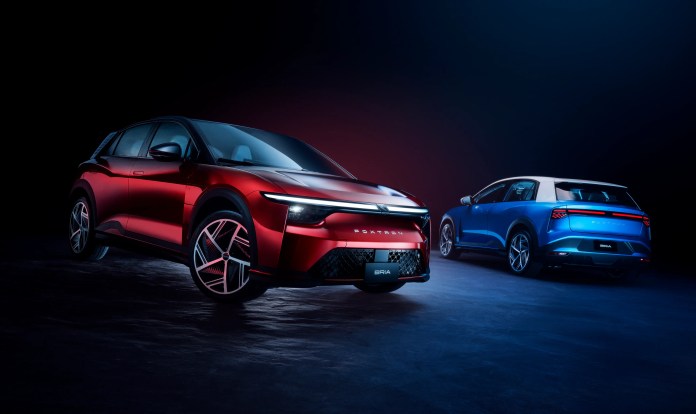
If the sleek profile of the new ASX VR-e looks suspiciously familiar, there is a very good reason for that. Mitsubishi did not build this platform from the ground up in Japan. Instead, the company partnered directly with Foxtron Vehicle Technologies, the automotive arm of Taiwanese manufacturing titan Foxconn. Underneath the familiar three-diamond logo sits the Foxtron Bria, a platform designed from day one as a tech-first electric crossover.
Call it badge engineering if you want, but borrowing hardware from the world’s biggest electronics manufacturer is actually a brilliant shortcut. It allows Mitsubishi to instantly deliver a modern, software-defined EV without waiting through a half-decade development cycle.
Translating Taiwan specs to Australian Mitsubishi trim levels
When looking at the Foxtron Bria lineup overseas, the vehicle is split into three distinct grades known as Elegant, Emerge, and Pioneer. Mitsubishi Motors Australia is re-packaging those underlying specifications into a structured lineup that local buyers know by heart.
The Australian ASX VR-e family will kick off with the accessible LS trim, moving up to the mid-tier XLS, and reaching the luxury-focused Exceed. Sitting right at the top of the range is a halo variant that will turn a few heads: the high-performance GSR.
By mapping Foxtron’s hardware across the traditional Mitsubishi hierarchy, local drivers get a clear path from budget-friendly commuter to outright dual-motor performance.
Performance specs and the sub-four second GSR halo model
Under the bonnet, or rather across the axles, the standard rear-wheel drive variants of the ASX VR-e pack a solid punch. The single-motor setup delivers 171 kW of power and 229 horsepower, sending power directly to the rear wheels.
In the standard LS, XLS, and Exceed variants, that electric motor propels the crossover from zero to 100 km/h in a respectable 6.8 seconds. That gives it plenty of pep for merging onto highways and sprinting away from traffic lights.
The real headline act is the flagship GSR model. By adopting Foxtron’s dual-motor all-wheel drive powertrain, the ASX VR-e GSR slashes its zero to 100 km/h sprint time down to a blistering 3.9 seconds. That puts a humble Japanese crossover straight into sports car territory.
Battery chemistry, driving range, and charging speed
Powering the entire range is a 57.7 kWh lithium iron phosphate battery pack. Choosing LFP chemistry is a smart move for durability, offering excellent thermal stability and long cycle life under hot Australian conditions.
On paper, the Bria architecture yields an estimated range of up to 516 km on a single charge. It is worth noting that this figure is measured on the generous NEDC testing cycle. In real-world Australian driving conditions, owners should expect a realistic WLTP range somewhere closer to 380 to 410 kilometres.
When you need to plug in on a road trip, the ASX VR-e supports DC fast charging speeds up to 134 kW via a standard CCS2 port. That is fast enough to top up the battery from 10 to 80 per cent in under 30 minutes. For overnight charging at home, a standard 7 kW AC Type 2 connection gets the job done while you sleep.
Aerodynamics and modern exterior styling
The original petrol ASX was never known for slicing through the air, but the VR-e changes that story completely. The new body boasts an impressive drag coefficient of Cd 0.26, which plays a massive role in preserving battery range at highway speeds.
Up front, a full-width lightbar gives the crossover a futuristic face that immediately sets it apart from older petrol models. An integrated S-duct at the leading edge of the bonnet channels high-pressure air directly over the roof line to cut drag.
Side air curtains and sculpted wheel arch portholes work together to minimize wind turbulence along the doors. Mitsubishi will offer both 18-inch and 20-inch aero wheels designed to balance low rolling resistance with aggressive curb appeal.
Interior tech and software-defined architecture
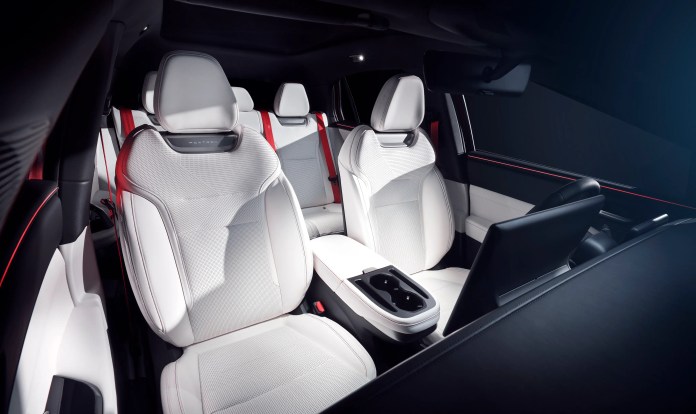
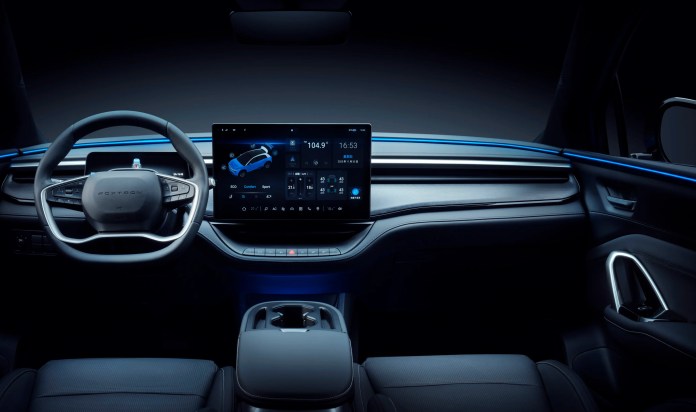
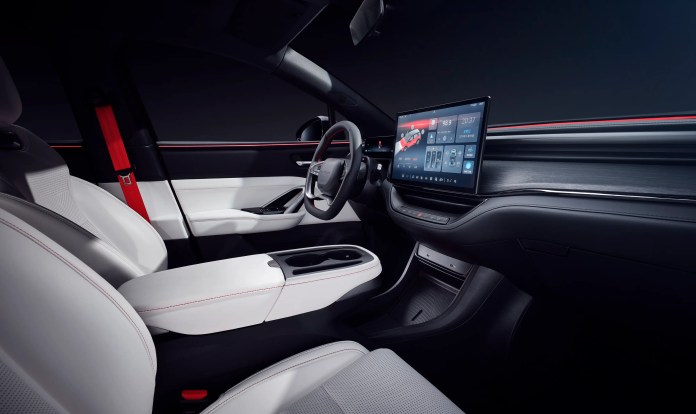
Step inside the cabin and you are greeted by an interior that looks vastly different from any Mitsubishi currently on the road. The dash is dominated by a floating 15.6-inch central touchscreen interface that controls climate, navigation, and infotainment.
In front of the driver sits a slim 9.2-inch digital instrument display that delivers clear speed and battery metrics at a glance. The minimalism is intentional, clearing out clutter to create a spacious cabin feel.
Because the underlying platform was designed by Foxconn’s automotive branch, the vehicle runs on a genuine software-defined architecture. That means deep digital integration with support for continuous over-the-air software updates, ensuring the car can receive new features long after leaving the showroom floor.
Practical dimensions for the daily Australian commute
In terms of footprint, the ASX VR-e fits squarely into the compact crossover class that local buyers love. The vehicle measures 4,315 mm in length, 1,885 mm in width, and stands 1,535 mm tall.
A wide track width of 1,639 mm at the front and 1,638 mm at the rear gives the chassis a planted stance on regional roads. The turning radius comes in at a tight 5.59 metres, making tight city parking spaces and tight U-turns effortless.
Practicality remains strong for small families. The rear boot offers 320 litres of cargo capacity with five passengers on board, which expands up to 1,043 litres when you fold the rear seats flat.
Australian pricing context and competitive landscape
Mitsubishi Motors Australia has not released official pricing details for the ASX VR-e lineup yet. We will have to wait closer to the late 2026 launch date for localized window stickers across the LS, XLS, Exceed, and GSR variants.
To be competitive against tight rivalry from Chinese imports and established electric players, the entry-level LS model will need to launch around the A$40,000 to A$45,000 mark. Meanwhile, the flagship 3.9-second GSR variant could easily push toward A$60,000 or higher given its dual-motor performance credentials.
Positioning the vehicle aggressively will be crucial. Australian buyers are spoiled for choice in the compact EV space, but a familiar badge paired with modern EV tech could be a winning formula.
Closing the loop on Mitsubishi’s electric legacy
It has been fifteen long years since Mitsubishi launched the original i-MiEV in Australia. While the company kept its electrification foot in the door with plug-in hybrid Outlanders, a pure battery electric vehicle was sorely missing.
By partnering with Foxtron to bring the Bria platform to local shores as the ASX VR-e, Mitsubishi is making up for lost time. With sleek styling, a blistering GSR variant, and modern tech, late 2026 cannot come soon enough.
For more information, head to Foxtron
.
Keep following us for the latest insights.