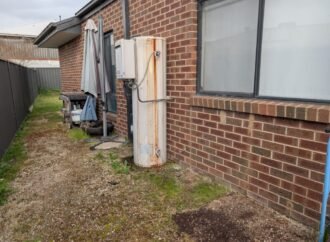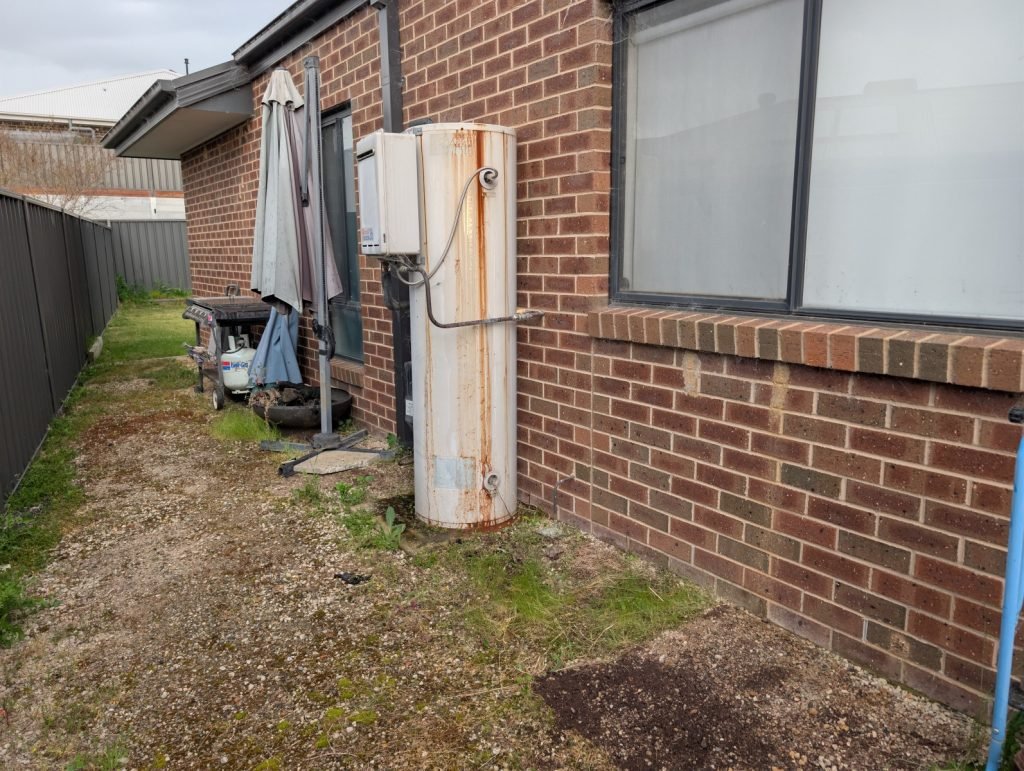
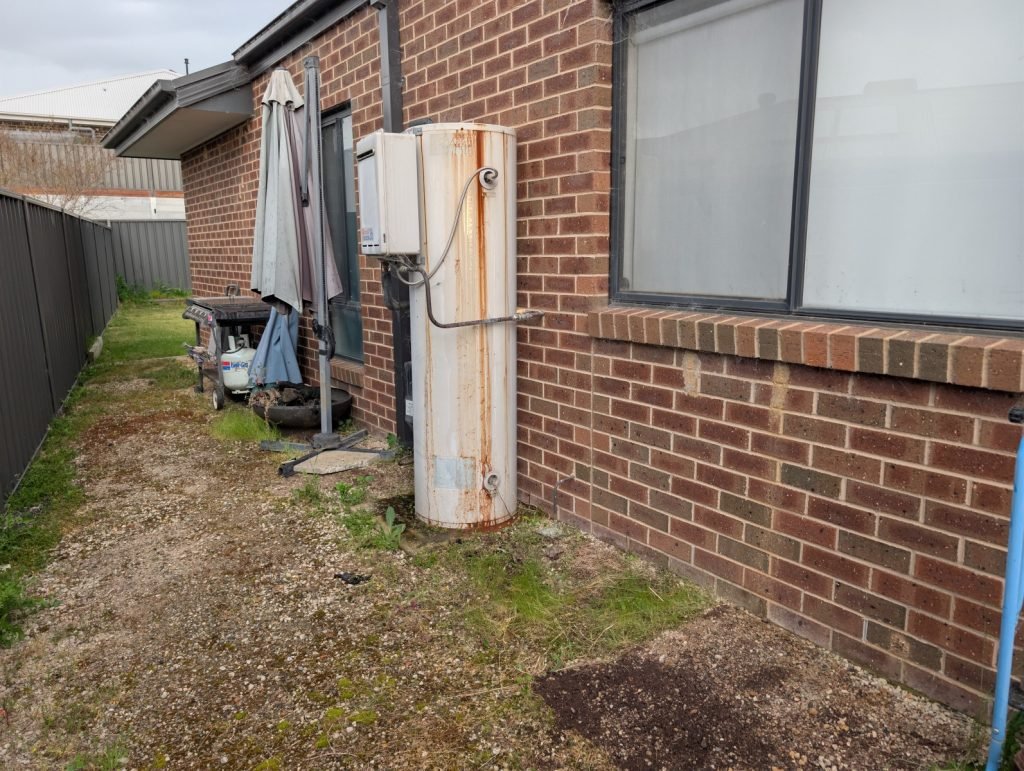
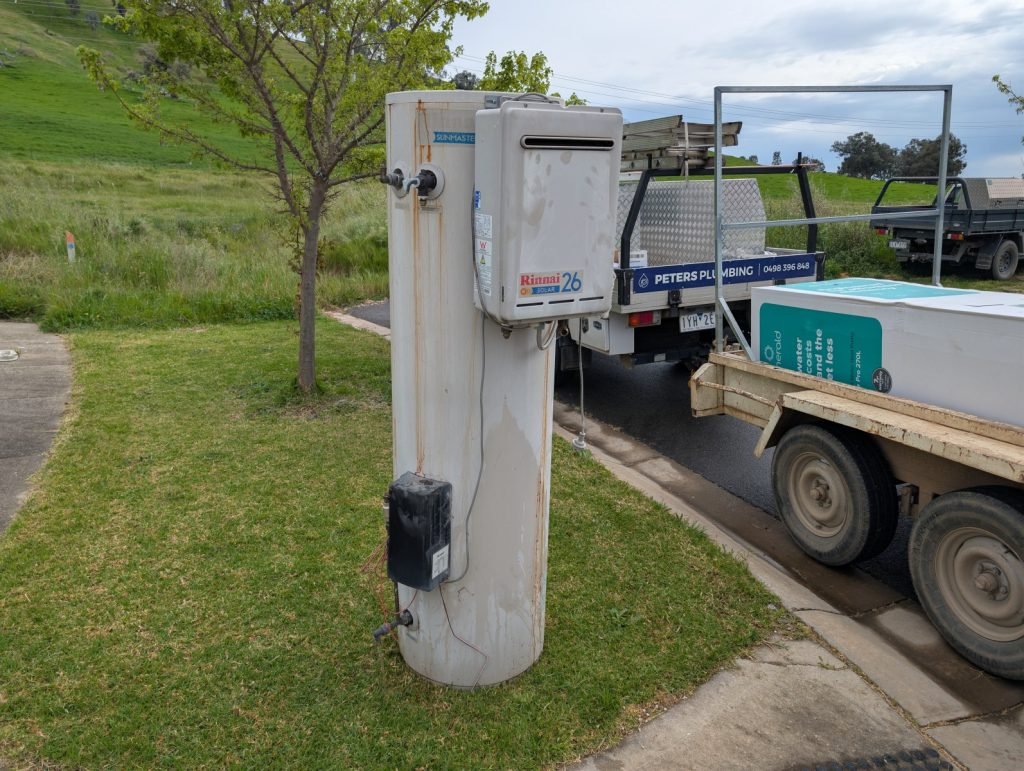
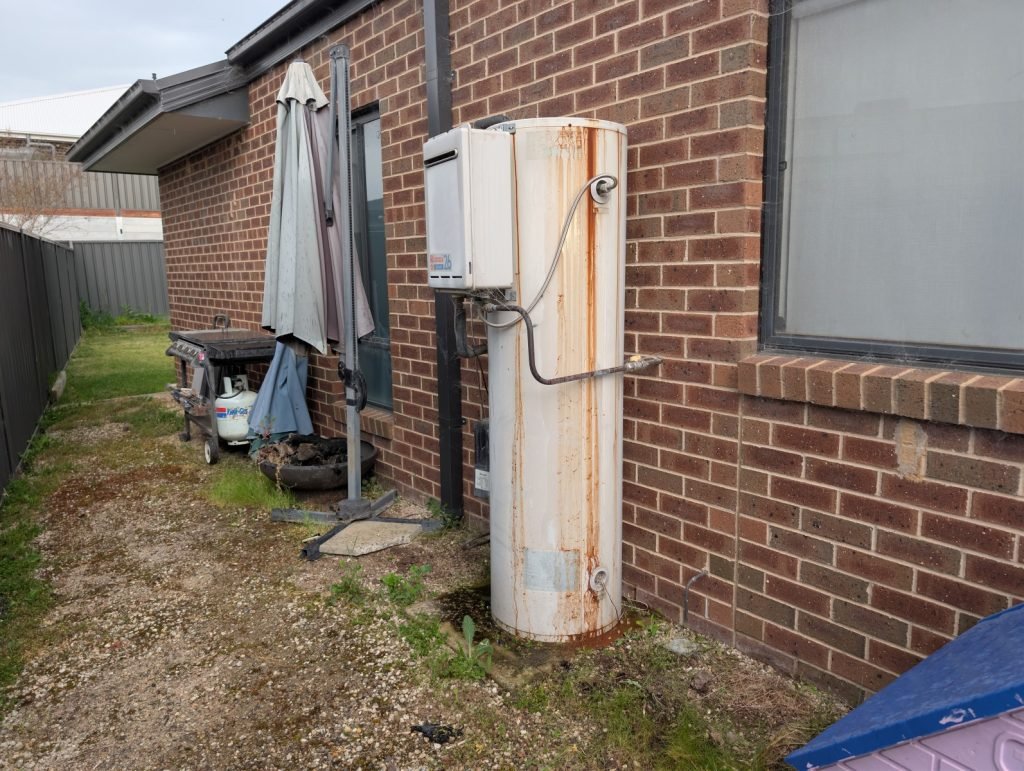
It’s a regular Tuesday night and I’m taking out the bins, I turn and spot something different about the hot water system down the side of the house. There’s a bronze coloured fluid flowing down the side of the unit. Having seen photos of other systems fail, I knew it was done.. creating an opportunity.
It’s a regular Tuesday night and I’m taking out the bins, I turn and spot something different about the hot water system down the side of the house. There’s a bronze coloured fluid flowing down the side of the unit. Having seen photos of other systems fail, I knew it was done.. creating an opportunity.
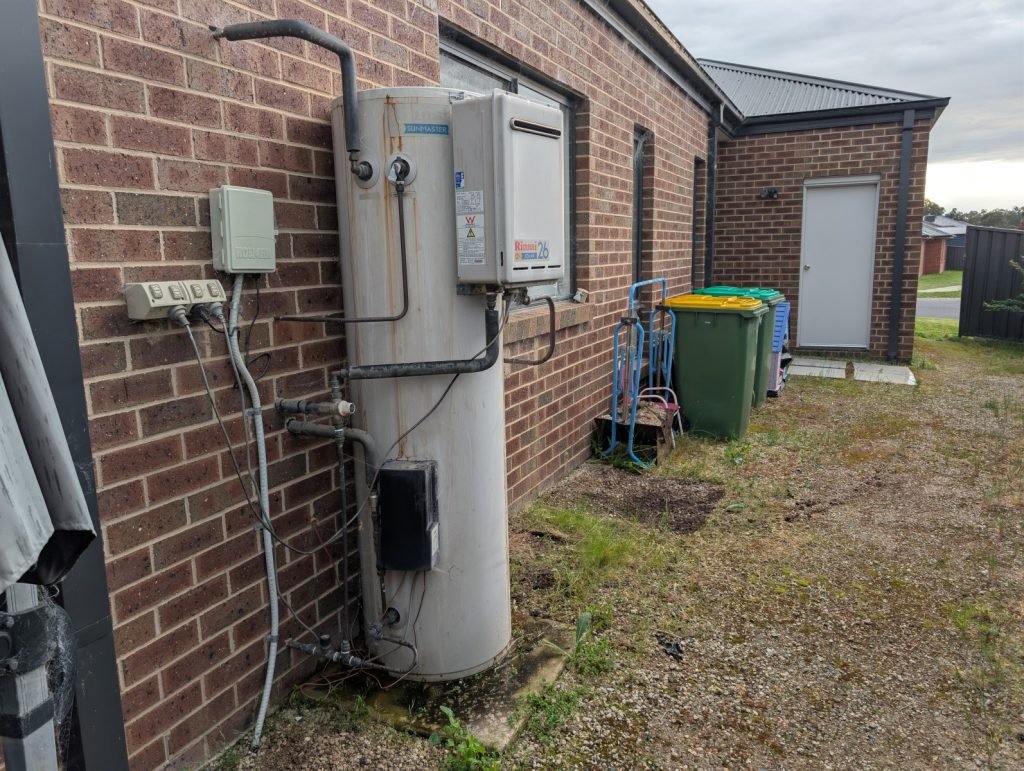
The hot water system was installed when the house was built almost 10 years and from what I understand that’s not an unusual lifespan. The Sunmaster hot water system featured a Rinnai 26 Solar gas booster and was connected to two solar panels on the roof, which, in theory, reduced the cost of heating the water. The problem is, there’s no way to measure this, it simply shows up as a gas bill, which also includes cooktop and ducted heating, but estimates are that somewhere close to 30% of my gas bill may be associated with hot water.
The bronze liquid streaking down the tank is rust (iron oxide) mixed with water, which is a definitive indicator of a terminal internal failure of the storage cylinder. While the outside just looked like it was weeping a bit of dirty water, the inside was a different story. Because the Sunmaster tank uses a mild steel core with a vitreous enamel coating, it relies on a sacrificial anode rod to absorb corrosion.
After almost 10 years of daily heating cycles and thermal expansion fracturing the glass lining, that protective rod had completely dissolved. Without it, the heated water and dissolved oxygen began a process of galvanic corrosion, aggressively attacking the bare steel and converting it into the rust I was seeing. The cylinder walls eventually thinned out to the point where the internal mains pressure just pushed that rusty water straight through a compromised weld.
Replacement process and options
Faced with the situation, I had a decision to make.. replace with a like-for-like system, or look at this as a chance to modernise the system and opt up for a heat pump hot water system that used less energy and added the telemetry expected from modern devices – I chose the later.
While it would have been cheaper in the short term, I took a longer-term view and over time the difference will be returned.
With my parents due to visit on the weekend, I needed to act fast, so I immediately started investigating options. I drafted my scope of works and tasked Grok and Gemini with turning that scope into finding 3 local suppliers and drafting an email to them to request a quote.
Part of that scope was to call out the fact I planned on leveraging the Solar Homes Program and that meant the LLMs needed to review the authorised retailer list, along with the approved products on the list.

Solar Homes Victoria Program
Victoria offers a Solar Homes Program that provides rebates to support Victorians to take control of their energy bills and knowing they offered options for hot water system replacements, I jumped on the website to review eligibility criteria. Thankfully I met the requirements and while a typically planned replacement may take up to 3 months, they did offer an emergency provision, designed exactly for my circumstances.
If you’re in Victoria and considering leveraging the program, all the details are available here – https://www.solar.vic.gov.au/hot-water-rebate. At the time of writing, there’s still 2,435 remaining for the current release.
The rebate offers up to $1,000 off eligible heat pumps and solar hot water products, and as much as $1,400 if you choose a local product.
As clumsy and cumbersome as most Government systems are, this was one that worked incredibly well, it was easy to follow, simple to meet the evidence requirements (upload last year’s tax return) and had approval in just a few hours.
As a Victorian householder, you could receive a hot water rebate if:
- you received a Solar Homes rebate and/or loan but have moved house. You can apply for another incentive at your new address as an owner-occupier if the property has not received these rebates before.
- you are the owner-occupier of an existing property where the system is to be installed
- the household taxable income of all owners combined is less than $150,000 per year
- the value of the property is under $3 million
- the property address has not already received a hot water or a solar battery rebate under the Solar Homes Program
- the hot water system to be replaced is at least 3 years old from the date of purchase
Product Selection
Out of a list of 438 supported products in the spreadsheet, 374 of them are heat pumps and 59 of them are 270L capacity, which was the size I was chasing.
Having seen iStore around I was leaning in the direction, particularly given it’s slick mobile app and energy monitoring. They are seen just 3 times on the list, while other brands have more than a dozen products.
While I wanted the product to meet the requirements of reducing energy use, and offering IoT features, outside that I didn’t have a lot to base my selection on.. this is where the supplier was going to play a key role.
Having emailed them, I started receiving replies and one easily stood out from the pack. The team from Watters recommended and provided a quote for an Emerald Energy Heat Pump. This was a new brand to me, so naturally I jumped on the website, did some further research and established this actually looked like a great fit.
The quote provided an option for something called a Solar Soaker. With a 6.5kW solar array on the roof, this would leverage the excess power being sent back to the grid (for a tiny feed-in-tarrif) and instead use this power to heat the water during daylight hours, making the cost almost nothing.
While the cost was a lot more than what I initially expected, I recalibrated and approved the quote to proceed, having confirmed they could do the works the following day (unbelievable).
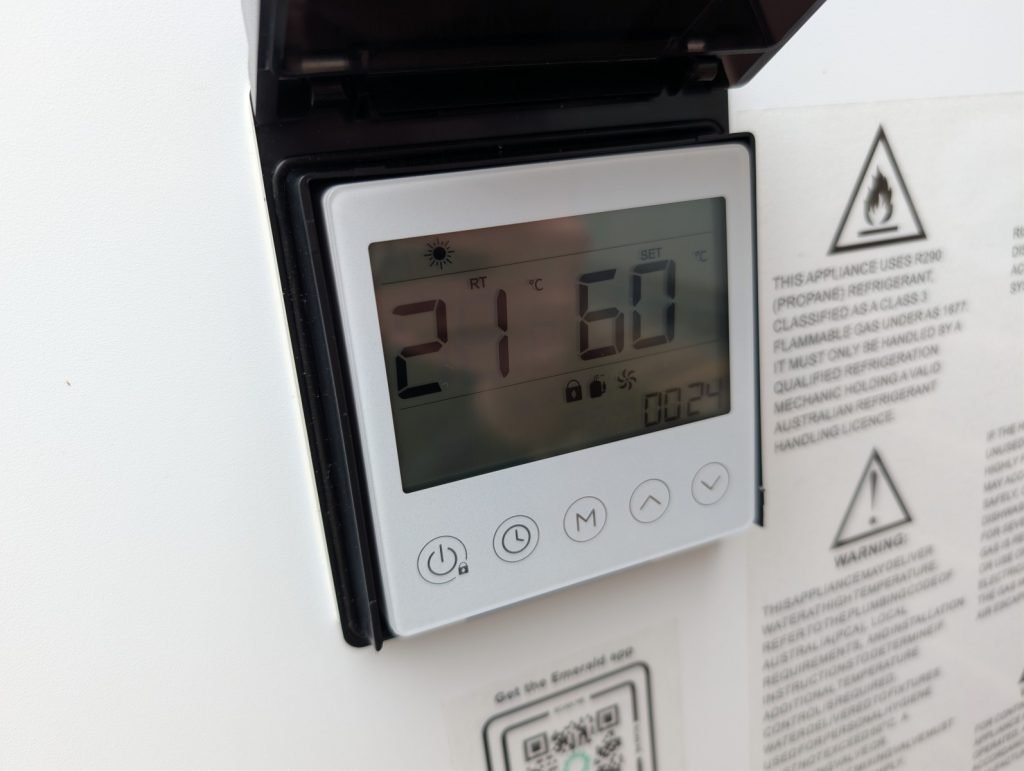
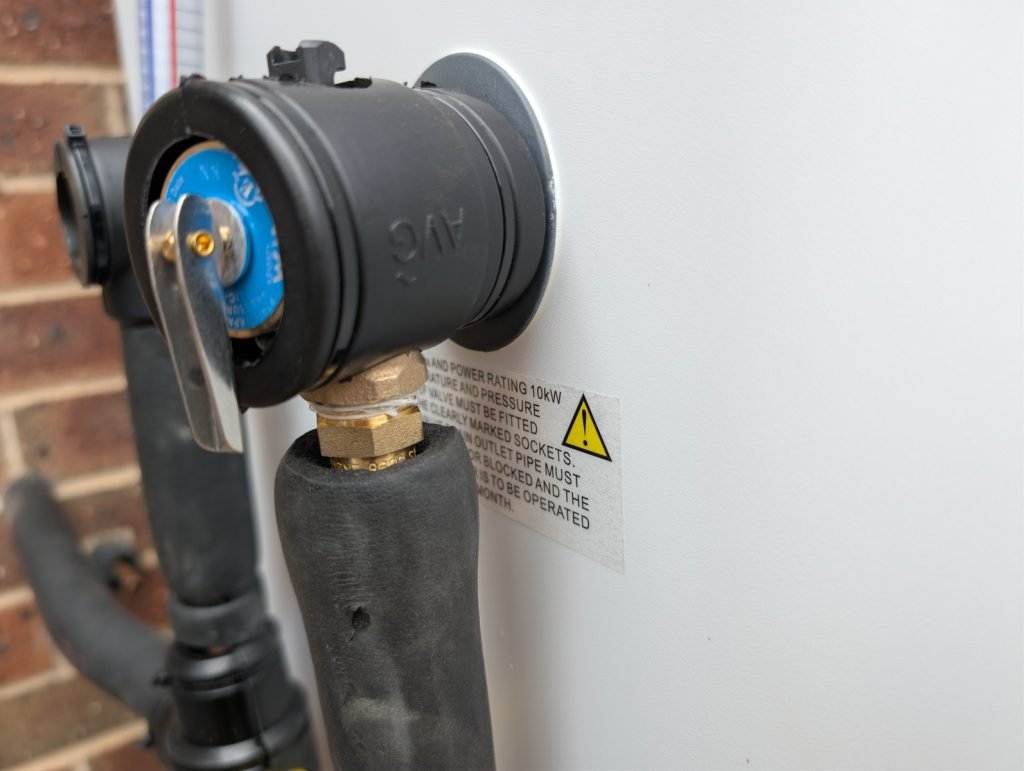
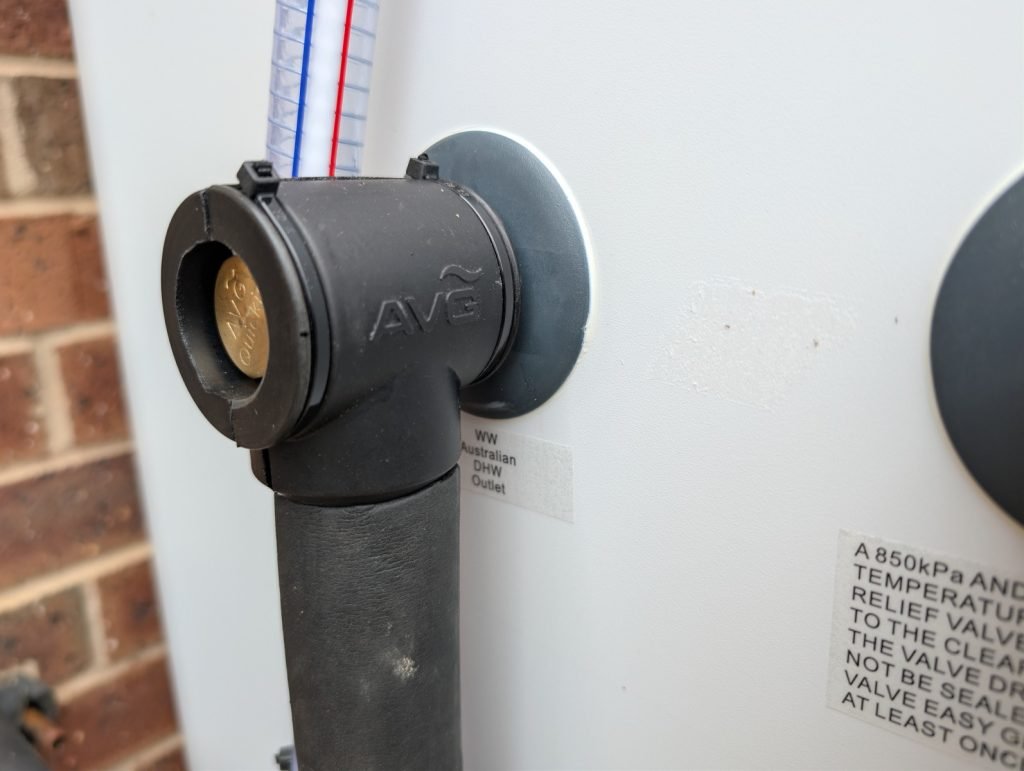
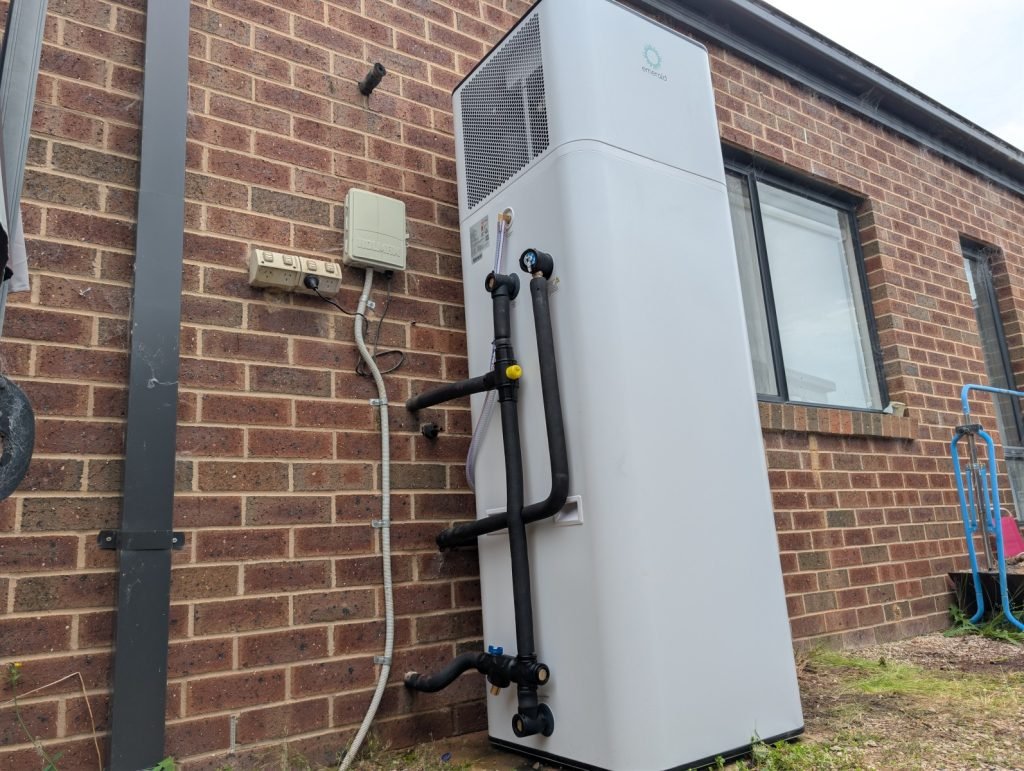

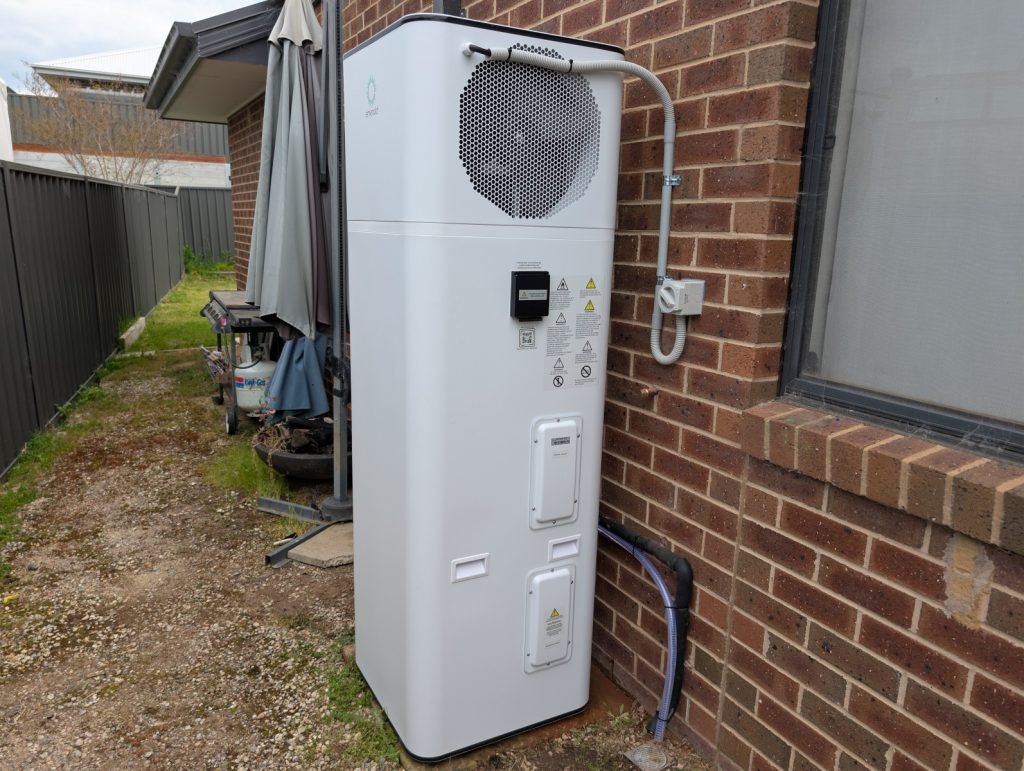
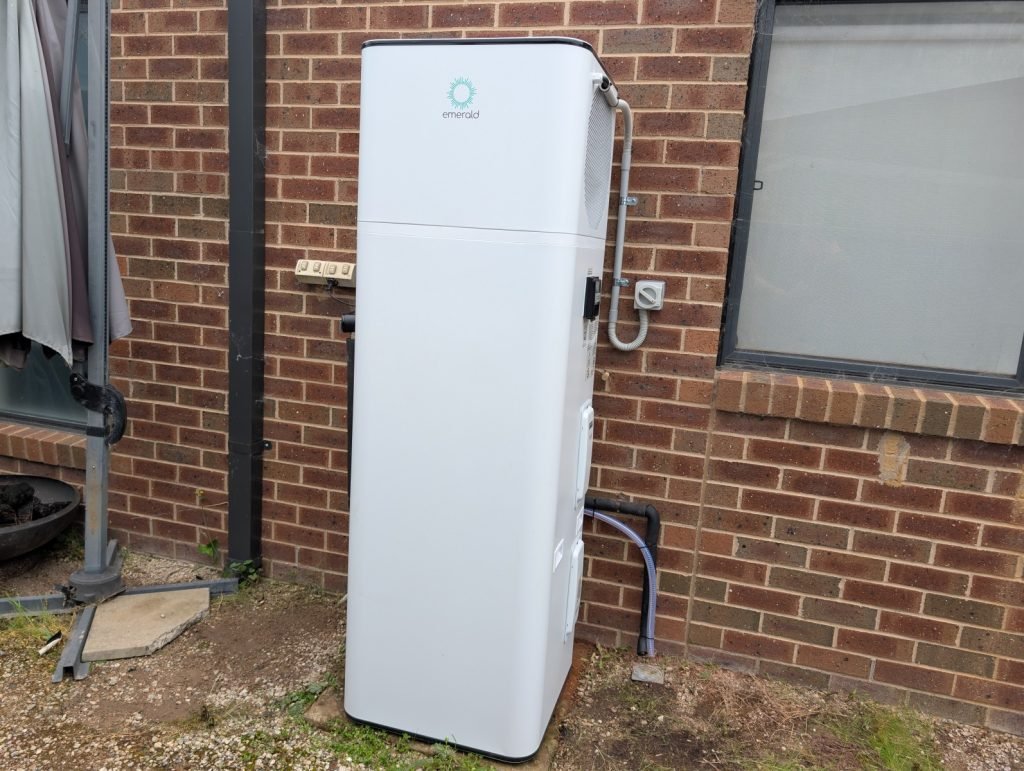
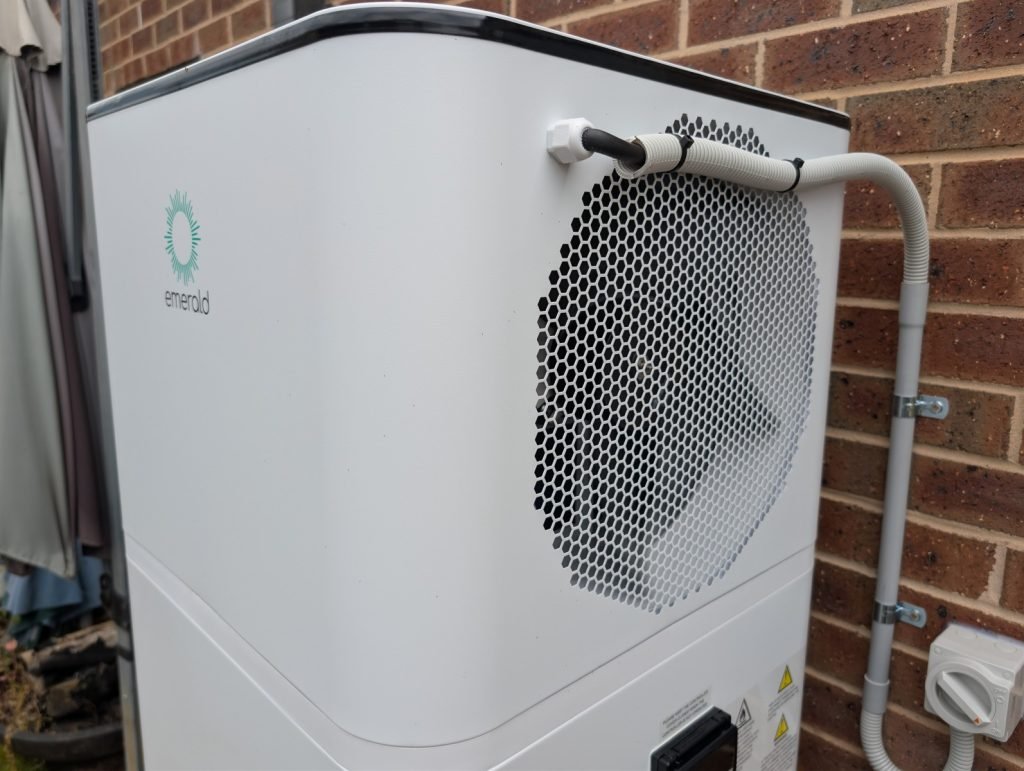
Replacing the hot water system with a heat pump
With an approved application to Solar Homes, they provide you a magic QR code, which I provided to the supplier which allows them to claim the rebate and I pay the difference.
When you consider the full task here it actually involves a number of trades. Firstly there’s the disconnection of the existing system, which involves power, water and gas, and to make this happen they organised a plumber to come from Wangaratta (around 45 minutes away), while the rest of the team came from Albury.
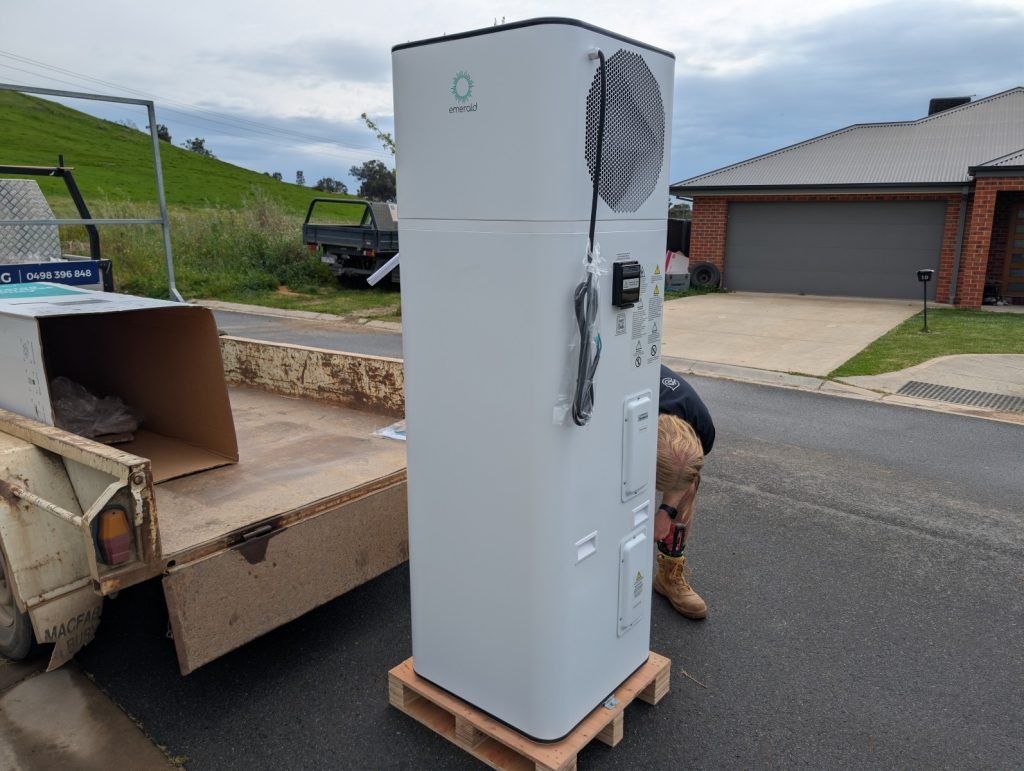
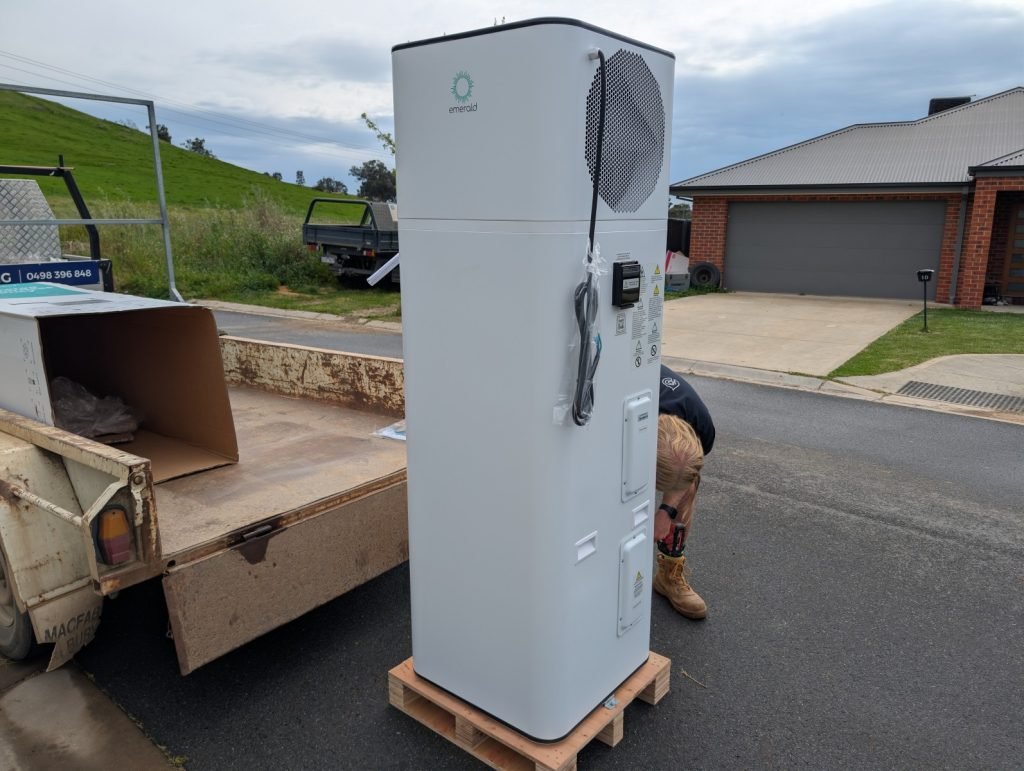
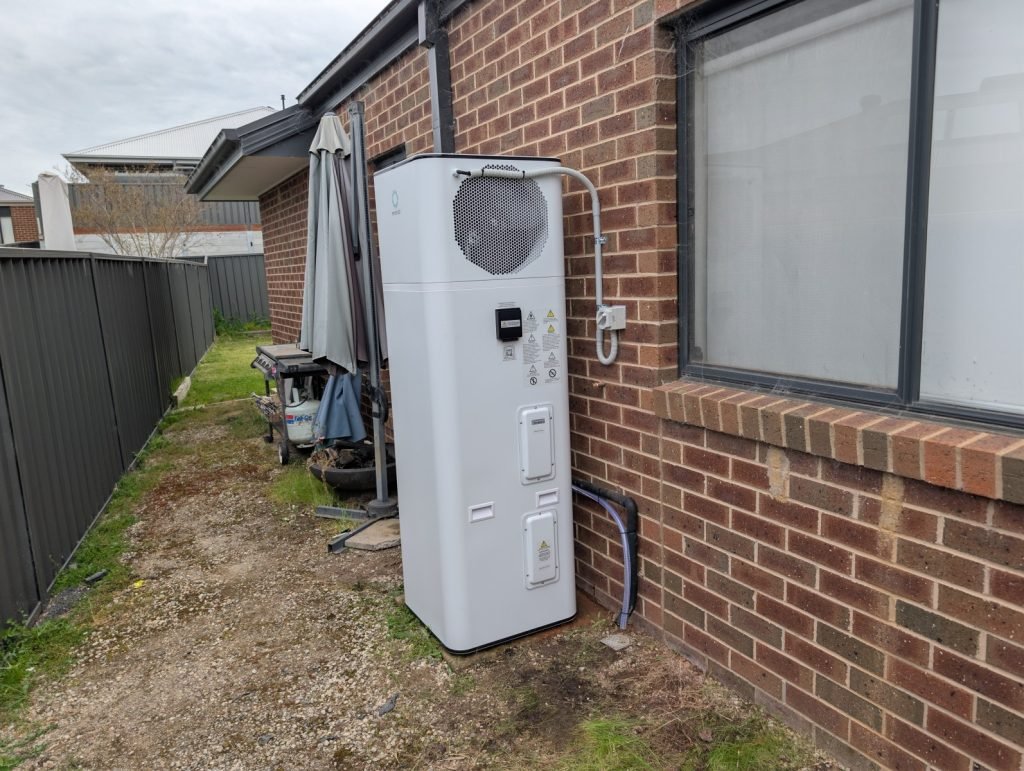
The team wasted no time in removing the broken unit, also removing it as part of the quote. The concrete pad was then readied for the new unit which after unboxing, was promptly installed in place.
The install also involved an upgrade on the electrical side. While there was an outdoor power point available next to the system, a heat pump requires a dedicated circuit, so the team needed to run it through the roof to the meter box on the other side of the house.
Having done this, the gas was capped off, the electrical and water connected and the system powered up for the first time.
One thing to note.. I enquired why I ended up with open connections sticking out from the wall, these were the connectors for the solar hot water panels on the roof (which I had experienced problems with in the past with frost valves). Now disconnected, these were dripping a little excess water, but the installers informed me these can build pressure if you cap them off, so they leave them open.
Naturally being an empty system, it needed to fill with water and heat it for the first time before I’d truly be able to test the hot water from the new heat pump. This process took 2-2.5 hours and checking the water use the day before I seen the increased water consumption as the 270L filled the tank.
I also received the solar soaker devices that would typically be installed by them, but having talked through it, they understood I knew a little about technology and having provided high-level guidance, left me to it. It turns out the install was super easy.
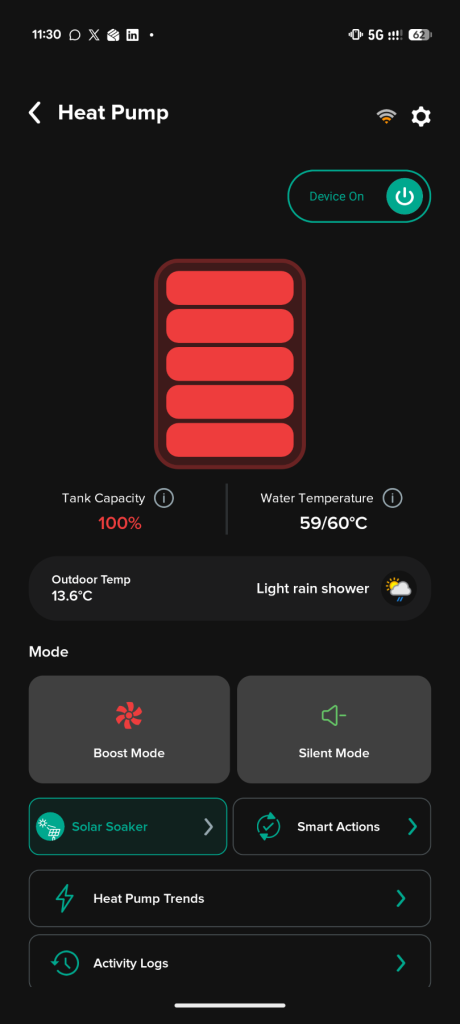
Emerald Energy Mobile App
Having said goodbye to the installers and providing a quick signature to confirm the work was complete, it was time to install the mobile app, setup an account and add the hot water system to the app. This is a very familiar process for anyone who’s setup smart lighting, speakers, vacuum cleaners etc. In this instance, you just need the barcode on the side of the heat pump to add it to the app and join it to your WiFi.
The app then provides a view into the temperature of the water and hot water level inside the unit. There’s other features like Boost Mode and Silent Mode, but it’s the Smart Actions that really add the intelligence.
The Silent mode reduces the noise level of the fan, but to be honest, it’s absolutely fine, far quieter than external air conditioner unts, so I don’t think I’ll ever use this mode.
The other important detail is the data around your energy use, but first.. let’s talk about that Solar Soaker.
Solar Soaker
Installing the 2 devices was pretty straight forward when you consider the logical architecture of what’s happening here. There’s a simple light sensor that gets installed in your meter box. This is a plastic sensor, that attaches using a bit of double-sided 3M tape. This sensor reads the LED on your smart meter that indicates when power is going back to the grid from the solar panels. This sensor is connected to an antenna cable run out the bottom of the meter box and sits on top, simply magnetically attached.
The external antenna is required as the metal meter box acts as a faraday cage and wireless signals would ordinarily be blocked. So with this problem solved, the next step is to get this information to the heat pump (on the other side of the house).
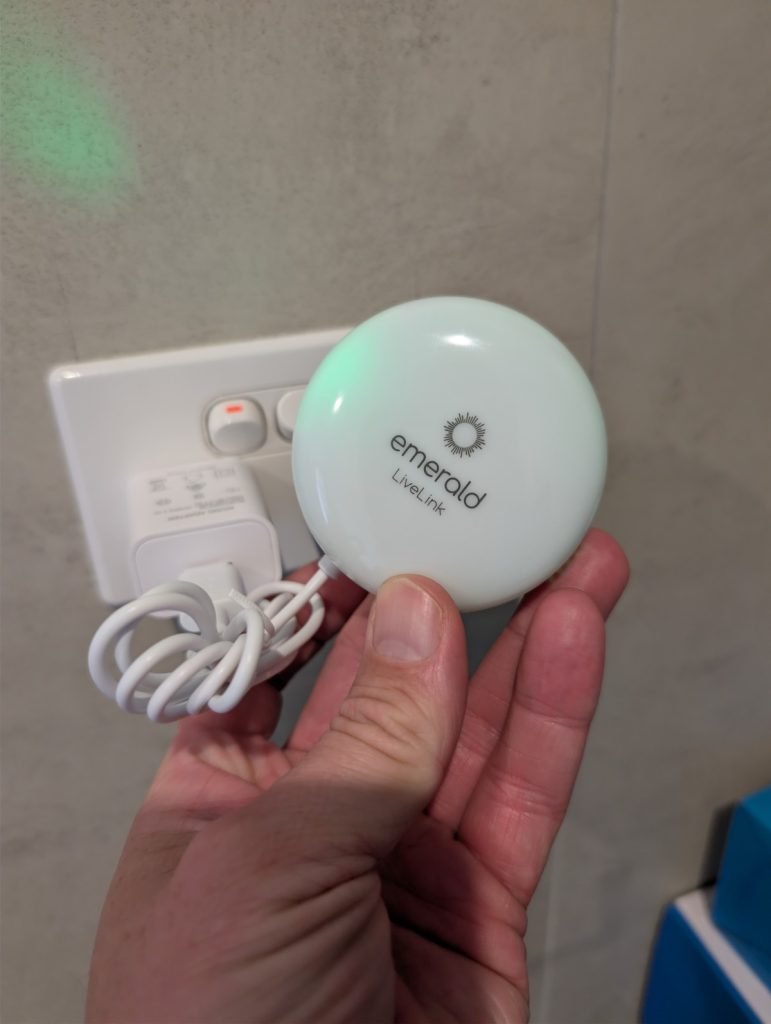
Inside your home, you’ll then find an available power outlet and install the LiveLink device. This takes device connects to the sensor in the meter box and talks to the heat pump, via your home WiFi. The only gotcha I found is that this only supports 2.4GHz networks, and running an Amazon Eero that doesn’t easily allow you to select, it did take some troubleshooting to overcome. Thankfully the Troubleshooting option allows you to temporarily disable 5GHz and allow a 2.4GHz device like this to connect. Once it’s connected, the network returned to normal, so it was really just a matter of knowing this was required to get it connected in the Emerald App.
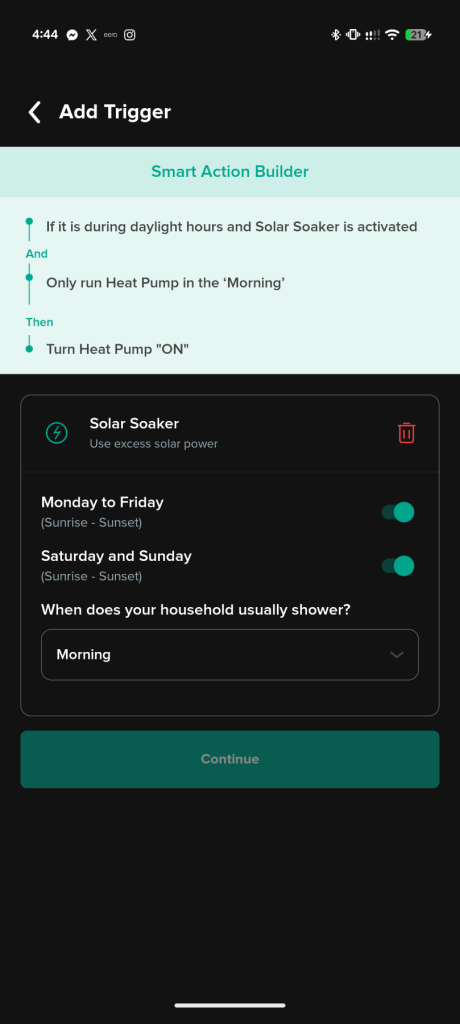
With those 2 steps resolved, it was time to configure it. In Smart Actions, you then have the option to select the Solar Soaker option which uses excess solar power to heat the water. Without it, you may choose to use off-peak power which is likely to be around $0.20c/kWh, or $0.40c/kWh if it leveraged peak power, so clearly the excess solar when possible, is the best option and virtually free.
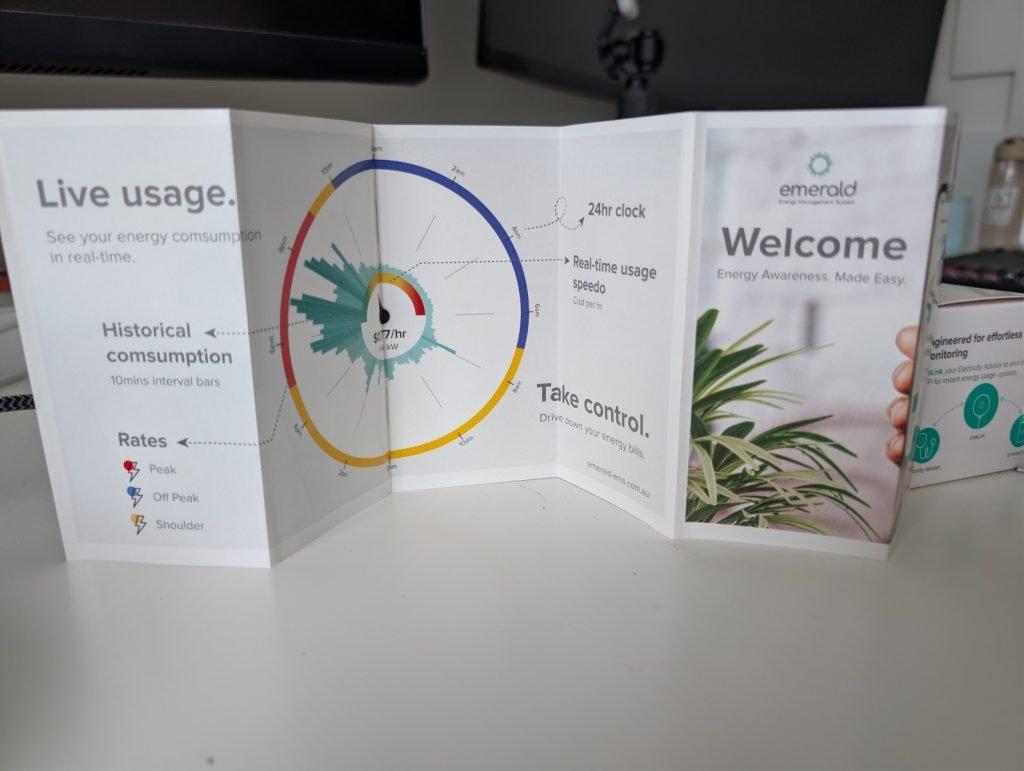
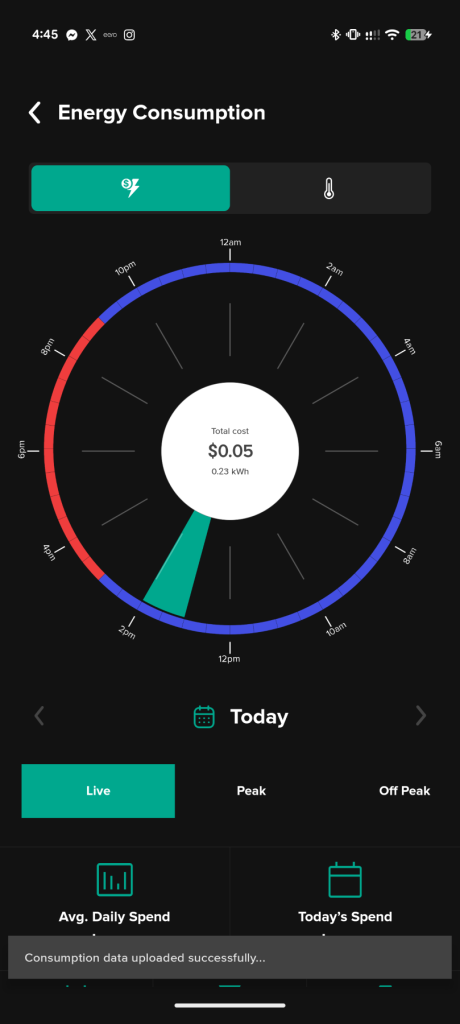
Having reviewed my costs in the app, since having the heat pump, have averaged $0.41 heating the hot water each day. It’ll take a full round of bills to really understand just how long the return on investment is, but the early indication is, that’s a massive reduction in what I used to pay for a gas hot water system. Given the gas bill is my largest utility bill and I had virtually no ability to reduce that cost, this transition to a heat pump was that opportunity, so I jumped at it.
Overall
Overall I’m very happy with how the replacement played out, it was incredible to have identified the issue on Tuesday night and have the replacement system in place on Thursday. It was funny to receive a response to one of the quote requests after the new system was already installed, showing that responsiveness is one of the most important attributes for customers ready to buy.
The new Emerald Energy Heat Pump could last as much as 20 years, and if it went anywhere close to that, the per-month cost would be minimal. While the cost was not cheap, more than $4k for the new unit and the $200 solar soaker option, the early indications are this change was a positive one and not only does it look great, it’s a modern solution to the problem of supplying hot water to the home.
I’m keen to hear the experience of others, if you’ve made the jump to a heat pump, let us know your experience in the comments and if you’re considering it, please let us know your questions below.
If you’d prefer to watch the video version, check out the video on our YouTube Channel.
{For more tech updates, stay tuned to our blog.|Keep following us for the latest insights.|Check back often for more exciting news!}