This is Optimizer, a weekly newsletter sent from Verge senior reviewer Victoria Song that dissects and discusses the latest gizmos and potions that swear they’re going to change your life. Opt in for Optimizer here. Finding concrete data about gray-market peptides is a Sisyphean task. Unlike bona fide clinical drug trials, there are no official
This is Optimizer, a weekly newsletter sent from Verge senior reviewer Victoria Song that dissects and discusses the latest gizmos and potions that swear they’re going to change your life. Opt in for Optimizer here.
Finding concrete data about gray-market peptides is a Sisyphean task. Unlike bona fide clinical drug trials, there are no official numbers. There’s little to no safety data. Some peptides have more anecdotal evidence than others, but a stranger on r/peptides is, perhaps, not an ideal information source. The fact is most people partaking in a dubiously legal activity aren’t going to shout it from the rooftops. What we do know about many of these unregulated, unapproved substances is simply this: A lot of people are taking them, unsupervised by medical professionals.
Take BPC-157 — one half of the infamous “Wolverine” stack. The BPC in BPC-157 stands for “body protection compound.” The substance was originally found in gastric juice in 1993 and is thought to promote injury recovery. It supposedly works by creating new blood vessels, promoting cell growth, and repairing damaged tissues like tendons, muscles, and ligaments. You know, Wolverine-y stuff. Sounds great. Except it’s not approved by any regulatory body, has primarily been studied in animals, and has limited clinical evidence in humans. One systematic review from 2025 found only 35 preclinical studies and a single clinical study for BPC-157 in humans.
Nevertheless, BPC-157 is on a lot of people’s minds. That same systematic review states that, in 2024, there were over 50 million views for BPC-157 videos on YouTube and TikTok. According to Google Trends, there’s been a 1,600 percent increase in traditional web searches for BPC-157 in the United States in the last five years. That jumps to over 5,000 percent for YouTube searches. As for real-life usage data — it’s impossible to find reliable numbers.
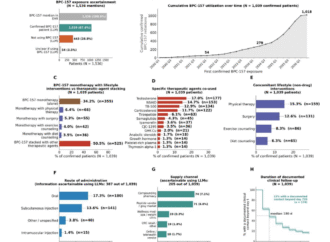
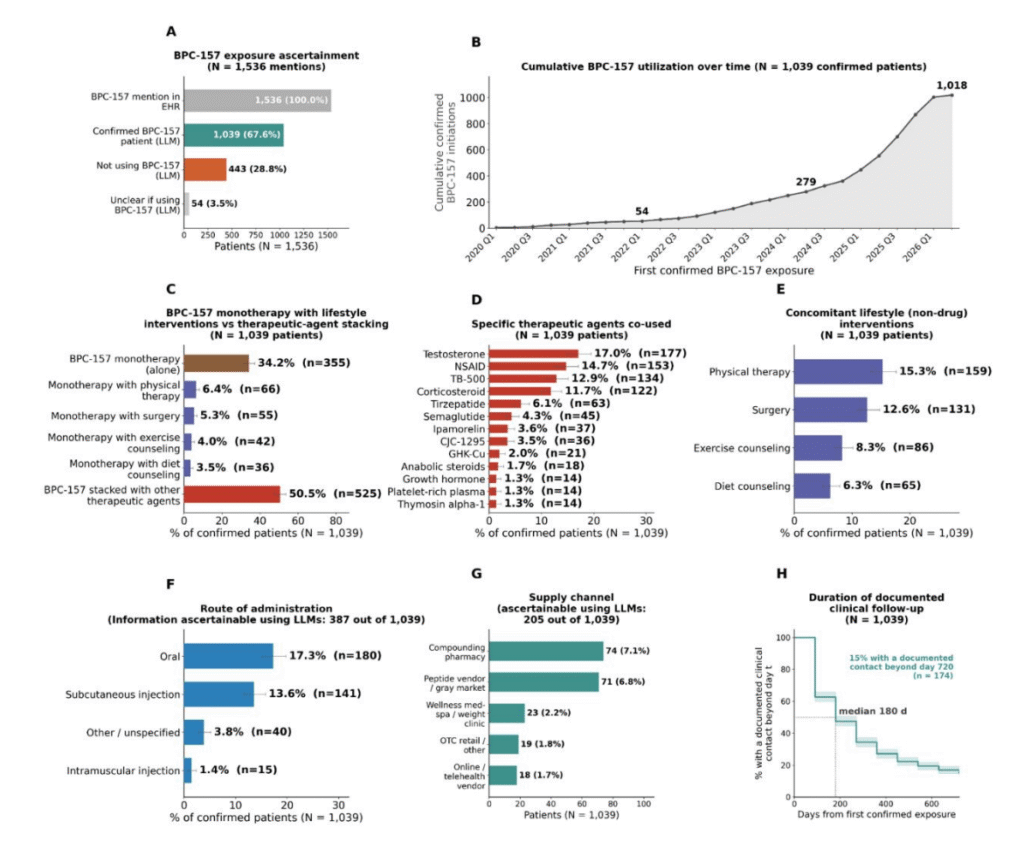
That said, a recent preprint study attempted to capture how real-world BPC-157 use has increased. The study, yet to go through peer review, is a retrospective look at anonymized electronic health records using a large language model to detect mentions of the peptide in clinical notes. This itself is an imperfect method, as BPC-157 has no insurance code or a uniform way for medical providers to indicate a patient is using it. Even so, the preprint highlights interesting — and concerning — trends.
“[BPC-157 usage] was kind of benign during the pandemic and the deep end of the pandemic, but it’s skyrocketed over the last few quarters. Over the last three years, the use has increased significantly,” says Venky Soundararajan, one of the study’s authors and chief scientific officer of nference, an AI startup that uses LLMs to find insights from clinical records.
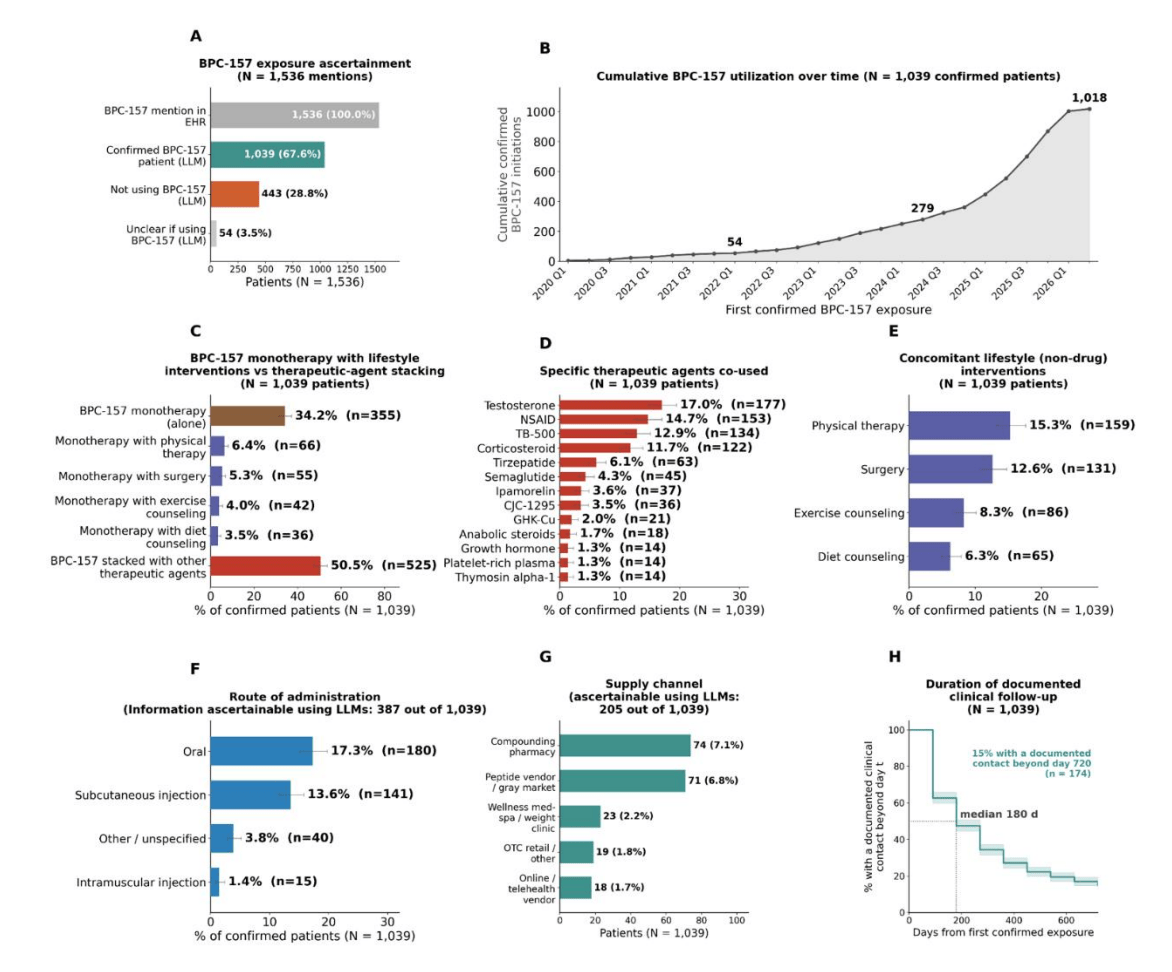
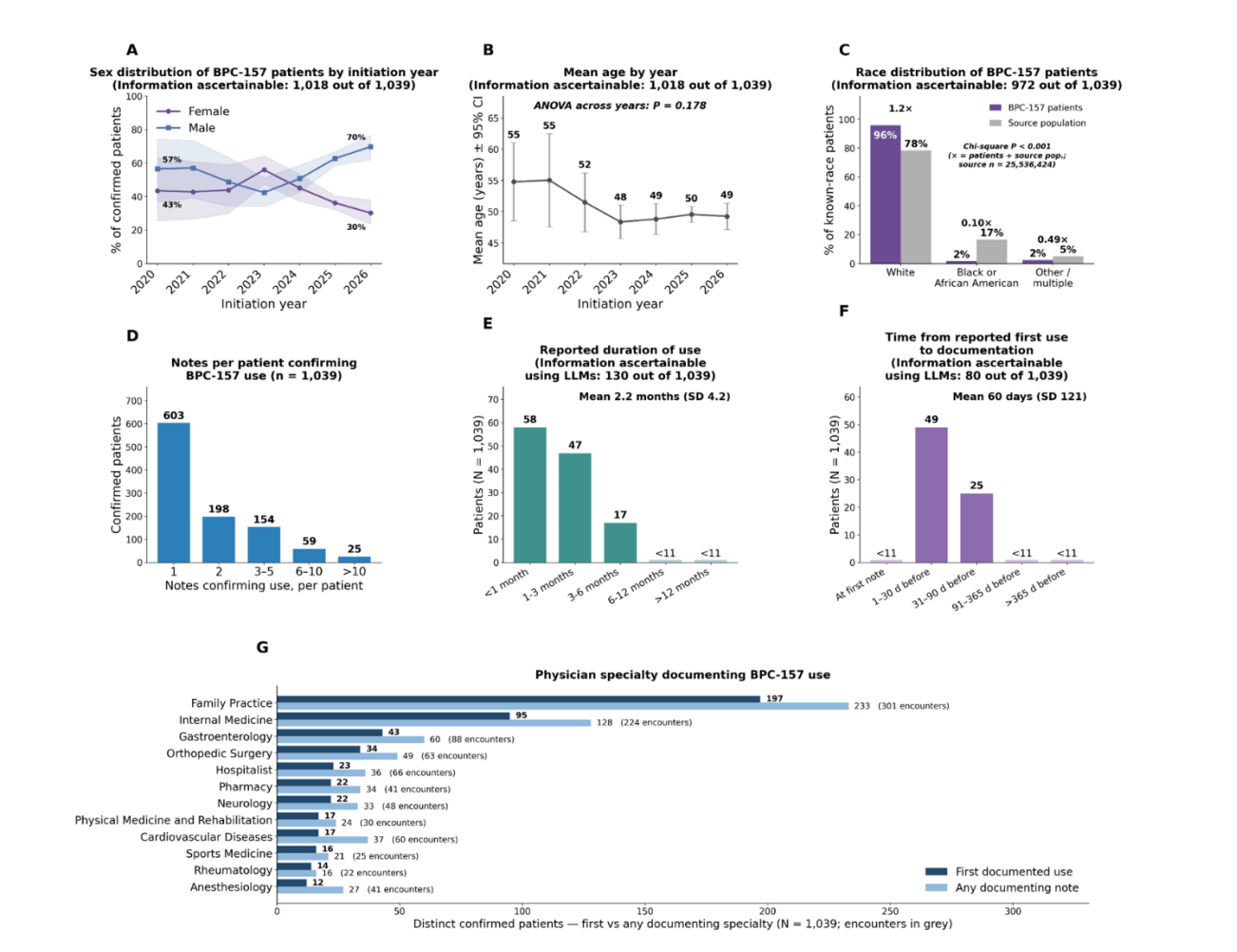
Put plainly, the study found roughly 54 confirmed patients using BPC-157 in Q1 2022. (The real number is likely much higher, but this is a snapshot based on the records the researchers had access to.) That number jumped to 1,018 in Q1 2026. According to Soundararajan, about 33 percent of patients who used BPC-157 didn’t pursue any other therapies or drug use. Roughly half, however, stacked it with other substances. (Chief among those were testosterone, non-steroidal anti-inflammatory drugs, and TB-500, the other half of the Wolverine stack, which also supports tissue repair.) He also noted that the majority of patients were taking BPC-157 orally, followed by injections.
“The average BPC-157 user who’s showing up to the doctor is getting younger and younger — they’re in the upper 40s as an average age and is very likely a Caucasian white patient,” says Soundararajan. “And from the time the product is [first] used and the time they show up to discuss their use with a doctor, at least two months has elapsed.” As for the type of doctors, BPC-157 is most commonly reported to family practice and internal medicine, followed by gastroenterologists and orthopedic surgeons.
Even so, this data has flaws, acknowledges Soundararajan. For example, he pointed out that 96 percent of patients who disclosed their usage were Caucasian, compared to the 2 percent that were African American. That’s a dramatic gap from what the researchers would’ve expected statistically based on the source data, which was 78 percent Caucasian and 17 percent African American. This doesn’t mean African Americans aren’t taking BPC-157 — they may simply feel less confident talking about it with doctors compared to Caucasians. As for why someone might feel that way, I’ve conducted interviews with peptide users who say they don’t want judgment, don’t trust their doctor is knowledgeable about the subject, or fear it may lead to repercussions with insurance.
Another problem, Soundararajan says, is that this preprint can’t really give reliable insights as to BPC-157’s efficacy in humans or safety. Only a small subset reported adverse reactions — roughly 2 to 3 percent. However, the problem is that data is anecdotal. In a clinical setting, he explains, researchers and doctors evaluate adverse reactions on a graded scale. Minor, manageable adverse effects might get reported in records, but severe cases requiring hospitalizations may not. Pain, he says, is also not an objective assessment. In the study, most of the positive effects of BPC-157 were self-reported by patients. However, physicians rarely intervened to say they also saw an improvement in the patient’s condition. Also, 66 percent of the cases showed no documented response on whether BPC-157 worked or not — only that the patient had tried it.
“The medical record has a bias. Obviously, there are those who are using the product for performance enhancement who are not talking about it,” says Soundararajan. For example, the top recorded reason for BPC-157 use is pain management. On the one hand, that indicates BPC-157 users may be turning to the substance because there’s an unmet need that legal therapies can’t address. But, he says, those are self-selecting patients. It’s possible that only patients with positive experiences were likely to talk about their usage in an official setting.
Pro-peptide users might say this is evidence that BPC-157 works. Some might even conclude from this preprint that, given their individual circumstances, the risk calculus is worth a go. But from a regulatory standpoint, this simply isn’t good enough.
Perhaps the scariest thing is that even Soundararajan can’t say whether the preprint truly says anything about BPC-157. The patients in the preprint obtained the peptide from gray-market sources, so it’s possible that some were taking another substance entirely. There’s always the chance that the positive effects recorded are simply the placebo effect. We’ll never know.
But this is the sort of information physicians, researchers, journalists, regulators, and the peptide-curious have to go off of. A fuzzy picture that tells part of a story, but not the entirety. Imperfect data like this is better than nothing, but it raises more questions than it half-answers.
The only thing that anyone can truly conclude from a study like this? We don’t know enough, but BPC-157 isn’t going away anytime soon. Doctors will have to start thinking about how to talk to patients who do turn to the gray market.
“The reason we are handicapped, not only us but others when they try to replicate these studies, is that they’ll be relying on clinical notes alone,” says Soundararajan. “You need to make it easy for the healthcare provider to structure the conversations that they’re having with patients for unapproved products. This is one thing where we think regulation should change. We believe health record manufacturers need to make it easy for doctors to record. Who’s the source? Where did you get the product from?”
Even if that helps paint a clearer picture of gray-market use, that, too, is a stopgap solution. One thing that everyone can agree on is that both prospective studies and gold-standard clinical trials are necessary. It’s “just” a matter of who will pony up the millions required. And it’s not isolated to BPC-157. This goes for all the commonly used gray-market peptides.
Until then, incomplete data is all we have.
For more tech updates, stay tuned to our blog.