
The ancient word “plague” is back in the headlines. NPR’s Russia correspondent Charles Maynes reported this week on what we know about a Russian researcher working in a lab studying the plague who died from pneumonia of an unknown origin last week. Maynes reports that the employee was a 28-year-old woman who worked in a
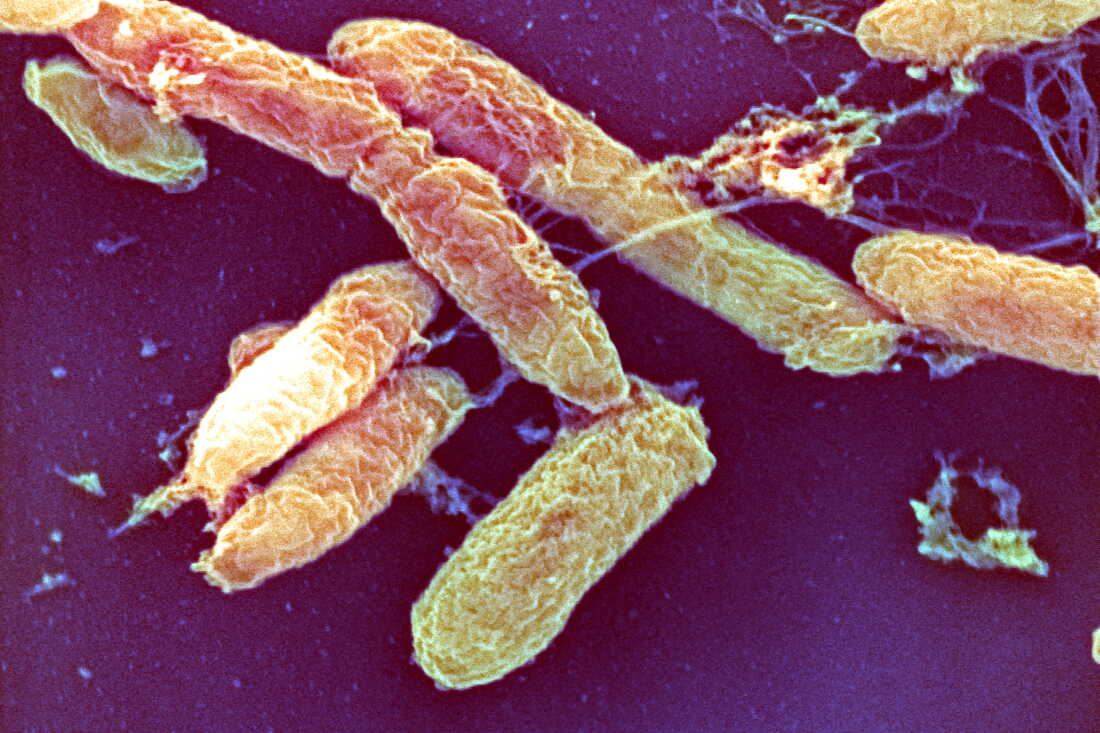
The ancient word “plague” is back in the headlines.
NPR’s Russia correspondent Charles Maynes reported this week on what we know about a Russian researcher working in a lab studying the plague who died from pneumonia of an unknown origin last week.
Maynes reports that the employee was a 28-year-old woman who worked in a lab in Siberia, some 2,500 miles from Moscow. An investigation by Russia’s consumer health watchdog concluded that no pathogens in her body were connected to her work with infectious disease.
But local media have raised concerns about the spread of pneumonic plague, which NPR has not independently confirmed.
It’s one of the diseases studied at the lab in Siberia. It’s airborne and can be fatal.
While noting that 200 “contacts” were in quarantine, Russia has denied that there are cases of plague in the area. But questions loom. In a press conference Wednesday, the head of the World Health Organization, Tedros Adhanom Ghebreyesus said these Russian assurances were — at the very least — incomplete: “We don’t yet have the full picture of this event and we’re not able to conduct a full risk assessment.“
In the meantime, here’s what we do know about the bacterial disease of plague — and the variant known as pneumonic plague.
Plague variations
The plague comes in several versions, depending on which body part the bacteria invade. When a flea bites a person, the individual typically develops what’s called bubonic plague. In this case, the telltale sign is one or more swollen and painful lymph nodes, known as buboes. (The word “bubonic” comes from the Greek boubon, which means groin, because some people have swollen lymph nodes in their groin.) Doctors can diagnose the disease by taking a sample from the person’s blood or lymph nodes and then submitting the sample to a lab for testing.
But when the bacteria spread to the lungs, this can cause what’s called pneumonic plague. In this case, there’s often no telltale sign of the plague, according to the Centers for Disease Control and Prevention.
This version is much more dangerous, says medical entomologist Adelaide Miarinjara at Emory University. “It transmits pretty easily between people because it spreads through droplets, almost like COVID spreads.”
And people can die more quickly with pneumonic plague than other forms, she adds, because the disease progresses more rapidly. “The key here is early diagnosis. If people aren’t expecting it or don’t seek treatment, they can die.”
Treatment involves antibiotics, often administered by IV infusion.
In 2017, Madagascar suffered a large outbreak of pneumonic plague when a person from a rural part of the country brought the disease to the coastal city of Toamasina. That city hadn’t seen a case of the plague in nearly a century, says Miarinjara, who was in Madagascar at the time. “A person transmitted the disease on public transportation,” she says.
The country recorded more than 2,400 suspected cases, including nearly 1,900 cases of pneumonic plague. One study estimated that about 25% of people with confirmed cases died in this outbreak.
The history of quarantine
As for the reports of Russian “contacts” of the lab worker under quarantine — that reflects a long-standing response to sicknesses like the plague.
The idea of isolating, or quarantining, sick people dates back at least 3,000 years. The Book of Leviticus in the Bible mentions how to isolate people with leprosy.
The word “quarantine” itself arose during the Black Death, when the city-state of Dubrovnik, now part of the country of Croatia, enacted what is likely the first state-imposed isolation.
At the time, Dubrovnik was a wealthy merchant city along the coast of the Adriatic Sea. City leaders wanted to keep the bubonic plague out. So they began to force visitors to wait for 40 days on a remote island outside the city before coming ashore.
They called the wait quarantino, from the Italian word for “40.”
“The first quarantine was pretty much improvised,” Ivana Marinavić, the head of educational programs at the Lazarettos of Dubrovnik, told NPR in 2021. The Lazarettos were the first buildings ever constructed for the sole purpose of quarantining.
If you broke the quarantine during the plague, the consequences were severe. “Torture, or cutting your nose or your ears off,” Marinavić told NPR.
For stories about life in our changing world, subscribe to NPR’s Global Health newsletter.
{For more tech updates, stay tuned to our blog.|Keep following us for the latest insights.|Check back often for more exciting news!}