For years, GoPro has led the way in the action camera market, delivering rugged and reliable devices for extreme sports enthusiasts. The GoPro Mission 1 Pro represents a significant shift, bridging the gap between a traditional action camera and a professional compact cinema rig. It takes the familiar, indestructible form factor we all know and
For years, GoPro has led the way in the action camera market, delivering rugged and reliable devices for extreme sports enthusiasts. The GoPro Mission 1 Pro represents a significant shift, bridging the gap between a traditional action camera and a professional compact cinema rig. It takes the familiar, indestructible form factor we all know and injects it with serious filmmaking capabilities designed to elevate your production quality.
If you purchase this device, you are getting a highly capable camera that delivers exceptional low light performance, extreme slow motion, and 8K quality at 60 frames per second. By maintaining a compact size, it allows creators to capture professional footage in confined spaces or extreme environments without needing a bulky cinema camera and the jump to a larger sensor and advanced processor means your footage will look incredibly rich and detailed, straight out of the box.
The target audience for the GoPro Mission 1 Pro is clear, built for professional videographers, serious content creators, and even filmmakers who need a durable, mountable camera that does not compromise on image quality.
While it’s certainly overkill for entry-level users, anyone looking to upgrade their production value for YouTube, documentaries, or commercial work will find a lot to love here.
Design
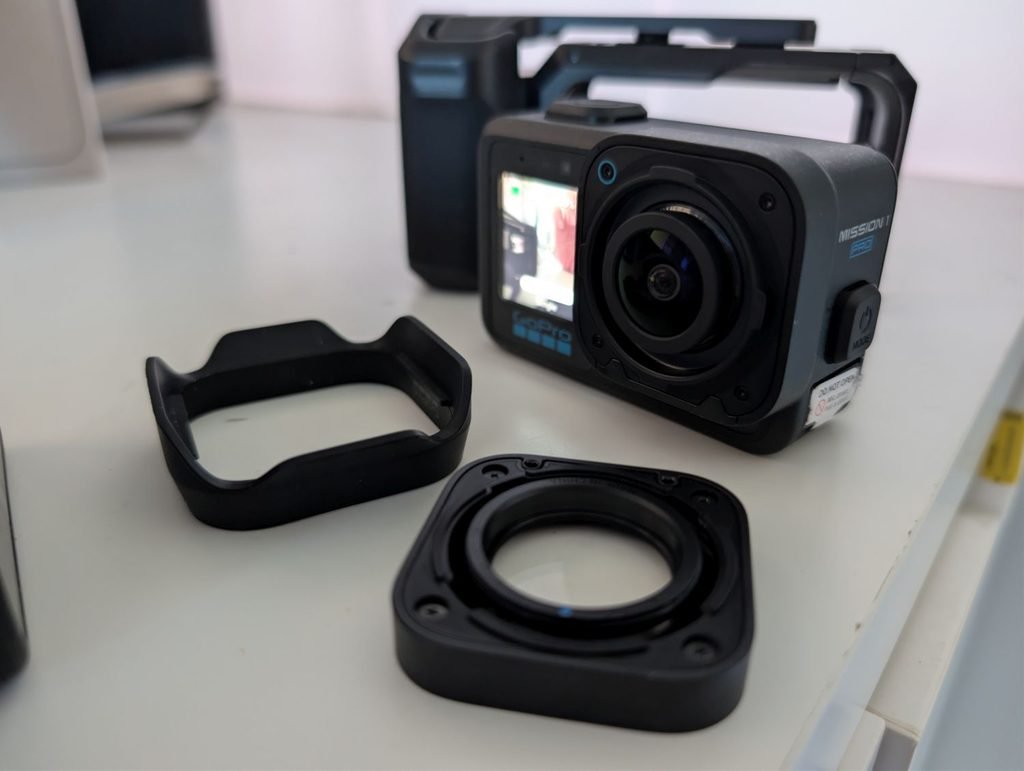
At a glance, the GoPro Mission 1 Pro draws heavy inspiration from the long running Hero series, maintaining the iconic dual screen layout and black finish. It is however marginally larger and heavier than the Hero 13 Black, weighing in at around 207 grams to accommodate the massive new sensor and improved internals.
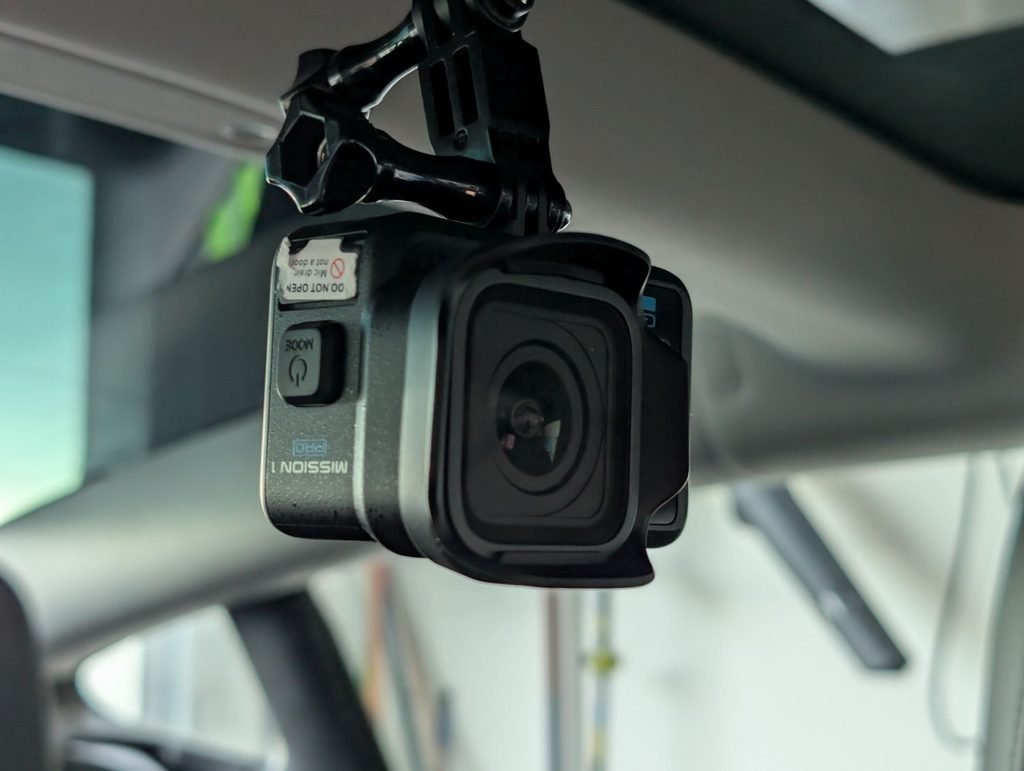
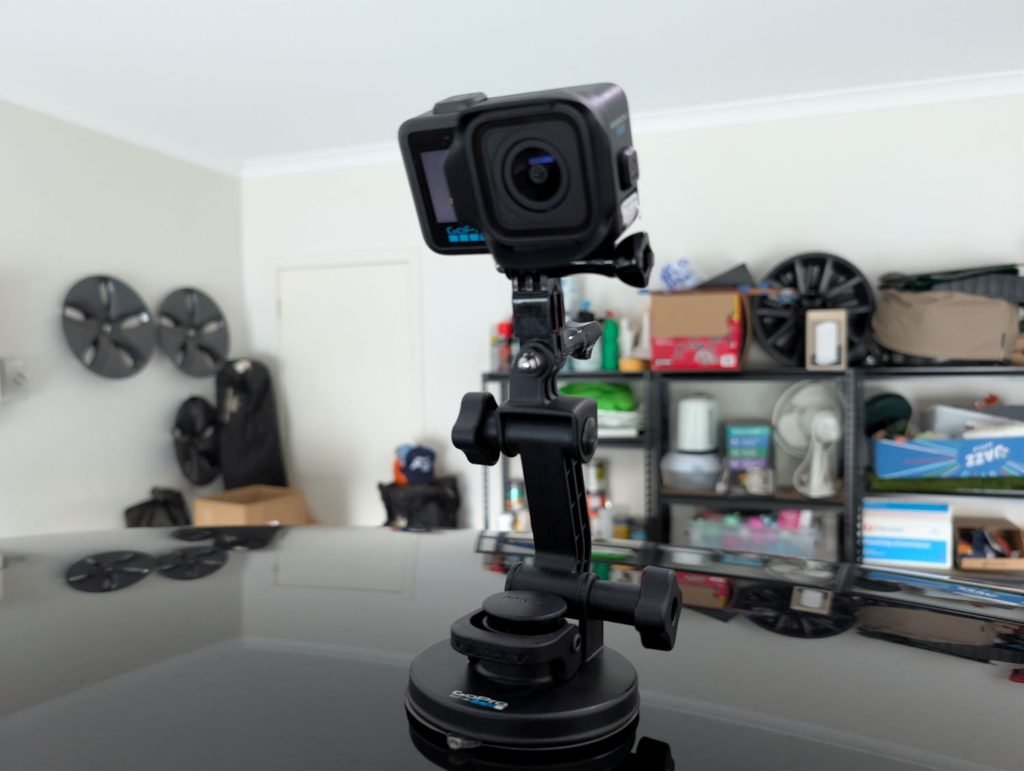
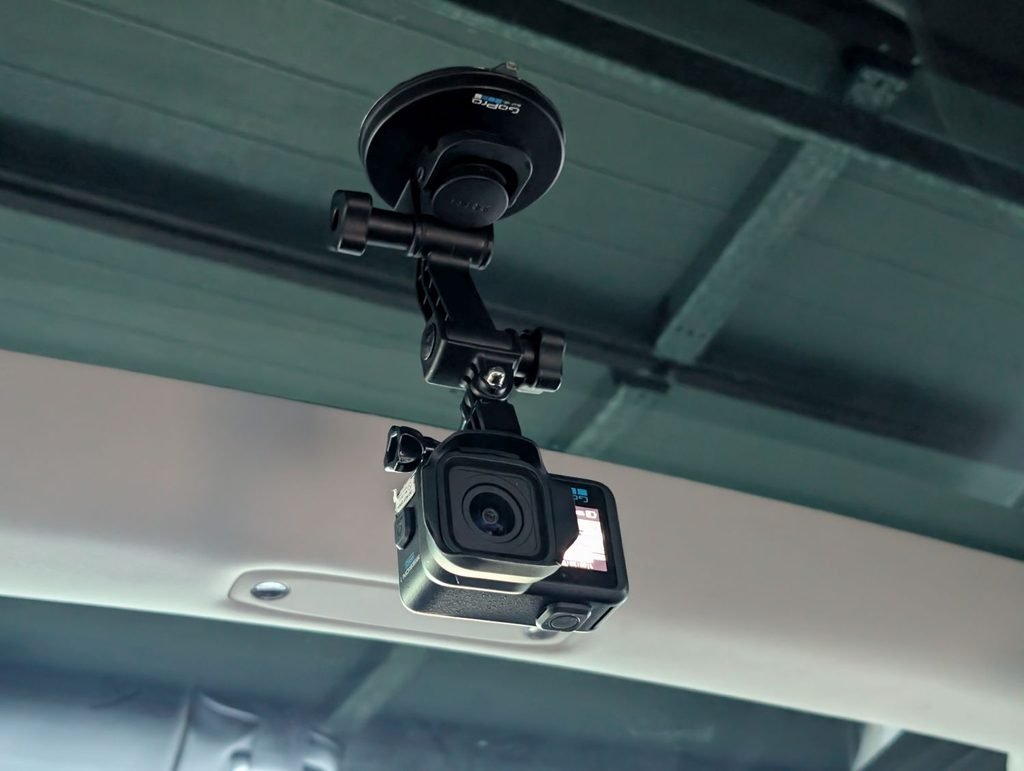
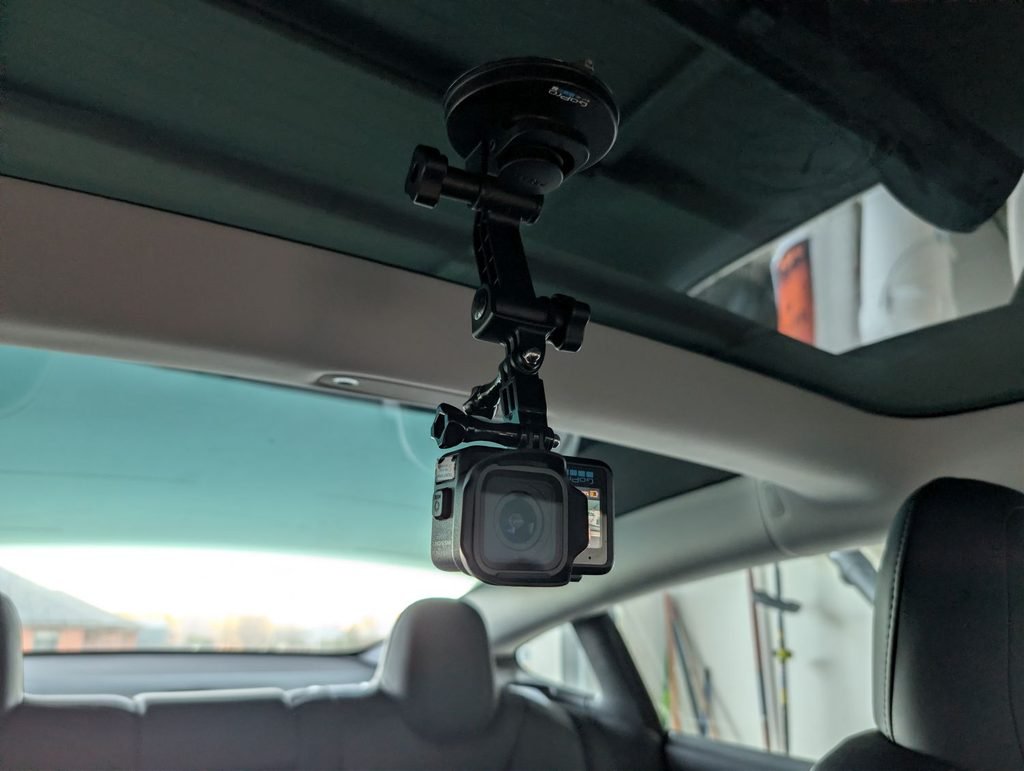
Despite the extra bulk, it remains compact enough to mount on helmets, suction cup mounts on vehicles and rigs using the standard 1/4 inch tripod thread.
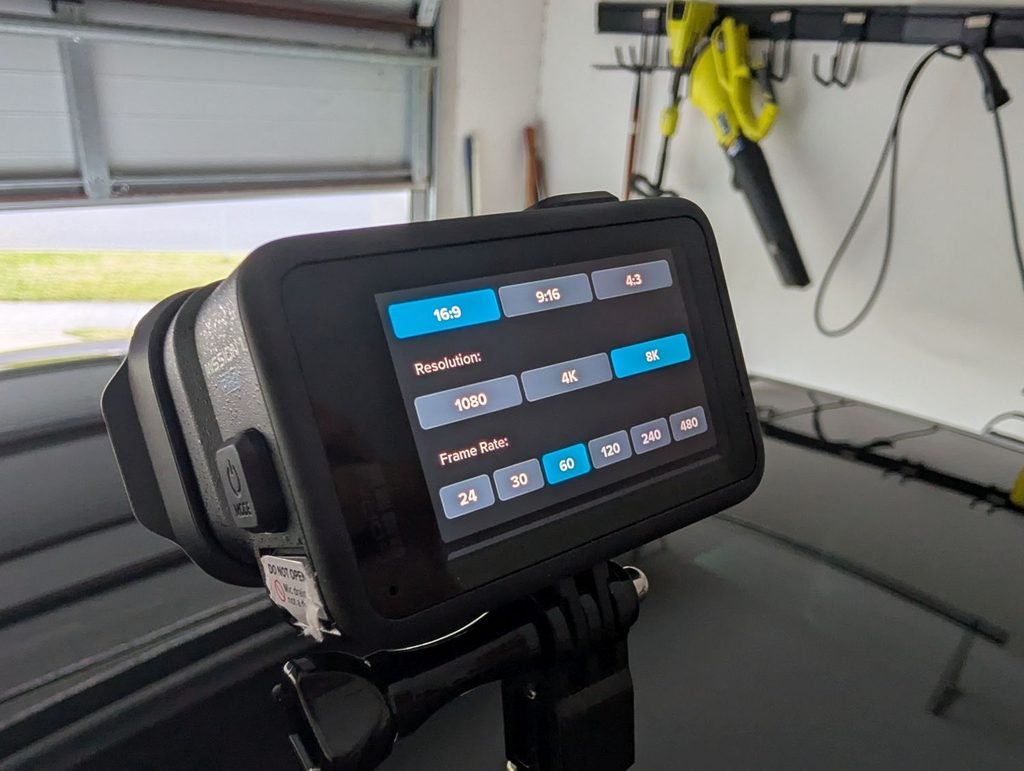
The camera features a larger 2.59″ rear OLED touchscreen for framing and navigating menus, paired with a 1.4 inch front display. The physical buttons on the side are very practical, allowing you to turn the camera on and off easily and switch between the modes (low light or night mode, Slow-mo, Smart POV, Video, Photo, Timelapse).
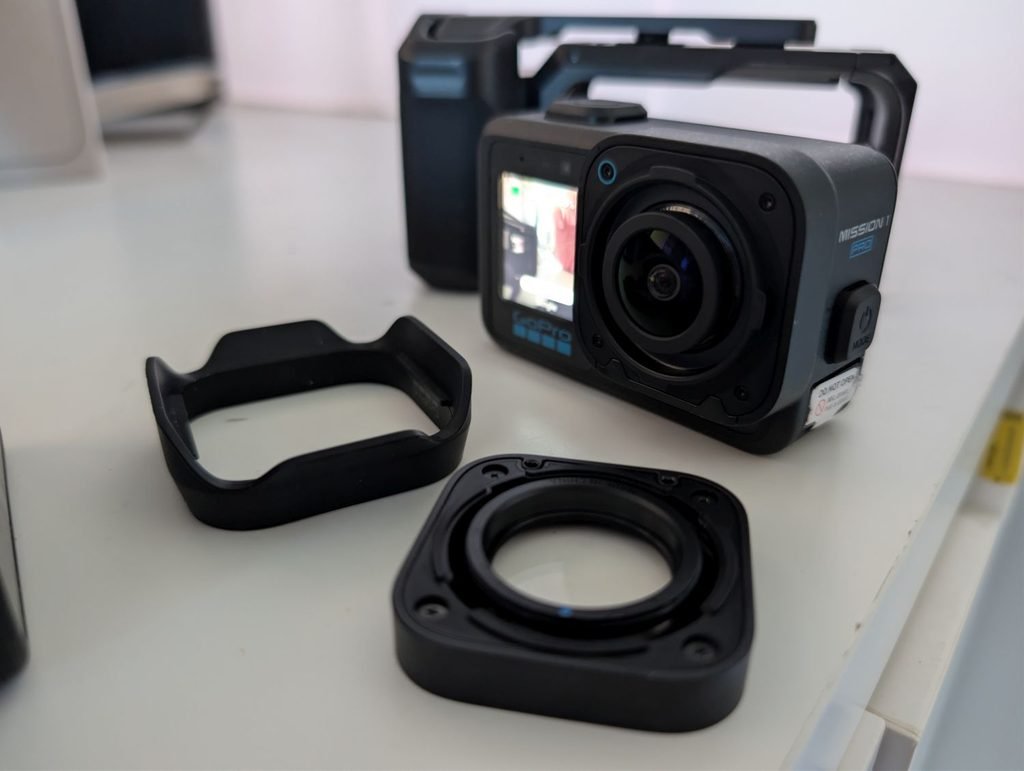
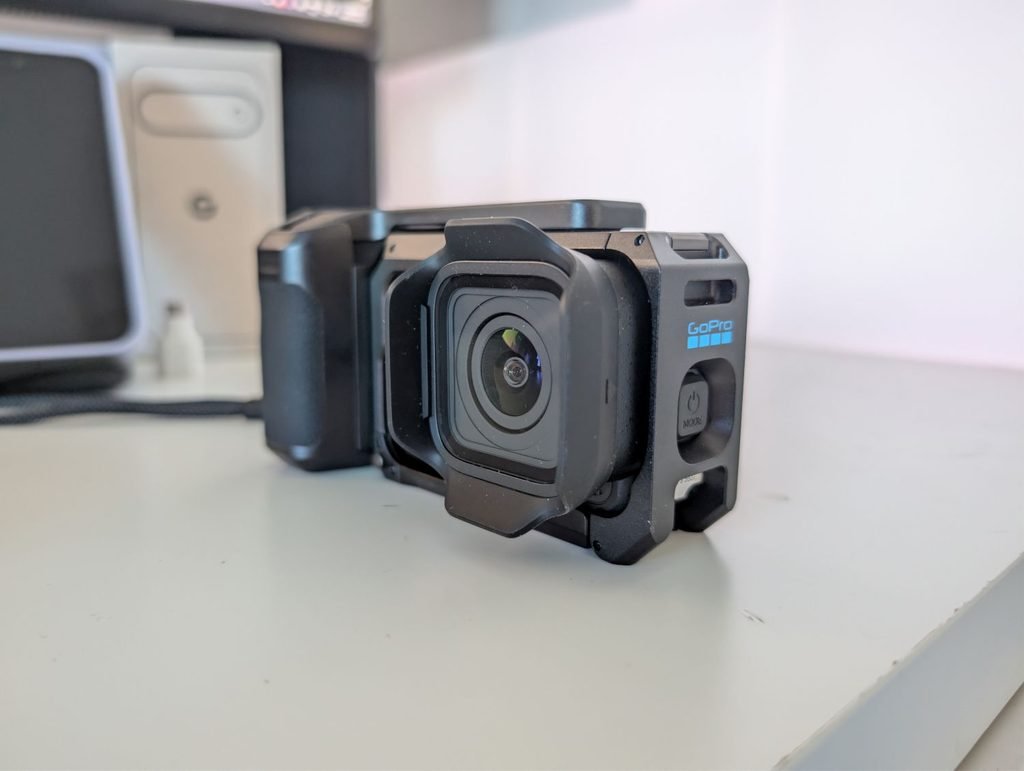
The chassis retains the legendary rugged construction and is completely waterproof down to 20 metres without needing an external housing, which is a major win for aquatic filmmakers. The camera also comes with a lens hood, which allows you to avoid sunlight ruining exposure and colours by sunlight directly hitting the lens. This clips over the lens and is easily removed.
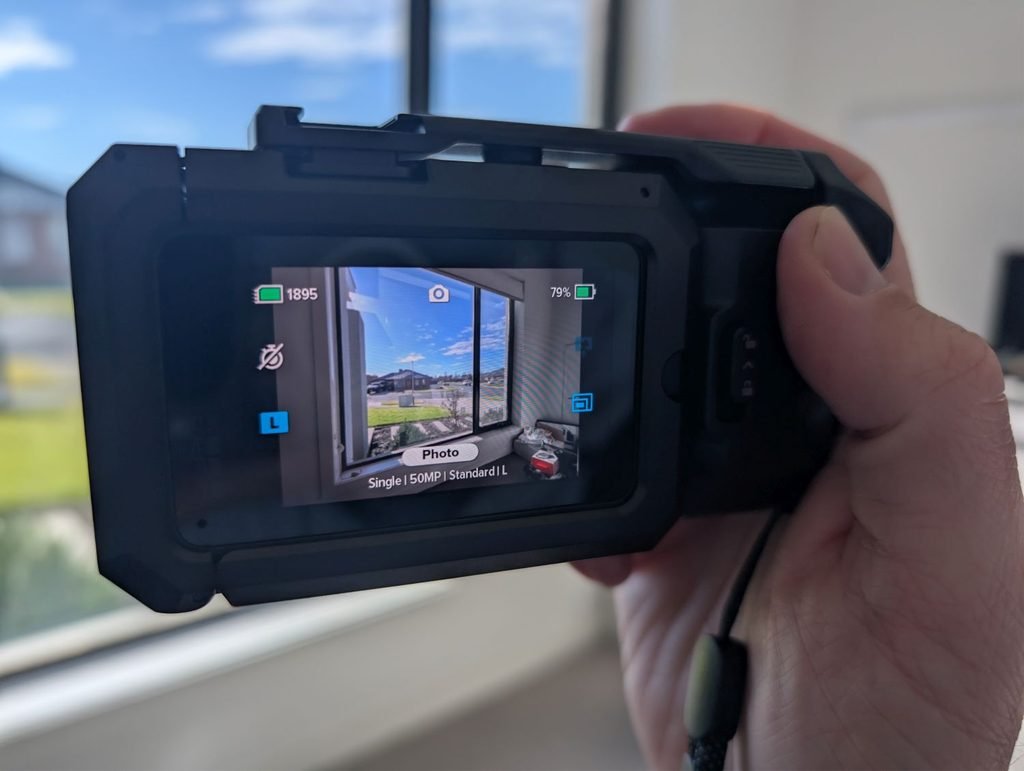
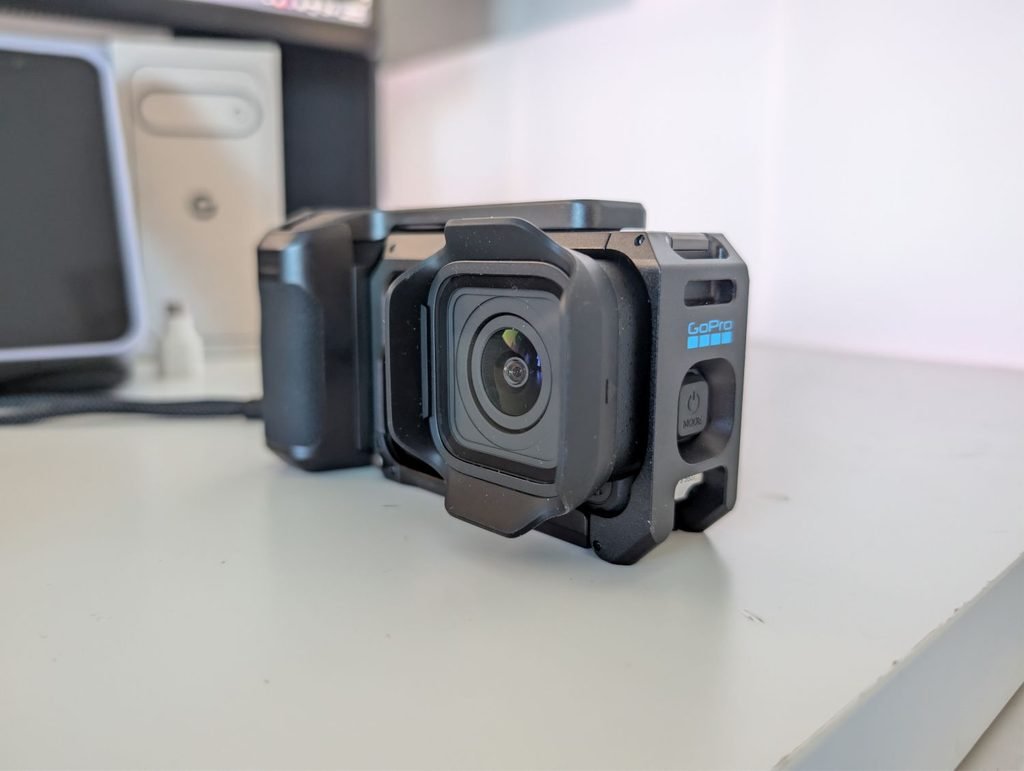
If you’ve used GoPros before, the design is excellent, it’s familiar, but more capable and the optional handle grip accessory was something I loved much more than I expected to. This accessory transforms the camera into something you can hold in your hand and use like your phone, but comfortably in two hands.
Clipping the GoPro into the accessory is strange at first, but the quick release buttons help make it a breeze to get access to the charging port and remove the camera if required. The consideration to leave the mounting clips available while in the housing is great, although I did touch that area at the base after the recording for a while and noticed it throwing off quite a bit of heat. Thankfully I never experienced the dreaded overheat message on the screen, so perhaps this dissipation of heat is doing what it should.
The Mission 1 Pro is the middle of 3 tiers of the camera, with the top end model in the series, the Mission 1 Pro ILS features an option for interchangeable micro four thirds for larger lenses. The Pro model still features the lens mod capability so those after ultra-wide angle with the Max Lens Mod are still in luck.

Performance
The performance of the GoPro Mission 1 Pro is driven by the new GP3 processor and a massive 50 megapixel 1″ sensor. In real world use, this combination delivers the best video quality ever seen on a GoPro, with stunning dynamic range and natural colours. The larger sensor significantly improves low light performance, allowing you to capture usable, clean footage at dusk or indoors where previous models would introduce heavy noise.
When it comes to frame rates, this camera is an absolute powerhouse. You can shoot 8K video at up to 60 frames per second, which provides incredible detail and massive flexibility for cropping in post production. If you are shooting fast moving action, the camera handles 4K at 240 frames per second effortlessly, and the digital stabilisation works wonders to keep the horizon level and the footage perfectly smooth.
It is worth noting that the extra resolution comes at the cost of storage, while the visuals look stunning and have the resolution to be able to zoom in and still maintain great quality, it will consume lots of your mciroSD card. My advice is to think about 64GB as the minimum. This will deliver about 1 hour of footage in 8K, or 1.5hrs at 4K, if you’re project only requires 1080, then you’ll get more than 2.5hrs.
If your needs require longer shoot times, you have a choice of going for a single larger card, or multiple cards, but neither option is cheap with the current storage price hikes.
Battery life has also seen a welcome improvement, thanks to the included Enduro 2 battery. You can expect close to 3 hours of continuous recording at 4K resolution, which means you’ll likely run out of storage betfore battery. As mentioned above, the device manages heat dissipation well, meaning you can record long takes in high resolutions without the frustrating overheating issues that have plagued small action cameras in the past.
Features
The GoPro Mission 1 Pro is packed with professional tools designed to give creators maximum flexibility on a shoot. Here are the standout features that make this camera special.
1” 50 megapixel sensor
The larger sensor captures significantly more light than previous models, delivering cinematic depth of field, superior low light performance, and crisp 50 megapixel still photos.
8K video and open gate recording
Shoot ultra high resolution 8K video at 60 frames per second, or use the 4:3 open gate mode to capture the full sensor area, making it easy to crop for vertical and horizontal social media formats.
Next generation GP3 processor
This powerful new chip enables advanced denoising algorithms, seamless interface navigation, and higher frame rates while keeping power consumption efficient.
Extreme slow motion
Capture incredibly fast action with 4K recording at 240 frames per second, or use the burst slow motion mode to hit an astonishing 960 frames per second at 1080p.
Professional audio capabilities
The camera features a four microphone array with 32 bit float recording for excellent built in sound, and supports external USB-C microphone setups like the DJI Mic 3.
Subject tracking
A new intelligent feature that automatically keeps your subject centred in the frame by leveraging the ultra wide field of view to crop and track movement.
Issues and Opportunities
GoPro could make some improvements to future editions to make the Mission 2 even more impressive.
The standard GoPro mount is a classic, and we’re so deep into that with accessories, it’s hard to see it ever changing, but I’d like it to. This comes from competitor DJI’s magnetic clip system which is fast, easy and secure and as far as a mounting system I think it beats GoPro’s hands down.
Another missed opportunity is the lack of interchangeable lens support on this, what is already called the PRO model. While it may not ship with this adapter, it should support it without requiring a whole new camera, the more expensive Mission 1 Pro ILS variant. Giving videographers the ability to swap lenses on this base model would have truly cemented its status as a compact cinema camera.
Price and Availability
The GoPro Mission 1 Pro is on sale now in Australia. Official pricing is A$1,099.95 RRP for the camera kit, which includes the Enduro 2 battery, removable lens hood, curved adhesive mount, buckle, and USB-C cable. Existing GoPro subscribers can buy it from GoPro for A$949.95.
The Grip Edition adds the point-and-shoot handle and is listed at A$1,229.95, or A$1,079.95 for subscribers. Activity bundles and larger Creator kits live mainly on GoPro’s own store.
If you’re on a tighter budget, the cheaper Mission 1, which shares the same sensor but caps out at 8K30 and 4K120, costs A$949.95 / A$799.95 for subscribers.
You have a range of options to pick one up, starting with GoPro directly, or a range of alternatives, some of which are offering discounts.
- GoPro Australia lists the Mission 1 Pro at A$1,099.95, or A$949.95 for subscribers.
- JB Hi-Fi has the Mission 1 Pro 8K Compact Cinema Camera at A$1,099.
- Ted’s Cameras is advertising the camera at A$999.95, marked down from A$1,099.95, with stock ready to ship.
- CameraPro has it at A$1,065.00.
- digiDirect lists the Mission 1 Pro at A$1,099.00.
Make sure to accommodate for a faster and larger microSD card in your budget if you shoot all day.
Overall
The GoPro Mission 1 Pro is an outstanding piece of technology that successfully bridges the gap between rugged action cameras and professional filmmaking gear. By introducing a massive 1″ sensor and the powerful GP3 processor, GoPro has addressed the biggest historical complaints regarding low light performance and dynamic range.
If you are a professional videographer, a dedicated content creator, or a filmmaker needing a durable B-camera, this is absolutely worth the investment. It provides immense value for money when compared to full sized cinema cameras, delivering comparable footage in a fraction of the size.
If you are a casual user or someone who prioritises a lightweight setup for basic social media clips, you might be better served by the standard Hero series. For its target audience, the Mission 1 Pro is a clear must buy.
Keep following us for the latest insights.