South Australia is moving to stop councils routinely sending parking fines in the mail after camera cars identify an alleged offence. The proposed reforms would require a physical ticket or written notification on the vehicle, or a notice handed to the driver, rather than motorists discovering the allegation days later. Premier Peter Malinauskas outlined the
South Australia is moving to stop councils routinely sending parking fines in the mail after camera cars identify an alleged offence. The proposed reforms would require a physical ticket or written notification on the vehicle, or a notice handed to the driver, rather than motorists discovering the allegation days later.
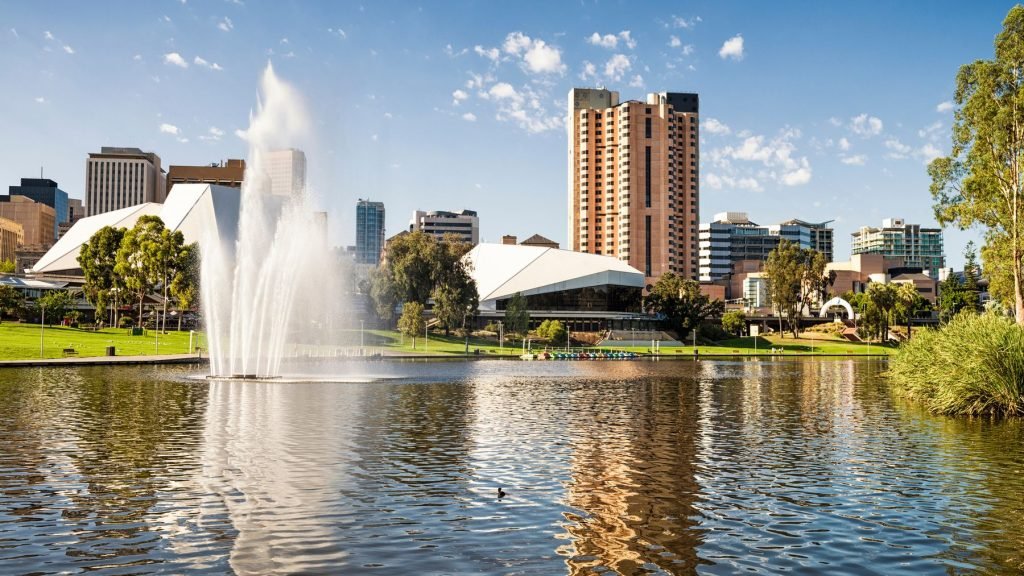
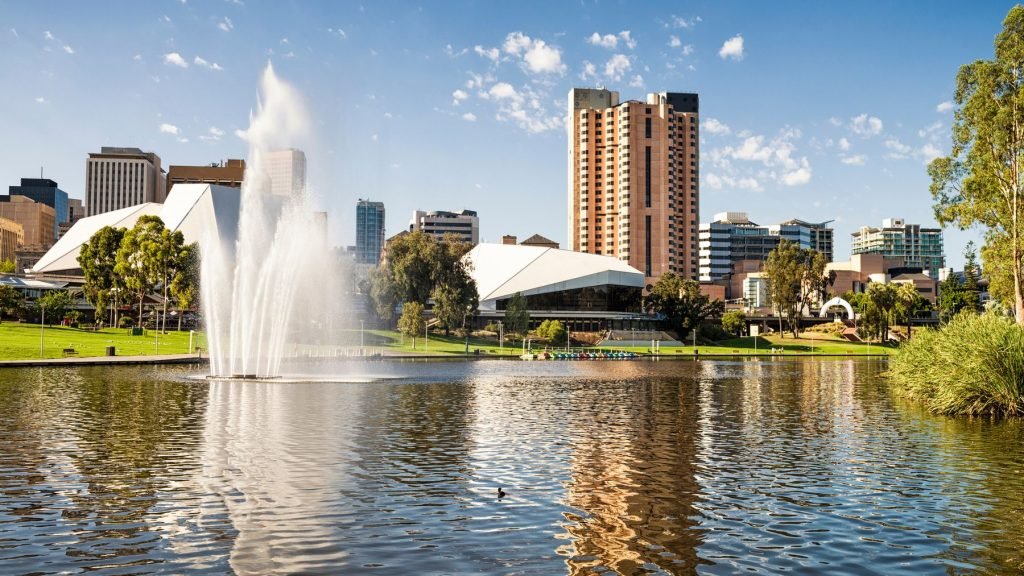
Premier Peter Malinauskas outlined the changes on Sunday, 8 November 2026, highlighting the City of Adelaide’s AI-assisted Park Safe program.
There is an important distinction here: this is not a blanket ban on artificial intelligence in parking enforcement. Councils could still use the technology, but an inspector would need to issue the ticket on the spot, subject to limited proposed safety exemptions.
For me, the bigger question is whether the system is accurate enough to justify issuing fines. If the evidence shows it is not, fix the detection, evidence and review process rather than treating AI itself as the problem.
What South Australia is proposing
The changes would make physical notification the normal requirement for council parking and stopping expiation notices. That matters because a driver who receives a notice immediately can check the signs, photograph the car’s position and preserve evidence before leaving.
ABC reports the approach is modelled on similar reforms in New South Wales. Glam Adelaide reports the government intends to amend the Expiation of Offences Regulations 2026, under the Expiation of Offences Act 1996, with limited exemptions where delivering a physical notice could put an officer at risk.
There is no confirmed commencement date or verified named bill in the reporting reviewed. These are proposed reforms, not a ban that has already taken effect.
Malinauskas told ABC:
It’s the practice of the car and the AI machine only forming the judgement that we are regulating out.
Peter Malinauskas, Premier
He also made clear that technology could remain part of the process:
If they’ve got someone in the car and someone gets out of the car, looks at the circumstances … that’s OK.
Peter Malinauskas, Premier
However, the council’s description of its existing operation already includes human decision-making. That difference between the political framing and the documented workflow deserves attention.
The system is Adelaide’s Park Safe
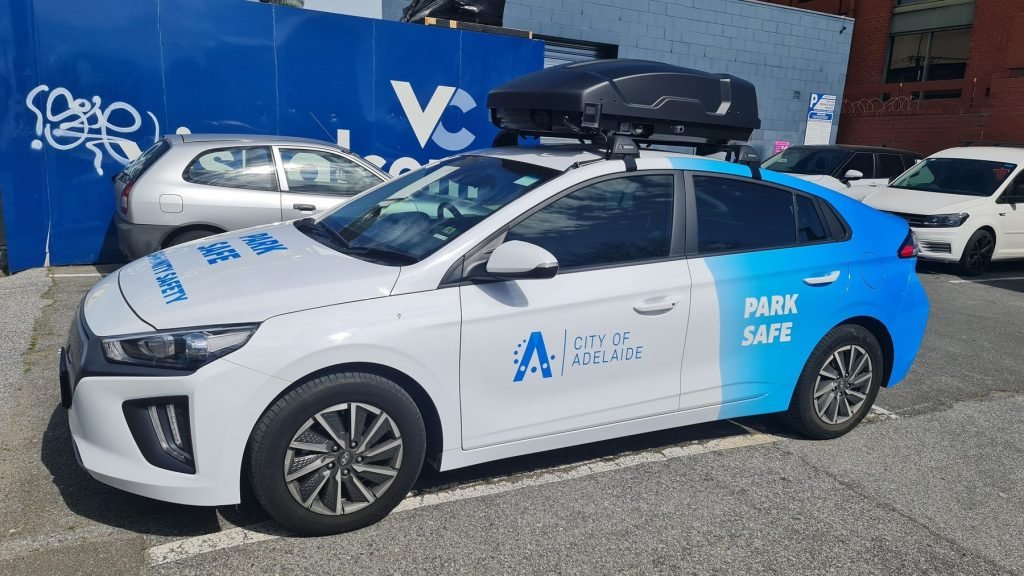
The council at the centre of the announcement is the City of Adelaide. Its Park Safe program uses SenFORCE technology supplied by SenSen Networks, rather than a system developed by the state government.
Council tested the technology during a four-week pilot in early 2021. Its public rollout announcement was issued on 22 July 2022, with operational enforcement scheduled for August that year.
Roof-mounted cameras on a council electric vehicle combine automatic number plate recognition, GPS, environment mapping and AI to identify potential breaches against the parking rules for a location.
The initial focus was no-stopping zones and bus lanes. Residential permit parking monitoring followed in October 2024, while council documentation also describes taxi zones, yellow edge lines and parking on Park Lands.
According to the council’s October 2025 report, photographs are reviewed by a Parking and Information Officer back at the office. That officer decides whether there is enough evidence to issue an expiation and can discard images where no action is warranted.
Confirmed fines are mailed to the registered owner. Council’s public information warns delivery can take up to two weeks. The AI flags and records a potential offence; council says a trained person makes the enforcement decision.
What the fine numbers actually show
The scale of enforcement has grown substantially. Council’s October 2025 report records 2,508 Park Safe expiations worth A$402,000 in 2022–23, rising to 7,874 worth A$1.28 million in 2023–24.
In 2024–25, the system was used to issue 31,373 expiations with a value of A$4.25 million. These are the reported values of notices issued, not a verified tally of money collected.
For that financial year, council received 2,199 review requests and withdrew 563 fines. That is about 25% of challenges, but 1.8% of all Park Safe fines issued.
Those denominators matter. Saying one in four challenged fines was withdrawn is not the same as saying one in four fines was wrong. Equally, a low proportion of withdrawals across all notices does not prove that every unchallenged fine was correct.
Withdrawals can also reflect discretion or circumstances beyond a technical detection failure. The council report identifies humanitarian reasons and trifling offences among the grounds for withdrawal.
More recent media reporting puts the first three quarters of 2025–26 at 27,104 fines. 7NEWS reports 2,353 review requests and 702 withdrawals for that period. Those figures should be identified as media-reported rather than presented as an independently audited accuracy assessment.
A dashcam showed why context matters
A 7NEWS report published on 14 October 2026 provides a concrete example of a disputed notice. A driver received an A$342 fine alleging he had stopped in a bicycle lane.
Dashcam footage showed him waiting briefly for passing traffic before reversing into a parallel parking space. Council reviewed the matter and cancelled the fine.
That case exposes the importance of context. An image of a vehicle in a restricted area may not, by itself, establish whether the driver was illegally parked or completing a permitted manoeuvre.
It also raises a practical question about the human review stage: what evidence was available, and why did the original assessment not resolve the situation before a notice was sent?
Fix the system, and prove it works
I am not convinced that the useful dividing line is AI versus no AI. The standard should be whether the complete system, including human reviewers, can reliably distinguish an offence from lawful driving (or in this case, parking).
There is no independently audited overall accuracy figure in the material reviewed. Without one, neither confident claims of precision nor sweeping claims that the technology is fundamentally broken are established.
Councils should publish meaningful performance information: confirmed detection errors, reasons for withdrawals, review outcomes and the steps taken to prevent repeat mistakes. Independent testing should examine difficult cases, not just easy number-plate reads.
Physical notification has a clear benefit for motorists collecting evidence, but it does not automatically make an incorrect judgement correct. Conversely, keeping an officer in a vehicle may reduce exposure to confrontation, one of the benefits council identifies for Park Safe.
The sensible goal is accurate enforcement, timely notification and a fair challenge process. If the error data shows the system is not good enough, fix it before asking motorists to trust it. Banning the technology is not a substitute for proving that the decisions are right.
For more information, head to City of Adelaide.
For more tech updates, stay tuned to our blog.