BROOKSVILLE, Kentucky.- Even as the sun began to set, the heat of the day still hung in the air as Annie Woods returned to harvesting pumpkins and zucchini on her 50-acre farm. The prolonged, intense heat is part of a pattern of extreme weather events driven by climate change that has also led to intense
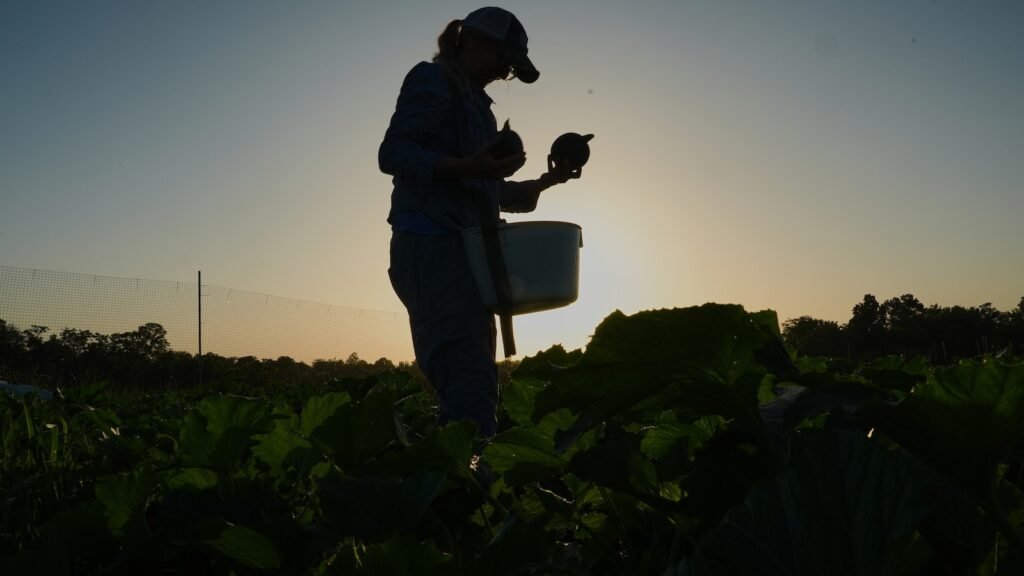
BROOKSVILLE, Kentucky.- Even as the sun began to set, the heat of the day still hung in the air as Annie Woods returned to harvesting pumpkins and zucchini on her 50-acre farm.
The prolonged, intense heat is part of a pattern of extreme weather events driven by climate change that has also led to intense flooding and prolonged droughts. For farmers, this means shorter planting periods and potential crop loss due to periods of early season heat followed by frost.
“I think it’s pretty safe to assume that these types of heat waves are not going away or that they are not strange events,” Woods said.
The recent heat dome, a high-pressure weather system that traps heat and humidity in a region, affected some specialty farmers who produce fruits and vegetables. Human-driven climate change has also led to more intense heat waves and other extreme weather conditions.
These specialized farmers have found ways to adapt, in part by adjusting their harvest schedules to avoid the hottest parts of the day. But they don’t always have access to the same safety net as farmers of traditional crops like corn and soybeans when extreme weather hits, experts say.
The heat and humidity that accompany a heat dome can be dangerous to farm workers and are a “serious threat to human health,” said Melissa Widhalm, associate director of the Midwest Regional Climate Center in West Lafayette, Indiana.
Woods works in the cooler hours of the day, morning and evening, and takes frequent water breaks. She plants and harvests by hand, unlike larger farms that often rely on machinery. If it’s too hot and he has to harvest, he sets up a tent in the field that he uses at farmers markets to create some shade.
Extreme heat, along with periods of rain and high humidity, can also lead to diseases and other pests that can destroy crops. Right now the priority is to harvest the most vulnerable crops, such as tender salad greens. Woods grows vegetables and culinary herbs for restaurants in the region and for a community-supported agriculture program. Harvesting crops when it’s too hot outside can affect their quality, he said.
He is also concerned about the health of the seedlings that will grow into fall crops. Right now, Woods keeps his seedlings in a closed cabinet inside a barn, where it’s cooler. Once they have germinated, he moves them to a greenhouse with fans running to keep temperatures manageable.
“We have to check the greenhouse a lot and water frequently to keep those tiny plants alive,” Woods said.
For some growers, the recent heat has also shortened the harvest window for certain specialty crops.
For Paul Rasch, owner and operator of several fruit orchards in central Iowa, the heat has forced his team of eight workers to step up the raspberry harvest. Normally, they would have about three weeks to harvest this perishable fruit, but “we are scrambling to pick as many as we can,” he said.
Some mornings they have started harvesting at 6 a.m. only to finish before noon, when it is too hot and unsafe to work. It also installed air conditioning inside the buildings and is adding outdoor shade with trees and covered pavilions so customers who come to pick their own fruit can stay cool. And it’s testing some high tunnels so it can maintain more consistent conditions for certain crops.
Rasch said it appears these heat events are becoming more common, more intense and lasting longer. These phenomena, together with floods, droughts and late spring frosts, are worrying and can negatively affect crops throughout the year.
“It feels like we don’t have a typical year anymore,” he said.
Smaller farms like those at Woods and Rasch often plant and harvest a wide variety of crops year-round. Part of that is a business decision, but it’s also to protect against losses that might affect one crop but not others.
“There will always be something that thrives, while other things might be more challenging,” Woods said.
Rasch also said crop insurance for specialty crop farmers is different than that for commodity farmers. They are more vulnerable to extreme weather, but are not as protected, he said. Woods, who also works with the Kentucky Organic Association, agrees and says she knows farmers like her who have difficulty accessing insurance because they grow such a wide range of crops on small acreages.
And that’s because federal crop insurance programs are designed to insure individual crops with a growing season, such as corn, soybeans and wheat, said Duncan Orlander, policy specialist at the National Sustainable Agriculture Coalition.
For small specialty crop farmers, the paperwork required to cover a broader range of crops on small acreages may be too onerous, and coverage for certain specialty crops may not even be available in certain locations. Crop insurers are also disincentivized from selling policies with small premiums and potential payouts, he added.
And while there are federal programs that cover a farm’s income rather than its specific crops, Orlander said these policies are complicated and widely underutilized.
“We are not living up to the losses and extreme weather we are seeing,” he said. “And we have to think a little differently about how we are going to mitigate risk and cover losses in the future when these things happen.”
For Woods, the community-supported agriculture program he runs gives him flexibility in the event of a crop failure. Their customers support the farm throughout the season regardless of the vegetables that end up in their boxes. That program and its crop diversity is a way she “hedges our bets” against heat, floods and drought.
“It’s something you have to keep in mind, plan for and have a plan to be resilient to these types of events,” Woods said.
___
Follow Joshua A. Bickel on Instagram, Bluesky and X @joshuabickel.
___
The Associated Press’ climate and environmental coverage receives financial support from multiple private foundations. AP is solely responsible for all content. Find AP’s standards for working with philanthropic organizations, a list of supporters and funded coverage areas at AP.org.
Check back often for more exciting news!