With the mid-term elections in the US, it’s been a turbulent day on Wall Street, but that shouldn’t deter you from exporing the opportunity to advance your future. Founded in Australia in 2017 to make buying U.S. shares easier for Australians, Stake (the trading site, not the gambing one) has since grown into a dual-market
With the mid-term elections in the US, it’s been a turbulent day on Wall Street, but that shouldn’t deter you from exporing the opportunity to advance your future.
Founded in Australia in 2017 to make buying U.S. shares easier for Australians, Stake (the trading site, not the gambing one) has since grown into a dual-market platform covering both Wall St and the ASX.
Stake says more than 1 million people use the platform, and its most recent company announcement in September 2026 put assets under administration at over $8 billion.
I use Stake myself, and have enjoyed seeing their web and mobile experiences evolve over the years.
Sign up to Stake using my referral code JASONC456. Sign up link: hellostake.com/au/referral?referrer=JASONC456
Two markets, one app
Stake is split into two products inside the same app.
Stake Wall St gives you access to more than 11,000 U.S. stocks, ETFs, government bonds and OTC securities. Stake Wall St is the older of the two products and the one that carries the free stock offer.
Stake AUS covers more than 2,500 ASX-listed securities across 77 industries, including shares, ETFs, bonds, A-REITs, hybrid securities and listed investment companies and yes, if you’re looking to get on the Anthropic IPO train, it is going to be available on Stake.
What it costs to trade
Stake’s pricing is refreshingly simple, which is a big part of its appeal.
- Stake AUS brokerage is A$3 per trade for trades up to A$30,000, or 0.01% of the trade value for trades of A$30,000 or more.
- Stake Wall St brokerage is US$3 per trade for trades up to US$30,000, or 0.01% of the trade value for trades of US$30,000 or more.
To put that in context, a A$1,000 ASX trade costs A$3 in brokerage, and so does a A$29,000 trade. That flat fee makes Stake particularly attractive for people investing larger amounts, although if you’re drip-feeding A$50 at a time, A$3 is still a meaningful percentage of each trade.
There are other fees to know about.
On Stake Wall St, the U.S. Securities and Exchange Commission fee and the FINRA Trading Activity Fee apply to sell orders, and some ADRs carry a periodic custody fee of US$0.01 to US$0.03 per share per quarter.
Funding your account by card, Apple Pay or Google Pay costs 0.5% on debit and 2.5% on credit. Stake’s fee schedule doesn’t list a fee for bank transfer deposits, although the FX fee below applies on Wall St.
Stake recently added support to transfer money using PayID, making it faster to fund your account.
Moving shares in from another broker is free. Moving U.S. shares out of Stake is not, costing US$65 per account via ACATS, or US$200 via DTC or DRS/DWAC.
The FX fee is the one to watch
If you invest on Wall St, the currency conversion matters as much as the brokerage. Stake charges an FX fee of 55 basis points (0.55%) on every transfer in and out of your Wall St account between Australian and U.S. dollars, with a minimum of US$2. Stake’s pricing schedule describes that as US$0.55 per A$100 converted.
So converting A$1,000 into U.S. dollars costs around US$5.50 in FX fees, on top of any brokerage when you trade. Converting money back to Australian dollars when you withdraw attracts the fee again.
The good news is that Stake does not charge FX on each individual trade. Once your money is sitting in U.S. dollars, you can buy and sell as often as you like and only pay brokerage, plus those small regulatory fees on sales. The practical lesson is to fund less often and in larger amounts, rather than converting small amounts every week.
Fractional shares from US$10
One of the best features of Stake Wall St is fractional investing. Instead of buying a whole share of a company trading at hundreds of U.S. dollars, you can enter a dollar amount and buy a portion of a share, with a minimum order of US$10.
Stake’s help centre says fractional shares carry the same ownership rights as full shares, including voting and dividends. There are some limitations, though. Fractional orders can only be placed as market or stop orders, not limit orders, and if you hold part of a share you’ll need to sell that fraction with a market order.
Fractional shares are not available on Stake AUS. Stake explains that the ASX operates under the CHESS model, which only supports whole-share trading.
What to know about Capital Gains Tax (and what’s changing)
Whenever you sell shares or ETFs at a profit on either Stake Wall St or Stake AUS, you trigger a Capital Gains Tax (CGT) event.
Under current Australian tax law:
- If you hold your shares for less than 12 months before selling, 100% of your net gain is added to your assessable income and taxed at your marginal income tax rate.
- If you hold your shares for at least 12 months, you qualify for the 50% CGT discount, meaning you only pay tax on half of the net gain.
On Stake Wall St, your capital gain or loss is calculated in Australian dollars. That means currency fluctuations between the day you buy and the day you sell also form part of your taxable capital gain, not just the stock’s price movement in USD.
The upcoming CGT shake-up from 1 July 2027
This system is set for its biggest overhaul in decades. Under legislated tax reforms taking effect on 1 July 2027:
- The flat 50% CGT discount is being replaced for individuals, trusts, and partnerships with an inflation-based cost base indexation method. Tax will only apply to the “real” gain above inflation.
- A new 30% minimum floor tax rate will apply to real capital gains.
- Gains that accrue prior to 1 July 2027 will still qualify for the grandfathered 50% discount rules, but any growth after that date falls under the new indexation framework.
Because tracking cost bases, exchange rates, and parcel dates will become even more critical under the dual-system transition, accurate trade reporting matters. Stake provides automated financial year tax reports and CSV trade exports, but if you hold significant positions leading into mid-2027, you will want to keep detailed records of your purchase prices and dates.
Note: Tax rules are complex and depend on individual circumstances. Always consider speaking with a registered tax professional before making major tax or investment moves.
CHESS sponsorship, custody and who holds what
That CHESS model is a positive for Stake AUS. When you buy ASX shares through Stake, they’re held in your name under your own Holder Identification Number (HIN), cleared and settled by FinClear.
Stake Wall St works differently, as most Australian access to U.S. markets does. Stake acts as an introducing broker for DriveWealth LLC, a U.S. broker-dealer regulated by the SEC and FINRA. DriveWealth handles execution, clearing, settlement and custody, and you have a fully disclosed account with DriveWealth in your name.
Stake itself operates in Australia as Stakeshop Pty Ltd, an Authorised Representative of Stakeshop AFSL Pty Ltd, which holds Australian Financial Services Licence 548196.
Key features
Beyond the pricing, Stake has spent the last few years adding features aimed at people who want to be more hands-on with their portfolios.
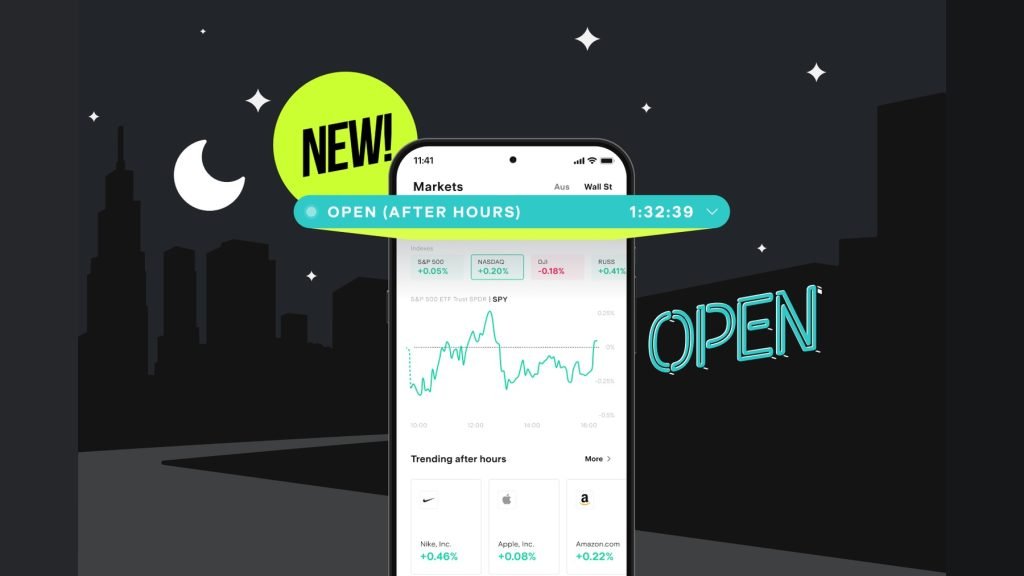
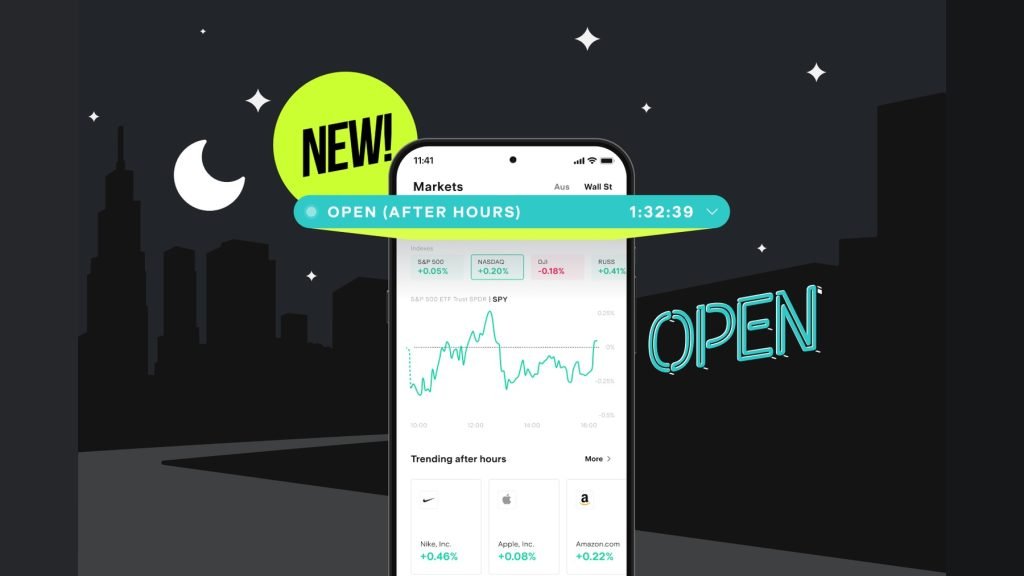
- Extended Hours trading adds an extra 9.5 hours of Wall St access per trading day, so you can react to U.S. news outside the regular session.
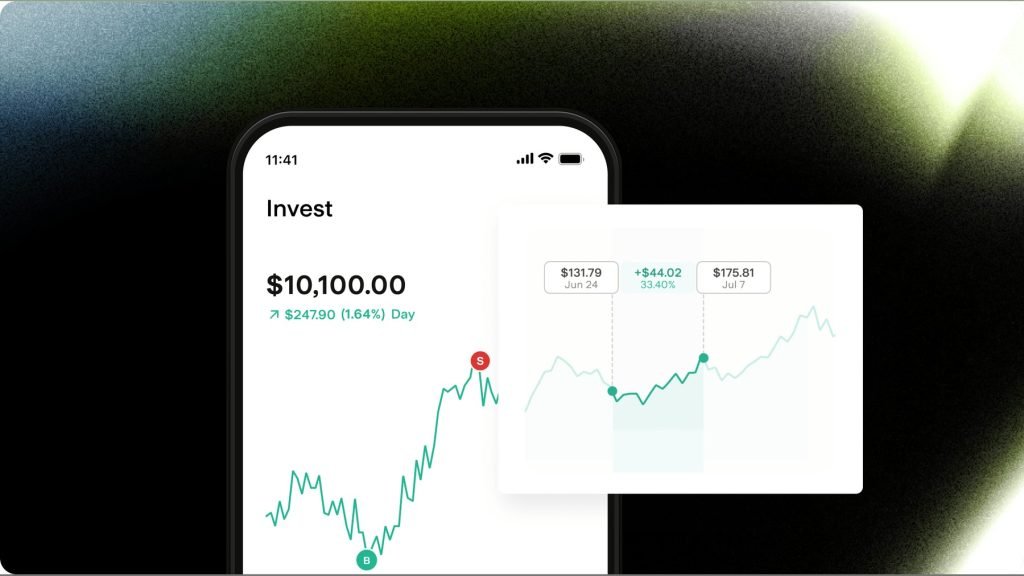
- The Performance Chart shows your portfolio returns across Australian and U.S. markets over custom date ranges, including positions you’ve already sold.
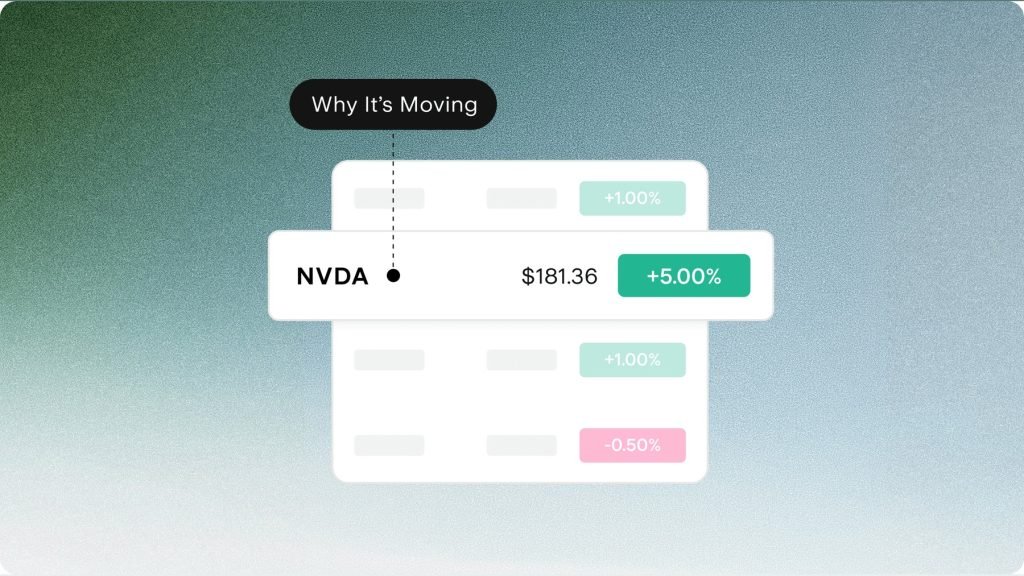
- Why It’s Moving provides short summaries explaining significant U.S. stock price moves, available on U.S. stock pages and through notifications.
- Multiple watchlists let you track companies across both markets.
- Stake Black is an optional subscription with premium tools, priced at A$14 a month or A$144 a year for one market, or A$20 a month or A$204 a year for both.
Stake describes the Performance Chart as the first of a series of portfolio analysis tools on its roadmap.
“Investing is a journey, not just a daily snapshot. The performance chart is designed to give each customer a clearer understanding of how they’re tracking over time, helping them evaluate decisions with more confidence and context, and reduce noise-driven reactions to short term swings.”
Bryan Wilmot, Chief Customer Officer, Stake.
Is Stake right for you?
This is not finanical advice, do your own research.
Stake’s strengths are clear. Flat brokerage up to A$30,000, CHESS sponsorship on the ASX, fractional U.S. shares and a well-designed app make it a strong option for Australians who want both markets in one place.
The trade-offs are just as clear. The 0.55% FX fee in each direction adds up if you move money between currencies often, U.S. shares are held under a custodial model rather than in your name on an Australian register, and A$3 or US$3 is proportionally expensive on very small trades.
Stake’s co-founder sees the bigger picture as a fight for competition in an industry that was expensive for a long time.
“For too long, investing was more expensive, more complex and less accessible than it needed to be. Greater competition and technology has changed that, and there’s still plenty more work to do.”
Matt Leibowitz, CEO and Founder, Stake.
For more information, head to Stake.
Check back often for more exciting news!