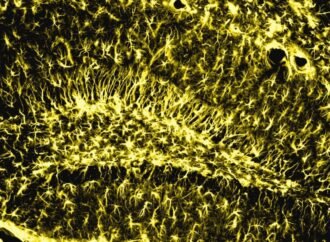
Screening of mouse hippocampus cells (pictured) identified an enzyme whose production rose with age. Credit: Talley Lambert/Science Photo Library An enzyme found in the brain could help to preserve cognitive resilience with advancing age, according to research in mice, humans and cells1. Researchers found that high levels of the enzyme are linked to low levels
Mapping microproteins in the brain might help to understand, and treat, Alzheimer’s disease.Credit: Zephyr/SPL More than 1,000 previously overlooked ‘microproteins’ have been found in samples of human brain tissue, providing researchers with the most comprehensive database yet to study these hidden molecules inside the human brain. Dozens of the tiny proteins showed altered expression in
Osteoporosis causes thin, porous bones that are prone to fracture, but a promising cell therapy might offer a way to strengthen them.Credit: Dr Tony Brain/SPL The ten older women had, between them, broken their bones dozens of times, often after little more than a stumble. But after receiving a single infusion of their own bone-marrow
Hello Nature readers, would you like to get this Briefing in your inbox free every day? Sign up here. The flash flood destroyed many buildings and left villages covered in mud and debris.Credit: Arun Sankar/AFP via Getty Satellite images taken just days before the high-altitude collapse of rock and ice that caused a catastrophic flash
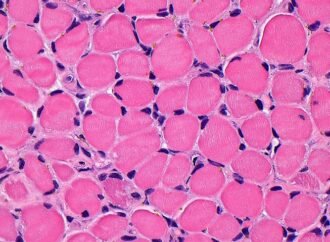
Grafts of muscle cells lead to cognitive and physical improvements in mice.Credit: Ziad M. El-Zaatari/Science Photo Library Researchers have created contracting muscle implants that can mimic some of the benefits of exercise, including improving muscle mass, strength and bone density while also slowing age-related muscle changes1. The research, published in Nature Aging on 26 August,
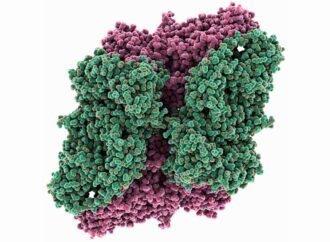
The β-galactosidase molecule can be targeted by antibodies in experiments. But some studies have erroneously used the antibody that targets the bacterial β-galactosidase instead of the mammalian version.Credit: Laguna Design/Science Photo Library More than 50 studies on cell ageing have apparently used the wrong antibody to identify a key protein in experiments, according to a