Two days after what appears to be voters rejecting data centers in town after town, OpenAI went shopping for something it can’t build: permission. On Thursday, the company published a National Community Compact, in which the company pledged to pay for the electricity and grid infrastructure of the data center campuses it owns and operates.
Good morning. By 2030, the AI ecosystem will need about $2.6 trillion in annual end-market spending to support data centers, chips, model development, and investor returns, according to a BCG Institute analysis. Enterprises would account for $1.8 trillion of that total, followed by consumers at $366 billion, hyperscalers’ internal use at $204 billion, and emerging
Meta is making a big push into AI, and it’s creating a new kind of stock that could help pay for it. On Wednesday, as the company reported its third-quarter earnings, Semafor reported the company might issue non-voting stock, meaning shares that don’t give their owners a vote on company decisions, to help fund its
Andreessen Horowitz has launched a new “Machine Age” fund with $1.1 billion raised. The firm’s aim with the new fund is to “open the throttle and accelerate the physical buildout of AI.” The fund will focus on hardware, bucking the firm’s typical focus on the scaling power of software. In a post on the venture
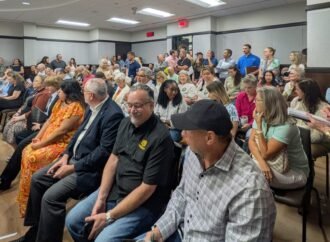
Residents of a rural Texas county say they want more control over the gigantic AI infrastructure projects sprouting in their backyards. Nearly 900 residents of Grimes County, the site of Elon Musk’s planned 100-million-square-foot Terafab semiconductor factory, signed a petition calling for more stringent regulations on large infrastructure projects that receive public incentives. The residents