So far, 2026 has seen a flood of successes for volunteers who do NASA science, exemplifying NASA’s commitment to gold-standard science—transparent, reproducible and intrinsically collaborative. The Backyard Worlds: Planet 9 project announced that their project volunteers have now discovered most of the known brown dwarfs, celestial objects that are similar to planets. The Zooniverse platform,
How do scientists studying space with data from a telescope hundreds of thousands of miles away know that what they are seeing is real? A new NASA project, Artifact InSPECtor, invites you to find out – and by doing so, to help missions like Euclid and NASA’s new Nancy Grace Roman Space Telescope answer fundamental
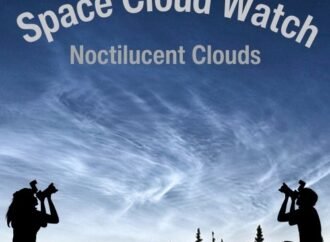
Certain kinds of clouds are misbehaving – appearing more often and lower in the sky than they used to. To help identify the factors influencing these changes (e.g. shifts in Earth’s long-term weather patterns), scientists have asked people around the world with cameras to submit fresh images of these clouds as a part of the
“I didn’t sign up to try to measure a new record or anything like that,” said Matt Carnicle, a volunteer with the NASA-sponsored Community Collaborative Rain, Hail, and Snow Network, or CoCoRaHS, project. Carnicle measured a whopping 29.06 inches of rain on June 18, 2026, breaking an all-time 24-hour record for the state of Louisiana
Zooniverse, a NASA grantee that runs the world’s largest platform for human-powered online research, has reached an extraordinary milestone: one billion rankings contributed by volunteers around the world. This milestone is a celebration of everyone who has marked a dip in a light curve, confirmed the presence of a moving object in a short video,
On Jan. 31, students, library staff, researchers, and community members gathered at the University of Florida’s (UF) Marston Science Library for the Environmental Monitoring through Education, Research, and Geospatial Engagement (EMERGE) NASA Data Hackathon. This initiative empowers libraries, educators, and individuals to engage in public health and environmental science using real-world data tools and citizen