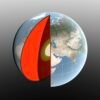
Earth’s days are not exactly the same length. Scientists have been recording small variations in for decades. These changes are minuscule—sometimes just a few milliseconds—and mostly imperceptible, but scientists are keen to understand them as they point to a much more monumental change: Our planet’s rotation speed is shifting. Scientists have already pinpointed a handful
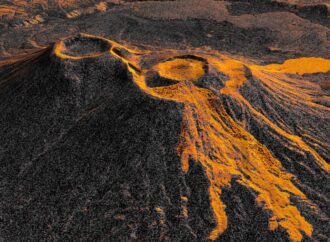
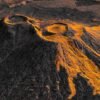
In this animation, frames of NISAR data from December 2025 to August 2026 show the spread of lava from the northern crater of Krasheninnikov, a volcano pair on Russia’s Kamchatka Peninsula. In the image, the lava field appears brighter in the foreground than the surrounding surfaces. Credit: NASA’s Scientific Visualization Studio Like tendrils on a vine,
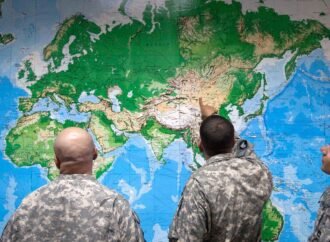
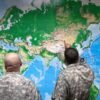
NEW YORK — Maps. Where would we be without them? And how would we even know? They can anchor us in a place or help us get somewhere else. They can show us global political realities via the drawing of contested country borders. We take it as truth that not only does X mark the
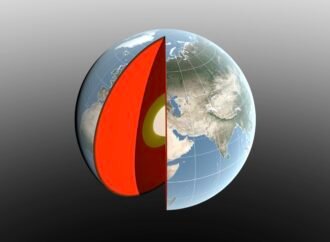
Seasonal changes redistribute enough water around Earth to shift the planet’s center of mass back and forth by fractions of an inch relative to its geometric center. NASA scientists are on the case, tracking the oscillations because Earth’s center of mass is a crucial reference point for satellite navigation and elevation measurements. A team, led
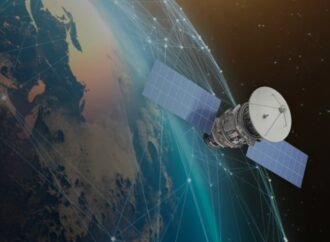
NASA’s Commercial Satellite Data Acquisition Program is a science‑enabling program that provides licensed access to high‑quality commercial Earth observation data, strengthens data quality through calibration/validation (cal/val) partnerships and transparent evaluations, and funds the development of science and application use cases to help turn commercial data into actionable research and applied solutions. The program augments NASA’s
More than 1,000 visitors explored NASA sea level science firsthand during World Ocean Day at the University of Georgia Aquarium on Skidaway Island on June 6, 2026. The free event was supported by NASA’s Science Activation program through the Sea Level Education, Awareness, and Literacy (SEAL) project – a national effort that connects NASA sea