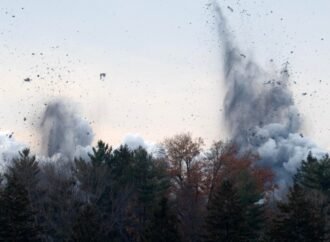
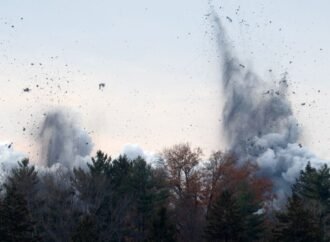
Days after the US military detonated nearly five tonnes of toxic explosives in Iowa, there were no indications of elevated lead levels in local drinking water, the Environmental Protection Agency (EPA) said. The military’s plan to blow up lead azide, a volatile compound reportedly at risk of exploding on its own, was met with public
Initial laboratory results indicate the controlled detonation of five tons of dangerous lead azide in southeastern Iowa has not caused a rise in the heavy metal in the bodies of water that supply drinking water to the area, the U.S. environmental agenc… Initial laboratory results indicate the controlled detonation of five tons of dangerous lead
LITTLE ROCK, Ark. — Sampling results following the U.S. Army’s detonation of a stockpile of lead azide in Iowa are expected to start coming in “as early as tomorrow,” the U.S. Environmental and Protection Agency said in a statement Thursday. EPA personnel and contractors took over 1,500 samples of air, water, soil and dust before
Saying it was necessary to prevent the possible spontaneous explosion of a stockpile of material used in igniters and blasting caps, the US Army conducted a controlled detonation of over 9,700 pounds of lead azide today at the Iowa Army Ammunition Plant (IAAAP) in Middletown, Iowa. Videos of the detonation showed plumes of smoke several
On Wednesday morning, the US Army detonated nearly five tons of degraded lead azide outside of Middletown, Iowa. Environmental Protection Administration chief Lee Zeldin told CNN shortly after the explosion that preliminary monitoring from the site detected no lead in the air around the site. But the full extent of the fallout may not be