Here’s a core dynamic of our AI moment: Many of the people who are most worried about AI’s power are also the people running the most powerful AI companies. And that’s always been the case, argues Kevin Roose. The veteran technology journalist says that many of the men leading the AI boom — most prominently
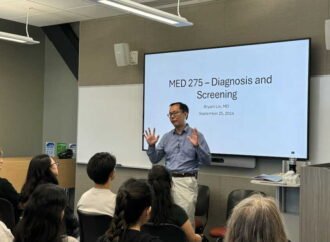
Dr. Bryant Lin teaches a lung cancer class in fall 2024. He says he was very nervous to teach the first class and share his story. The Lin family hide caption toggle caption The Lin family Stanford medical professor Bryant Lin founded the school’s Center for Asian Health Research and Education, advocating for better lung
A DeepSeek engineer who helped write a key component of the company’s latest model has given his readers a rare insight into work at a Chinese frontier lab — and how China’s workers are contending with AI’s risks. In a blog post published in Chinese on his public WeChat account titled “I Have No Choice
We’ve been seeing increasingly dire warnings from AI researchers about the dangers of artificial intelligence, and even comments from OpenAI CEO Sam Altman that it may be time to “pace” AI development. But what would that actually look like? In a new blog post, Anthropic CEO Dario Amodei not only echoed the call to “pace
When it comes to Chinese AI labs using distillation techniques to extract knowledge from frontier model makers, Y Combinator CEO Garry Tan is hoping regulators stay out of it. In fact, he thinks U.S. AI labs should perhaps play the same game. “I would do nothing,” he told CNBC in an interview earlier this week.
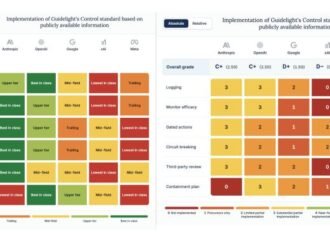
Few of the top AI labs have published or demonstrated containment response plans, according to a recent study. A containment plan spells out what happens once an AI is caught trying to subvert human control — what access gets cut, and when the system gets shut down entirely. That’s the finding from Guidelight AI Standards,