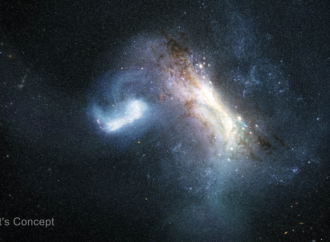
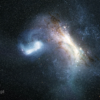
About 12 billion years ago, a dwarf galaxy known as LKH collided with a young Milky Way and merged with it. This artist’s concept portrays that collision. NASA’s Hubble Space Telescope uncovered definitive evidence of this collision by studying globular star clusters. Illustration: NASA, ESA, Joseph Olmsted (STScI) Our home galaxy, the Milky Way, grew
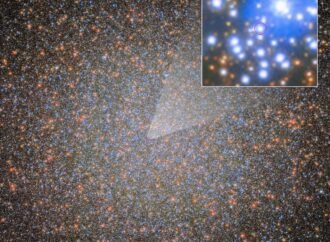
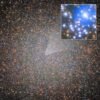
The enormous globular star cluster Omega Centauri has baffled astronomers for decades. It should be full of black holes left by exploding stars, but the evidence for them is scarce. Now, astronomers using archival data from NASA’s Hubble Space Telescope and supporting observations from NASA’s James Webb Space Telescope have finally located their first stellar-mass
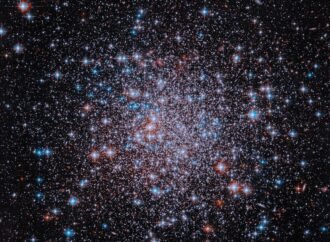
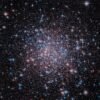
Red, white and blue stars shine like a fluttering flare on a dark night in this new image from NASA’s Hubble Space Telescope. NASA released this image to celebrate America’s 250th anniversary, as the agency continues America’s legacy of exploration. Located in the outer halo of our Milky Way galaxy, the globular cluster NGC 6426
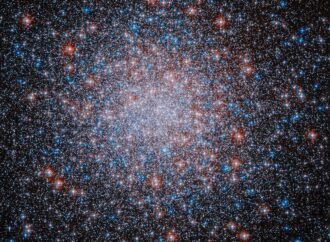
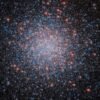
More than 500,000 stars shine red, white and blue in this image from NASA’s Hubble Space Telescope, released to celebrate the 250th anniversary of the United States. The image shows Messier 3 (M3), one of the Milky Way’s most massive globular clusters, or spherical collections of gravitationally bound stars. Globular clusters are made up of