Credit: SvetaZi/iStock via Getty Early-career fellowships play a key part in helping researchers to move from supervised work to greater independence. The intense competition, however, can make the application process daunting for early-career researchers (ECRs). Based on our experience of running a successful fellowship support structure in the chemistry department at University College London (UCL),
The Department of Defense has ordered 30 U.S. universities to audit their partnerships with mostly Chinese universities and military training institutions as the Trump administration scrutinizes the country’s growing global influence. If the schools don’t complete a review and terminate any arrangements deemed problematic within the next two weeks, they face losing funding. The goal
China’s research sector has experienced spectacular growth over the past two decades. The increase in scientific output is due, in part, to a system that funnelled resources to researchers selected by prestigious talent-acquisition schemes. This approach has helped the nation’s scientists to publish in leading journals. Yet, a rapid expansion in the scientific workforce has
The rapid spread of generative AI tools has exposed deep vulnerabilities in conventional methods of academic assessment. This challenge came into sharp focus for me when I found evidence of widespread unauthorized use of artificial intelligence in an examination for my course on welfare economics and social-choice theory at Brown University in Providence, Rhode Island,
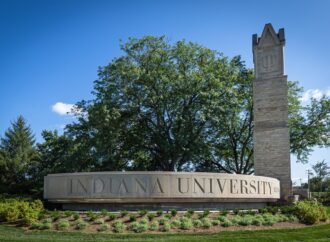
A lab at the University of Indiana Bloomington is under scrutiny from the US Department of Agriculture.Credit: Michael Hickey/Getty Biologists at Indiana University (IU) Bloomington have been locked out of their laboratories for more than a week, after the university suddenly changed locks on its biology building on 7 May. Although university officials restored access
Research misconduct can include a variety of infractions, including data fraud and manipulation.Credit: Tom Werner/Getty For decades, academic institutions have struggled with how to prevent researchers who have committed misconduct from securing jobs at new universities while hiding the bad behaviour. A proposal published today in the journal Science1 offers a solution, at least in