VIDEO REVIEW: Tesla Model Y L: The 6-seater variant of the popular electric SUV arrives in Australia
- AI, ai coding assistant, AI regulation, Artificial Intelligence, openai, Reviews, Tech, Technology, Tesla, Vehicles
- March 29, 2026

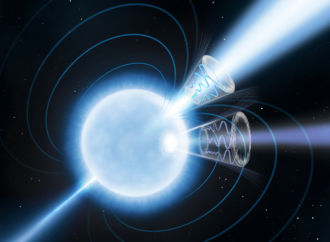
Scientists using NASA’s IXPE (Imaging X-ray Polarimetry Explorer) conducted more than 140 hours of observations of the magnetar 1E 1547-5408, shown in this Aug. 5, 2026, artist’s concept, between March and April 2025. In doing so, they may have captured empty space behaving in a way physicists have predicted for 90 years, but never directly
READ MORE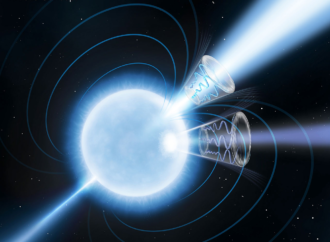
A first of its kind measurement of a magnetar may have captured empty space behaving in a way physicists have predicted for 90 years, but never directly observed. The results published Wednesday in Nature. Magnetars are a special class of neutron stars with ultra-strong magnetic fields, the strongest of any object in the observable universe,
READ MORE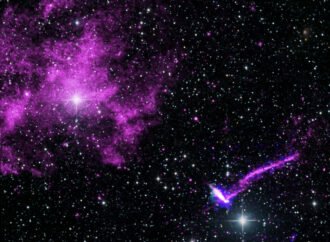
This composite image, released on July 9, 2026, shows the region around a pulsar (a neutron star with a strong magnetic field that spins incredibly fast) within the Lighthouse Nebula. The image contains X-ray data from NASA’s Chandra X-ray Observatory in purple, X-rays from NASA’s IXPE (Imaging X-ray Polarimetry Explorer) in blue, and radio emissions
READ MORE