We almost wish we hadn’t. The noise was brain-numbingly loud as we blasted, somewhat appropriately, Richard Strauss’ Also Sprach Zarathustra. We couldn’t hear each other speak, and we could feel our internal organs vibrating. Any sense of fidelity disappeared, but—all power to the Kallsups—it worked. We’d successfully linked 149 Bluetooth speakers, though sadly we’re well
Before being fired five days into her stint as White House press secretary, Katie Zacharia spent much of the day attempting to explain her past. Throughout her brief tenure, Zacharia’s résumé was the source of much intrigue. Foremost was the fact that despite claiming to be an attorney for much of her career, she never
Urbanization is usually judged by what is built, but it should also be evaluated according to what it hollows out. Around the world, increasing numbers of people are moving to cities — 67% of the global population is projected to live in urban areas by 20501. But this trend is about more than people relocating.
NEW YORK — Bacteria that cause potentially fatal Legionnaires’ disease were found in a Yankee Stadium cooling tower — one of 10 such towers in the Bronx that tested positive amid several reported cases of the illness including one death, New York City health officials said. The city’s Health Department said Sunday that more tests
This image shows a section of an organoid. Organoids are lab-grown tissues that model the human brain. A new study used brain organoids to probe key protein interactions that may be linked to profound autism. Courtesy of the UCSF Quantitative Biosciences Institute hide caption toggle caption Courtesy of the UCSF Quantitative Biosciences Institute Scientists have
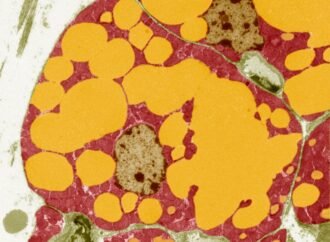
The ratio of fat tissue (fat droplets in yellow; artificially coloured) to muscle mass is reduced in people with newly identified variants of a gene that affects cellular metabolism. Credit: Steve Gschmeissner/Science Photo Library A massive genomic study has linked mutations in a specific gene to an increased proportion of muscle, decreased levels of belly